Alexander Wilson

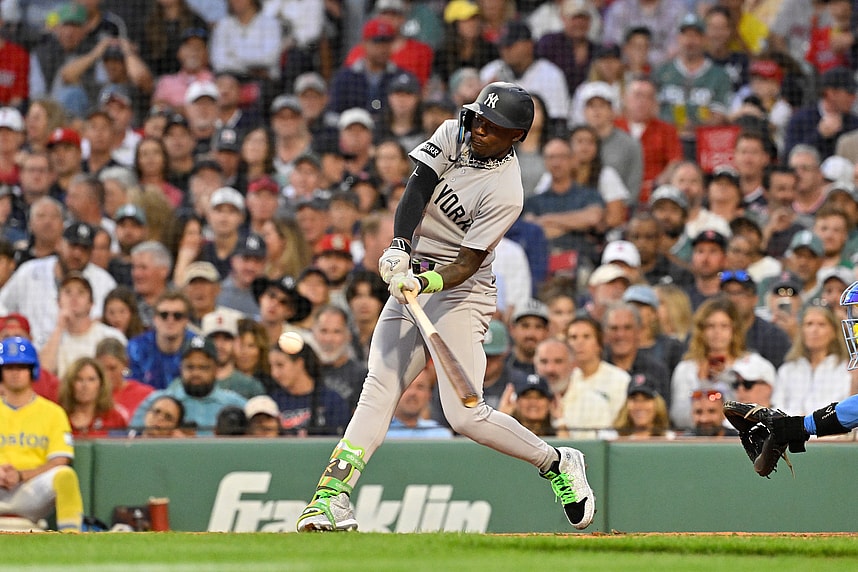
We need to stop letting the flashy highlights blind us to the cold reality of the Yankees‘ business model. Jazz Chisholm Jr. just put together the kind of season that usually guarantees a blank check: a 30-30 campaign in pinstripes, electrifying the Bronx with 31 home runs and 31 stolen bases. He is a walking highlight reel, a marketing dream, and statistically one of the most impactful second basemen in the sport. Yet, entering his walk year, I get the distinct feeling that Brian Cashman is preparing to let him leave.
The history here is impossible to ignore. Cashman let Robinson Canó walk to Seattle; he let Gleyber Torres walk to free agency. The Yankees General Manager views second base as a replaceable commodity, not a cornerstone. So while Jazz is playing for a $150 million contract, he might be auditioning for 29 other teams, not the one he’s currently starring for.
The Metrics Are Electric, But Volatile
If you want to argue for the extension, the data is your best friend. Chisholm didn’t just stumble into 30 homers; he earned them with elite contact quality. He ranked in the 91st percentile for Barrel Rate (15.0%), meaning when he connects, the ball is usually screaming into the gaps.
Defensively, he silenced the critics who thought he was just an outfielder masquerading in the infield. Chisholm posted 88th percentile Range (OAA), proving he has the athleticism to handle the keystone at an elite level. Combine that with 86th percentile Baserunning Run Value, and you have a player who impacts the game in every phase.
But here is the “but”—and with Jazz, there is always a “but.” The swing-and-miss issues are terrifying. He ranked in the 7th percentile for Whiff Rate (32.2%) and the 8th percentile for Strikeout Rate, swinging through pitches at a clip that usually gets players benched in October. His .234 Expected Batting Average (xBA) suggests the .242 average wasn’t bad luck; it was who he is.
Aaron Boone Is Turning Up the Heat
Even Manager Aaron Boone, usually the ultimate player’s advocate, sounded different when discussing Jazz on the New York Post podcast with Joel Sherman and Jon Heyman. He didn’t sugarcoat the dynamic behind closed doors.
“We have some interesting talks in my office from time to time. But I think we have a lot of respect for one another,” Boone admitted. “The reality is I just demand a lot out of him because he’s capable of so much. It’s on us to just make sure he’s focused on going out there and being the best version of himself.”
That isn’t a quote about a polished superstar; that’s a quote about a talented enigma who still needs to be managed.
The “Walk Year” Reality Check
Boone made it crystal clear: the pressure is on. “This is his walk year. This is his free agent year. So there’s a lot on the line… we’ll see where it leads as far as long term, or if we take it into free agency.”
The Yankees know exactly what they have: a dynamic, flawed, high-energy star who fits the spotlight perfectly but carries significant risk. If Jazz cuts down the strikeouts and repeats his 30/30 production, he will price himself out of Cashman’s comfort zone. If he regresses, the Yankees will have the QO at their disposal. Jazz is always betting on himself, but I’m betting on Cashman’s history of ruthlessness at second base.

More about:New York Yankees