Alexander Wilson
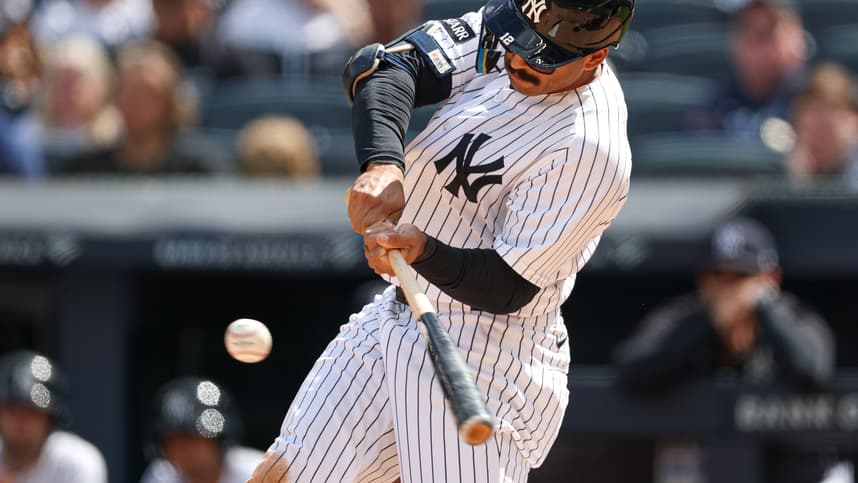
The New York Yankees just swept Baltimore in four games and the pitching was dominant, but the offense carried its weight too. One player who hasn’t been carrying much weight in the stat sheet is Trent Grisham, and yet the Yankees aren’t worried about him at all. If anything, they’re expecting a breakout that the underlying numbers have been telegraphing for weeks.
Grisham is hitting .176/.311/.380 with a .691 OPS and five home runs on the season. That batting average is rough, no way around it. But the moment you go one layer deeper, the picture changes dramatically.
What the Metrics Are Screaming
His profile reads like a completely different player than the box score suggests. He ranks in the 91st percentile or better in whiff rate, chase rate, and squared-up percentage. He’s hitting the ball harder than 91% of players in baseball. His walk rate sits at 16.4%, putting him in the 92nd percentile. These are not the numbers of a hitter who is lost at the plate. They are the numbers of a hitter who is making excellent decisions and generating quality contact, and getting almost nothing back for it.
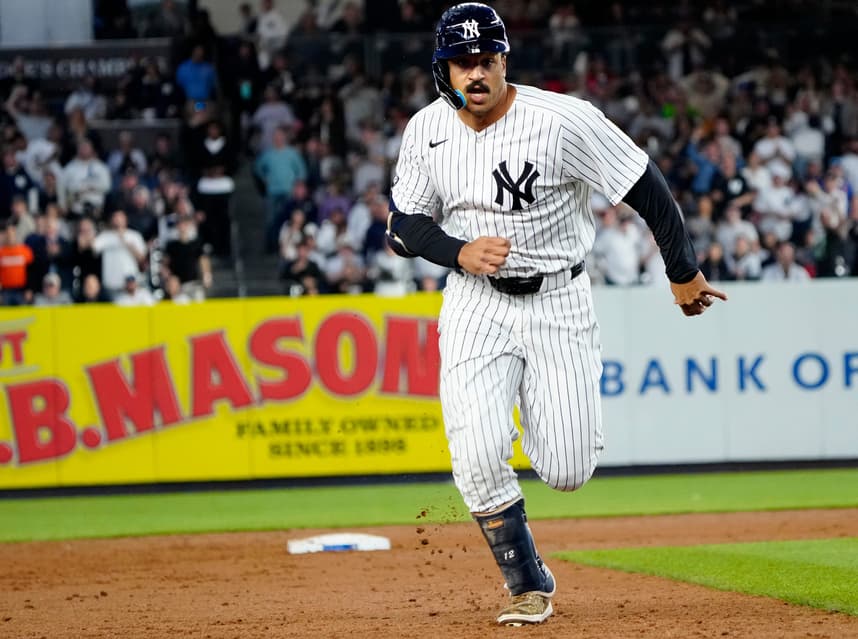
This is what advanced metrics were invented to explain. When a player’s process is elite and his results are poor, it means the baseball is finding gloves instead of grass. It means hard-hit line drives are being caught. It means well-struck balls are dying at the warning track instead of falling for doubles. Variance is real and it has been absolutely hammering Grisham this season.
The one legitimate concern is bat speed, which has regressed noticeably compared to his career norms. When bat speed drops, hitters can get late on fastballs and start fouling off pitches they’d normally drive. That explains some of the gap between what his contact quality suggests and what the results are showing. The good news is that bat speed tends to recover as the weather warms and the body gets into a full-season rhythm. Grisham playing through this cold stretch rather than sitting is actually the right approach, because the at-bats he’s accumulating are keeping him sharp mechanically even when they’re not producing.
Why the Yankees Aren’t Pressing the Panic Button
The Yankees have been here with Grisham before this season. He started April cold, then hit two home runs in a single game against the Angels in a 11-10 win that snapped a five-game losing streak. The breakout came out of nowhere because the underlying quality was always there. When a hitter’s process is this good and his results are this far below it, regression toward the mean isn’t a hope. It’s a mathematical certainty.
What makes Grisham valuable beyond the stats is how he functions at the top of the lineup even during cold stretches. The walk rate ensures he gets on base. The discipline ensures he doesn’t give away at-bats. He’s not hacking at bad pitches and compounding the problem the way some hitters do when they go cold. He’s working counts, drawing walks, and keeping himself in the game even when the hits aren’t falling. That’s a professional hitter operating with a short memory, and the Yankees are lucky to have that at the leadoff spot.
The production is coming. The process has been there the whole time.

More about:New York Yankees