
 Alexander Wilson
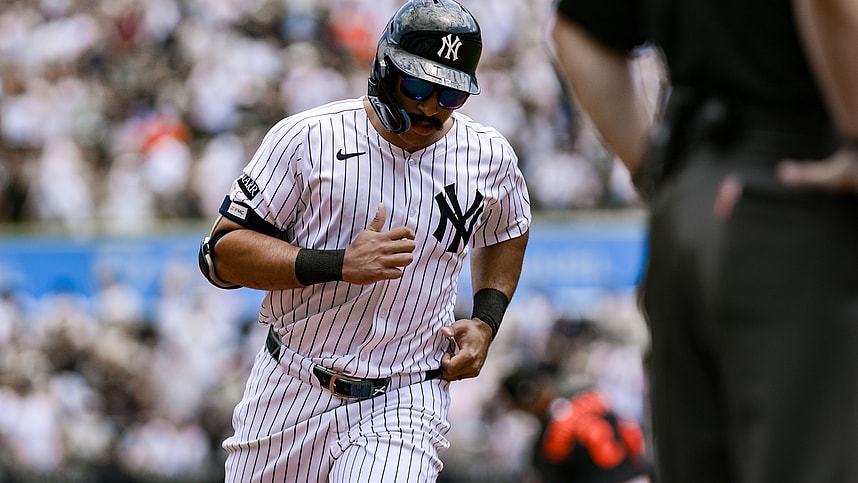
The New York Yankees handed Trent Grisham a $22 million check to run it back in the Bronx, and on the surface, you can understand why. General Manager Brian Cashman is banking on the 29-year-old replicating a career-defining 2025 campaign where he finally unlocked his potential, mashing 34 home runs and posting a robust 129 wRC+. That number means he was nearly 30% better than the average big leaguer, a production level you simply don’t let walk out the door for nothing.
But I have a serious concern about where Aaron Boone plans to write his name on the lineup card. The Yankees seem dead set on deploying Grisham as their leadoff hitter, and frankly, I think that is a fundamental misunderstanding of his skill set. We are looking at a player who provides elite thump and patience, but asking him to set the table for Aaron Judge might be forcing a square peg into a round hole.
The “Three True Outcomes” Don’t Always Work at the Top
If you look at Grisham’s Baseball Savant page, it is a sea of red in the power categories. He ranked in the 91st percentile for Expected Slugging (xSLG) and the 89th percentile for Barrel Rate last season, proving that his power surge was no fluke. He also possesses arguably the most disciplined eye in baseball, sitting in the 99th percentile for Chase Rate and the 96th percentile for Walk Rate.
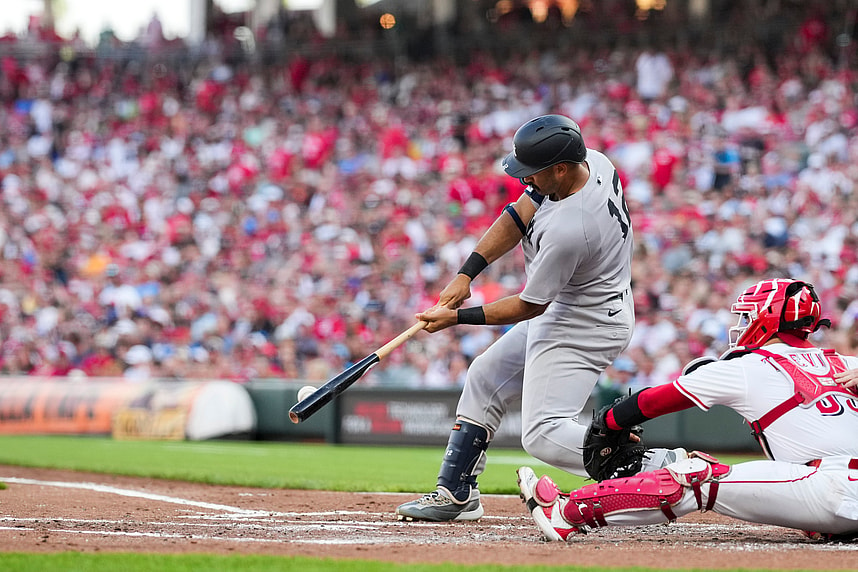
However, when you dig into his splits from the leadoff spot, the picture gets murky. In that role, Grisham slashed a meager .202/.325/.415, hitting 23 of his homers but failing to consistently put pressure on the defense. He is a “Three True Outcomes” hitter—he walks, he homers, or he strikes out. While a .348 OBP is solid, his lack of speed (32nd percentile Sprint Speed) means that when he walks, he clogs the bases rather than threatening to steal.
Solo Homers Don’t Maximize Aaron Judge
The problem isn’t Grisham’s talent; it’s the sequence. When your leadoff hitter is launching 34 homers but batting .235, a significant portion of those bombs are solo shots. I want those runners on base when Judge and Cody Bellinger step into the box. Grisham’s low batting average means fewer rallies start with a ball in play, and his lack of elite speed means he isn’t scoring from first on a double in the gap.
He is a perfect No. 2 or No. 6 hitter—someone who can punish mistakes and extend an inning with a walk. But as the primary leadoff guy? It feels inefficient. Unless Cashman finds a pure contact-speed threat in the next few months, the Yankees are entering 2026 with a leadoff strategy that prioritizes power over functionality, and I’m not sure that is the recipe for maximizing the MVP behind him.

More about:New York Yankees
