Alexander Wilson
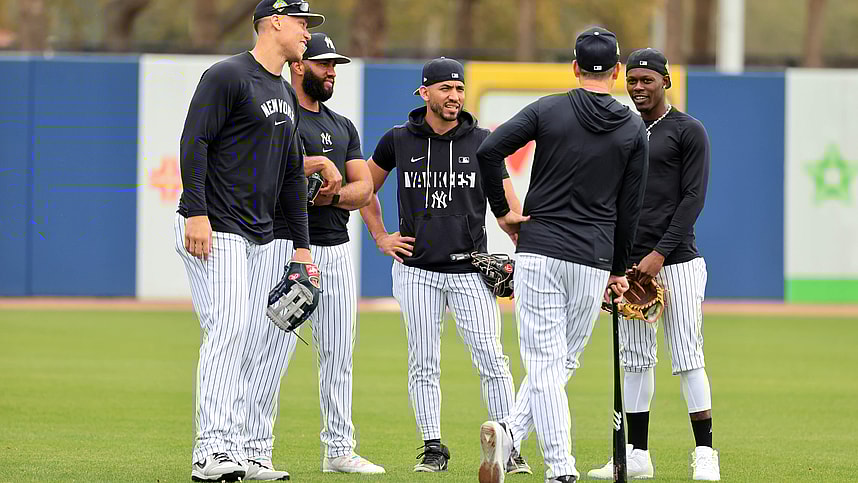
I’m convinced the Yankees found a gem in Ben Hess, and Monday’s spring training debut against the Pirates only strengthened that belief. The 6-foot-5, 255-pound right-hander carved up Pittsburgh for three innings, striking out five batters while allowing just two hits and one earned run. He touched 95 mph with his four-seam fastball and put that disgusting curveball on full display—the same pitch that generated a 58% whiff rate at Alabama. For a pitcher who didn’t throw professionally until 2025, this wasn’t just encouraging. It was a statement.
Here’s what separates Hess from the typical organizational arm: he doesn’t just miss bats, he’s getting better at every level while doing it. That matters more than people realize.
The Double-A Numbers Don’t Lie—He’s Ready for Triple-A
Hess finished his first professional season with a 7-4 record and a 3.22 ERA across 103.1 innings split between High-A Hudson Valley and Double-A Somerset. The strikeout stuff jumped off the page: 12.11 K/9 with a 41.3% ground ball rate and a microscopic 0.26 HR/9. That power sinker generates weak contact when he locates, and the swing-and-miss metrics suggest his secondary arsenal has legitimate teeth.
But here’s where it gets interesting. Most prospects struggle when they first hit Double-A—the competition is better, the scouting reports are sharper, and guys who dominated A-ball suddenly look ordinary. Hess did the opposite. At Hudson Valley, he posted a 3.51 ERA over 66.2 innings with 12.69 K/9. Solid, not spectacular. Then he got promoted to Double-A Somerset and immediately improved to a 2.70 ERA in 36.2 innings while maintaining an 11.05 K/9 against significantly tougher competition.
That’s not luck. That’s development.
The walk rate tells the real story. Hess posted 4.01 BB/9 overall in 2025, which is elevated but manageable for a 22-year-old making his professional debut. At Double-A, he tightened that to 3.19 BB/9, showing tangible command improvement as he adjusted to better hitters. His 2.50 FIP suggests he’s been even better than his surface ERA, and that’s exactly what you want to see from a first-round pick learning on the fly.
That Curveball Is Disgusting—Best Breaking Ball in the System
Monday’s outing gave evaluators another look at what makes Hess a legitimate rotation prospect, and it all starts with the curveball. He threw a looping hammer to retire Omar Alfonzo that had perfect 12-to-6 shape and dropped off the table. That pitch sits in the mid-70s and generated a ridiculous 58% whiff rate at Alabama—among the best of any individual offering in Division I baseball last year. When Damon Oppenheimer, the Yankees’ vice president of domestic amateur scouting, described Hess’ repertoire as having “three pitches that are just dynamite,” he was talking about this curveball leading the charge, per MLB.com.
The curveball is the out pitch. Everything else plays off it.
Hess complements the curve with a mid-80s slider that features tight tilt and two-plane depth, giving him two distinct breaking balls to keep hitters off balance. The changeup, also in the mid-80s, shows flashes of becoming an above-average pitch with good arm-side fade and solid velocity separation from his fastball. The four-seam heater has been clocked up to 98 mph and sits comfortably in the 93-96 range with natural bore through the zone.
Here’s what I love about his development so far: at Alabama, Hess leaned too heavily on his fastball when he fell behind in counts, becoming predictable and hittable. In pro ball, Matt Blake’s group has already taught him to trust his secondaries in any count, which is why the Double-A numbers improved. That’s coachable stuff, and Hess is clearly listening.
The Mid-Rotation Upside Is Real If the Command Tightens
I’m not saying Hess is the next Gerrit Cole. But I am saying he has the raw ingredients to be a legitimate mid-rotation starter if the command continues trending in the right direction. His 6-foot-5 frame and clean, repeatable delivery suggest durability, and the four-pitch mix gives him options to attack both lefties and righties. The fastball plays up because of extension and angle, the curveball is a true weapon, and the slider can be manipulated into a cutter when needed.
The risk? Command and control. A 4.01 BB/9 won’t cut it in the big leagues, period. Hess needs to refine his sequencing and pitch selection, but the Yankees’ pitching development infrastructure is perfectly built to fix those issues. Blake’s group has already helped him reduce his walk rate from 4.46 at High-A to 3.19 at Double-A, and there’s no reason that progress won’t continue at Triple-A Scranton.
The Yankees probably view Hess as a 2027 contributor, giving him another full season in the upper minors to polish the command and build innings. That’s the smart play. But if the walks continue trending down and the strikeout stuff holds, he could force his way into the conversation by September. I’ve seen enough to know this kid has frontline starter upside—and in an organization that churns out quality arms like an assembly line, that’s saying something.
The Projection: Hess Pitches in the Bronx by September 2027
Mark it down: if Ben Hess stays healthy and the command keeps improving at this rate, he’s pitching meaningful innings in the Bronx by September 2027. The stuff is too good, the development trajectory is too clean, and the Yankees are too smart to let a mid-rotation arm with this kind of upside rot in Triple-A just because they’re trying to preserve service time.
Monday’s spring debut was another reminder that the Yankees’ 2024 first-round pick isn’t just organizational depth. He’s a legitimate weapon in waiting.
| Level | IP | ERA | FIP | K/9 | BB/9 | HR/9 | GB% |
|---|---|---|---|---|---|---|---|
| High-A | 66.2 | 3.51 | 2.58 | 12.69 | 4.46 | 0.27 | 43.8% |
| Double-A | 36.2 | 2.70 | 2.34 | 11.05 | 3.19 | 0.25 | 36.9% |
| MiLB Total | 103.1 | 3.22 | 2.50 | 12.11 | 4.01 | 0.26 | 41.3% |
Frequently Asked Questions
What pitch does Ben Hess throw best?
Hess’ curveball is his best pitch by a wide margin, generating a 58% whiff rate at Alabama—among the best of any individual offering in Division I baseball. It sits in the mid-70s with 12-to-6 shape and is already considered a legitimate out pitch at the professional level.
When will Ben Hess pitch for the Yankees?
Hess is realistically a 2027 contributor, giving him another full season to refine his command at Triple-A Scranton. If his walk rate drops below 3.00 BB/9 and he stays healthy, he could force his way into the September callup conversation in 2026.
How did Ben Hess perform at Double-A Somerset?
Hess posted a 2.70 ERA over 36.2 innings at Double-A Somerset with an 11.05 K/9 and 3.19 BB/9. He improved significantly from his High-A numbers, showing better command and the ability to adjust to advanced competition.
What velocity does Ben Hess throw?
Hess’ fastball sits 93-96 mph and has been clocked up to 98 mph. He touched 95 mph in his spring training debut Monday against the Pirates while generating three whiffs with his heater.

More about:New York Yankees