Alexander Wilson
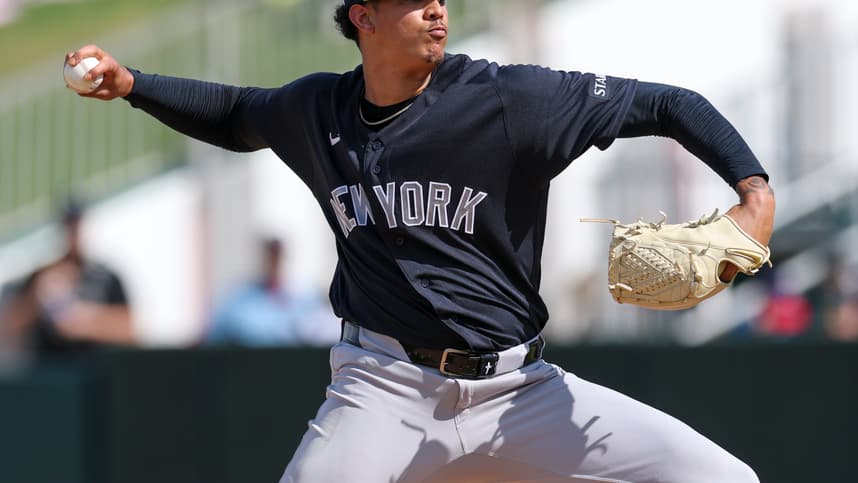
There’s a pitcher in Triple-A Scranton throwing 103 mph and striking out 12.42 batters per nine innings. He’s 22 years old. He won the Yankees’ James P. Dawson Award in spring training for the most outstanding rookie in camp. The New York Yankees are being patient with him because they have the rotation depth to afford patience, but make no mistake: Carlos Lagrange is coming, and when he gets there, opposing hitters are going to have a real problem on their hands.
Lagrange currently owns a 4.32 ERA over 33.1 innings at Triple-A with a 12.42 strikeout rate per nine innings, a 5.40 walk rate, and a 37.5% ground ball rate. The ERA and the walk rate are the issues that have kept him in Scranton. The strikeout rate and the velocity are the reasons the Yankees believe the ERA is temporary.
What Makes Him Different
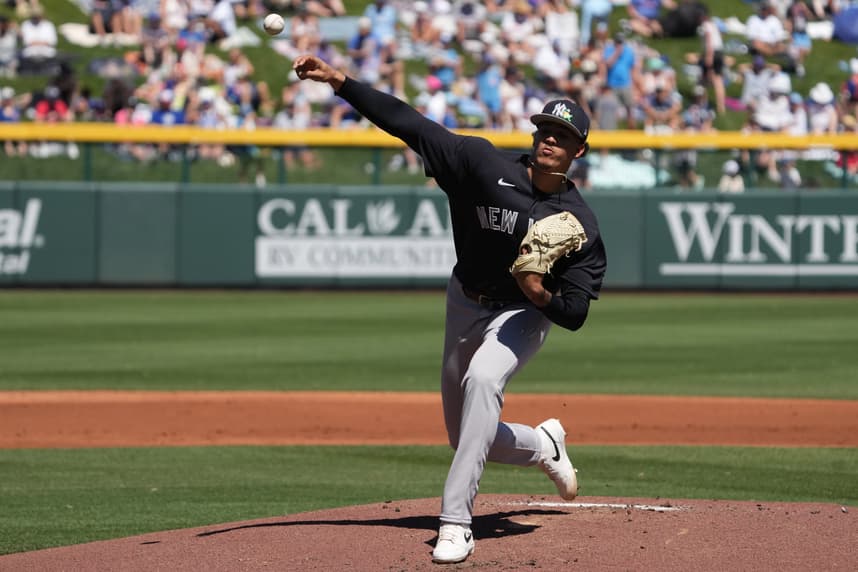
The fastball is the foundation of everything. His full profile shows a pitcher who generates elite swing-and-miss not because of deception or plus secondary pitches, though those are coming, but because the primary offering is simply too fast for most minor league hitters to catch up to consistently. At 103 mph with the natural riding action that comes from his arm slot and release point, the four-seamer explodes through the hitting zone before batters can fully rotate their hips. That’s not a thing you can teach. That’s a gift, and Lagrange has one of the more extreme versions of it in the entire organization.
He complements the heater with a sweeper in the mid-to-upper 80s that flashes plus shape when he locates it. The sweeper is the pitch that gives him a genuine put-away option against right-handed hitters who survive the initial velocity by getting their hands through early. When both pitches are operating together, Lagrange looks like a future closer or even a starting pitcher who could legitimately miss 11 or 12 batters per nine at the big league level.
The changeup is still developing. At 22 years old, asking a power arm to trust an off-speed offering consistently is a long-term project, and the Yankees aren’t rushing it. They’re building the foundation correctly.
What Needs to Improve
The walk rate is the honest concern and the primary reason the promotion hasn’t happened yet. A 5.40 walk rate per nine innings at Triple-A translates to serious damage at the major league level where patient hitters punish walks in ways that younger minor league competition does not. There have been outings this season where Lagrange looked like the most dominant pitcher in the International League, and others where the walk rate turned a clean inning into a self-inflicted crisis.
The ground ball rate at 37.5% is also below where the Yankees want it. For a power pitcher relying on elevated four-seamers, that number is somewhat expected since high-spin, high-velocity fastballs generate more fly balls than grounders. But combining a below-average ground ball rate with a high walk rate creates the conditions for big innings, which is the exact pattern that has kept the ERA in problematic territory this season.
The Timeline
The Yankees don’t need to rush this. Their rotation is about to be fully healthy with Cole returning and Fried working through his elbow issue. Lagrange in Triple-A continuing to refine his command is the right environment for the next few months.
But the moment the command tightens up and the walk rate dips toward a manageable level, the Yankees are going to have one of the most exciting arms in baseball available. At 22, throwing 103, with a sweeper that already flashes plus, the ceiling is genuinely elite. The Yankees are building him the right way. The rest of baseball should be paying attention.

More about:New York Yankees