
 Alexander Wilson
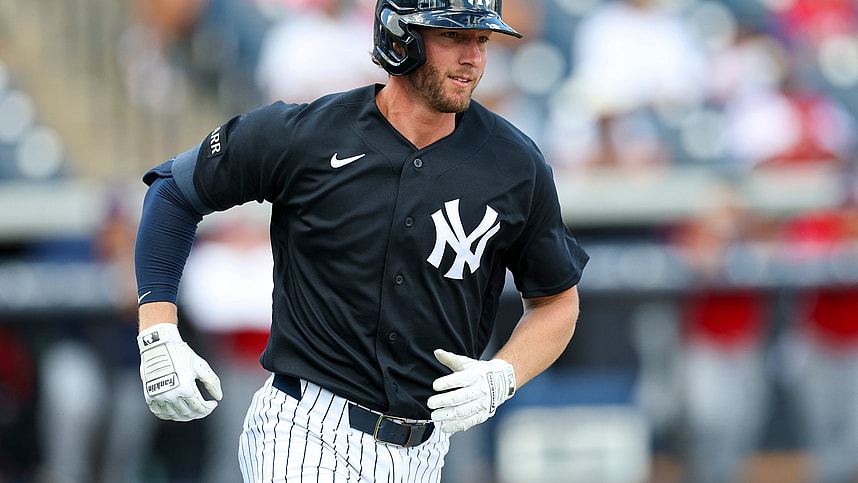
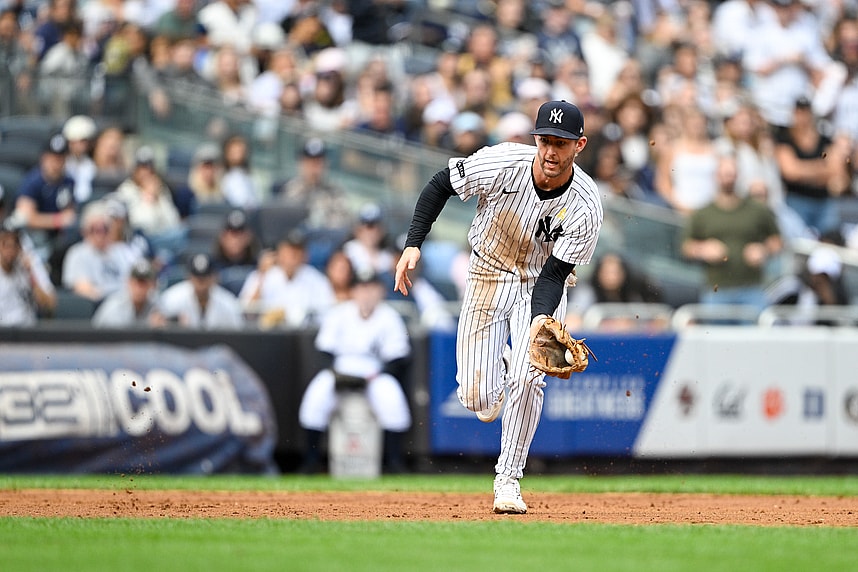
When the New York Yankees acquired Ryan McMahon from the Colorado Rockies at last summer’s trade deadline, they knew what they were getting defensively. The Gold Glove third baseman delivered, ranking in the 92nd percentile in range with six outs above average across 1,265 innings. He saved 10 defensive runs with a seven fielding run value.
But defense wasn’t the problem. The bat was.
McMahon hit .214/.312/.381 last season with 20 home runs, 53 RBIs, and an 86 wRC+. For a 31-year-old who’s never posted an above-average offensive season, those numbers weren’t surprising. His best came in 2022: 97 wRC+ with 20 homers and 67 RBIs. Since then, he’s regressed, and the Yankees are betting technical adjustments can unlock the best offensive season of his career.
The Statcast Paradox
McMahon’s metrics tell a fascinating story. He ranked in the 95th percentile in average exit velocity (93.3 mph) and 89th percentile in hard-hit rate (50.5%) last season. When he makes contact, he hits the ball as hard as almost anyone. His 77th percentile bat speed demonstrates above-average mechanics. His 60th percentile sweet-spot percentage shows he’s getting the ball in the air at an ideal rate.
The problem? He rarely connects. McMahon ranked in the 2nd percentile in both whiff rate and strikeout rate, displaying brutal plate discipline. The disconnect between how hard he hits the ball and how often he makes contact is why the Yankees targeted him.
The 42.7-Inch Problem
This spring, McMahon logged onto a Zoom call with hitting coaches James Rowson, Casey Dykes, and Jake Hirst. They came prepared with video breakdowns and a clear diagnosis: McMahon’s stance had gotten too wide. At 42.7 inches between his feet, he had the fourth-widest stance in Major League Baseball, and it was destroying his hip rotation and bat path.
“The coaches brought it up to me immediately,” McMahon told the New York Post. “Got in the cage the next day, worked it out. Felt great. Went into live [batting practice]. I think I had like six at-bats that day, and I think I walked in one and then hit all the other five balls over 100 [mph].”
That immediate result validated what the Yankees saw on film. McMahon had used narrower stances earlier in his career when better offensive results followed. The Yankees showed him video of Ben Rice and Bryce Harper demonstrating how much more they were getting through the ball with tighter setups. The evidence was overwhelming.
“You’re always trying to help guys be in a position where they can be multidimensional,” hitting coach Casey Dykes told the New York Post. “He can make more contact. He can keep the ball up [for fly balls rather than ground balls]. He obviously hits the ball hard. He sees the ball really well. We’re trying to put him in a position to maximize all those things.”
Why This Could Work
The math is compelling. McMahon already hits 20 home runs with a catastrophic whiff rate. If he cuts down strikeouts even marginally while maintaining his 95th percentile exit velocity, the power should spike. His elite contact quality suggests he could be a 25-30 home run threat if he puts the bat on the ball more frequently.
The narrower stance addresses multiple issues. It improves hip rotation, allowing better lower-half mechanics. It shortens his swing path. It keeps his hands in a stronger position to drive the baseball. Most importantly, it mirrors what worked earlier in his career.
“It’s going to be something I got to keep my eye on because my feel — if I’m not feeling it right, I can get wide,” McMahon told the New York Post.
The Yankees are betting on muscle memory. McMahon isn’t learning something new. He’s reverting to something old that worked before he abandoned it.
The Ground Ball Arsenal Benefits
The timing couldn’t be better. With Max Fried and Carlos Rodon as key southpaw components in the rotation, having an elite defensive third baseman who can turn everything into outs is invaluable. If McMahon provides even league-average offense, he becomes a genuine two-way asset.
Brian Cashman acknowledged as much: “I was excited he was one of the productive players in our postseason run on both sides of the ball, especially when you have ground ball guys like Fried and Rodon and all those ground balls going to that side of the field.”
But McMahon isn’t satisfied being just a glove. “I’m ready,” he told the New York Post before Monday’s 5-3 exhibition loss to the Pirates. “I’m ready for some games with some juice.”
That hunger, combined with the mechanical adjustments and the Yankees’ infrastructure, creates a perfect storm for a breakout. McMahon has two years and roughly $30 million remaining on his contract. The Yankees need his bat to justify that investment. For a hitter who ranks among the hardest in baseball when he makes contact, even a small improvement in his swing-and-miss rate could unlock a completely different level of production.
The Yankees made the bet last July. Now they’re refining it. If they’re right, McMahon could finally post that elusive above-average offensive season at 31, turning a defensive acquisition into a two-way weapon.

More about:New York Yankees
