
 Alexander Wilson
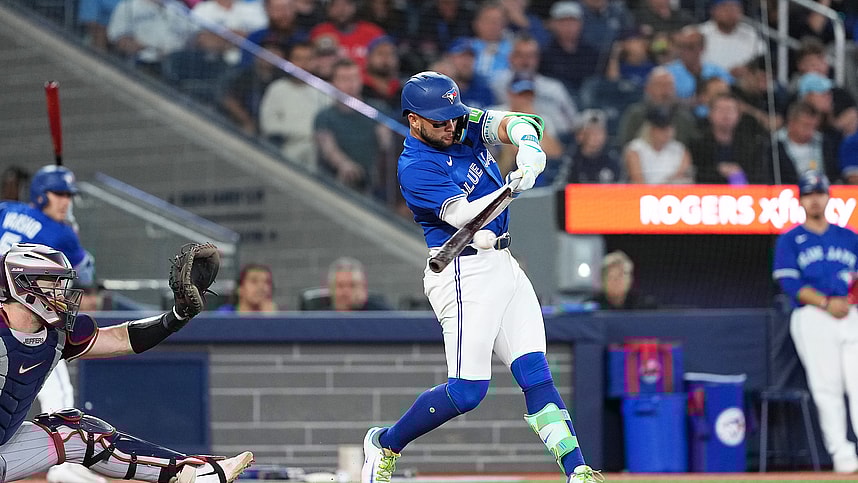
The New York Yankees could be flirting with an idea so drastic it could either secure a dynasty or get the front office run out of town.
General Manager Brian Cashman has already gone on record stating he is “open-minded” about trading star second baseman Jazz Chisholm Jr., a comment that feels less like due diligence and more like a “For Sale” sign on a player who just posted a 30-30 season.
If the Yankees actually pull the trigger on moving Chisholm, the prevailing theory is that they would pivot immediately to free agent Bo Bichette, effectively swapping electricity and defense for pure contact hitting and a massive financial headache.
This isn’t just a roster tweak; it is a fundamental philosophical shift. Chisholm is coming off a campaign where he slashed .242/.332/.481 with 31 homers and 31 stolen bases, providing the rare power-speed combination that teams usually hoard. However, his contractual clock is ticking with only one year of arbitration remaining, and the silence regarding a long-term extension suggests the Yankees might be ready to cash out while his value is at its peak.
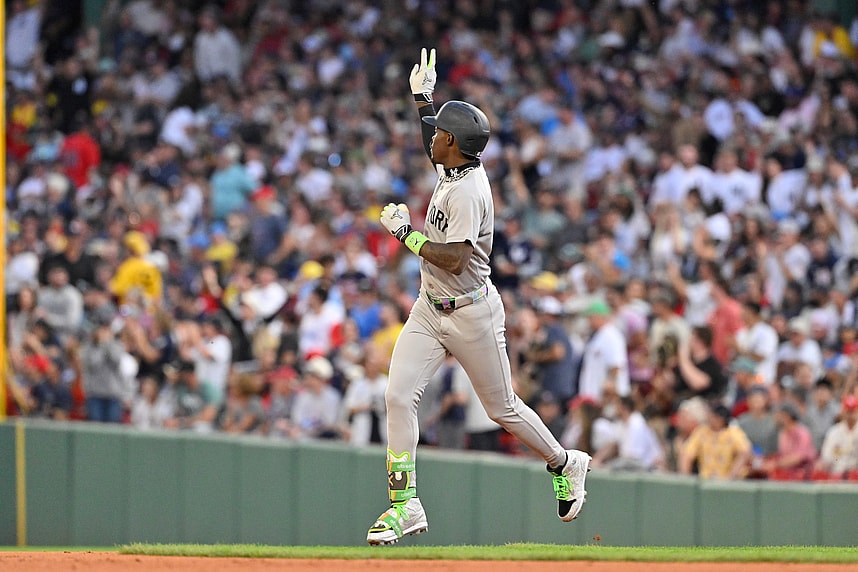
The Bichette Temptation: A Bat That Don’t Quit
On the surface, Bo Bichette is exactly the kind of high-contact, right-handed bat the Yankees have craved to balance their lineup. The 27-year-old is coming off a stellar 2025 season with the Toronto Blue Jays, hitting .311 with an .840 OPS and 44 doubles, proving he can spray the ball all over the field. Unlike Chisholm, whose game is built on explosive moments and high strikeouts, Bichette offers a relentless approach that puts the ball in play, a skill that plays beautifully in October.
The kicker is that Bichette is reportedly willing to move to second base, admitting that his days as a shortstop are likely numbered due to a flooded market and his own defensive metrics. A lineup featuring Bichette hitting .300 ahead of Aaron Judge is a terrifying prospect for opposing pitchers, adding a layer of consistency that Chisholm’s “all-or-nothing” swings sometimes lack.
The algorithm hides the best Yankees news; make sure you pin Empire Sports Media on Google News so you don’t miss a beat.
Trading Gold for Lead? The Defensive Drop-Off
However, replacing Chisholm with Bichette at second base is statistically terrifying when you look at the glove work. Chisholm has evolved into a legitimate defensive asset, ranking in the 88th percentile for range (Outs Above Average), using his elite athleticism to erase mistakes up the middle. In stark contrast, Bichette was a defensive liability at shortstop last season, posting -13 Outs Above Average (1st percentile) and grading out poorly in arm strength.
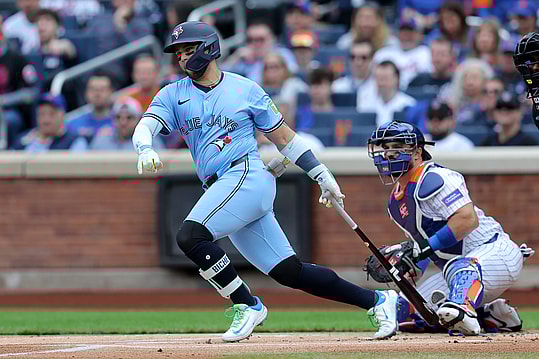
Moving Bichette to second base might hide some of those deficiencies, but it won’t fix his declining sprint speed or the fact that he has dealt with recurring calf and knee injuries that have sapped his mobility. You are essentially trading a 30-steal threat who covers ground like a gazelle for a guy who might be a designated hitter in three years.
Looking Ahead: A Gamble on Health vs. Hype
If Cashman makes this major mistake of trading Jazz Chisholm Jr., he is betting that Bichette’s bat is so transcendent that it masks the defensive downgrade and the injury risks. It is a move that screams “win now” at the expense of athleticism, and if Bichette’s knees don’t hold up, the Yankees will be left watching Chisholm thrive elsewhere while they pay a second baseman $25 million a year to jog to first. This is the kind of high-wire act that defines careers, and right now, Cashman looks ready to walk the line.

More about:New York Yankees
