Alexander Wilson
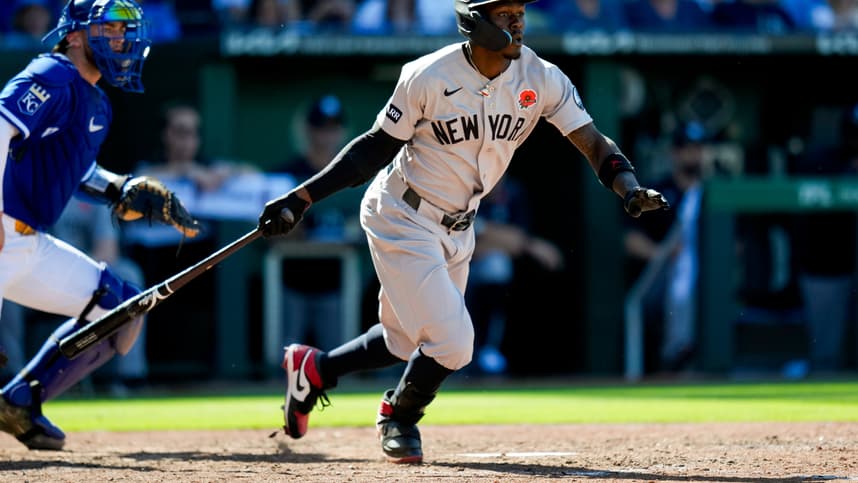
The NY Yankees can like Jazz Chisholm’s talent and still know where the contract line has to be. I think that is the uncomfortable part of this whole thing.
Chisholm came into the season with superstar goals, a loud personality, and every reason to believe his 2025 production could turn into a massive payday. Through the first chunk of 2026, the conversation has shifted. The player is still electric in flashes, but the overall production has not backed up a premium second-base contract.
He is sitting at .222/.298/.352 with four homers, 12 stolen bases, an 86 wRC+, and 0.7 WAR, which is a long way from the 2025 version that produced 31 homers, 31 steals, an .813 OPS, and a 126 wRC+. That gap matters because Chisholm is playing on a $10.2 million salary in his final year before free agency, and the next number will be judged against star expectations, not vibes.
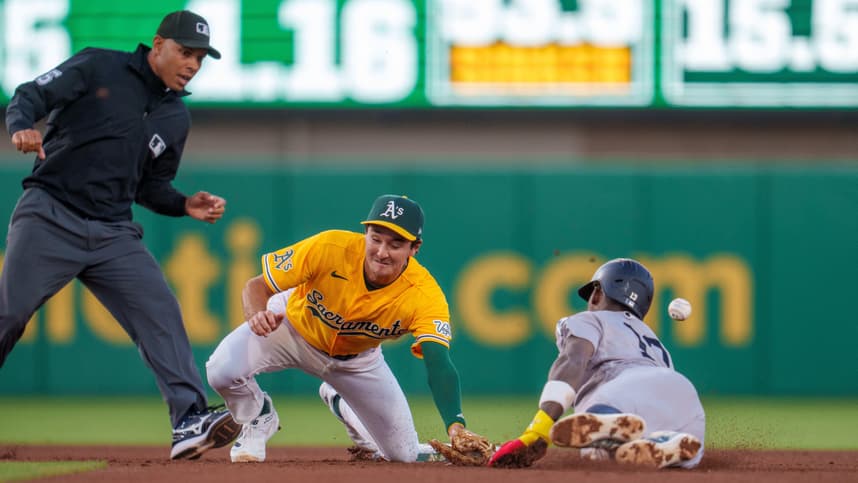
The bat has not made the case yet
Chisholm’s speed still plays. His athleticism still shows up. The Yankees can still use his energy, defensive range, and ability to pressure pitchers when he reaches base.
The problem is that second base is not a spot where the Yankees usually throw around franchise-level money, and ordinary offense from that position does not change the organizational math. If Chisholm is producing closer to league average than impact territory, the Yankees are not going to treat him like a centerpiece.
The profile also comes with volatility. The strikeouts remain part of the package, the on-base percentage is under .300, and the slugging has not carried enough weight to offset those empty stretches. A player can be useful with that combination, but useful is not $30 million-plus territory.
Cashman already gave the hint
Brian Cashman did not sound like a front-office executive rushing toward an extension when he discussed Chisholm’s situation over the winter, saying the Yankees tend to “let these things play out, for better or worse”. That quote feels even more relevant now.
The Yankees are not allergic to paying elite players. They paid Aaron Judge, they paid Gerrit Cole, and they have shown they will spend when the player changes the team’s ceiling. But second base is different, and Chisholm has not made himself impossible to let walk.
If the ask lands in the superstar range, the Yankees should pass unless the next few months look completely different. A shorter deal or a lower annual value makes more sense, something closer to strong-regular money than franchise-bat money. In practical terms, that probably means the Yankees are far more comfortable in the mid-tier range than anything resembling a $35 million annual commitment.
The recent Jazz climb helped quiet the panic, but it did not solve the future. Chisholm still has time to change the argument. Right now, though, the Yankees may already know the ceiling they are willing to pay for, and it is almost certainly lower than the number Jazz wants.

More about:New York Yankees