
 Alexander Wilson
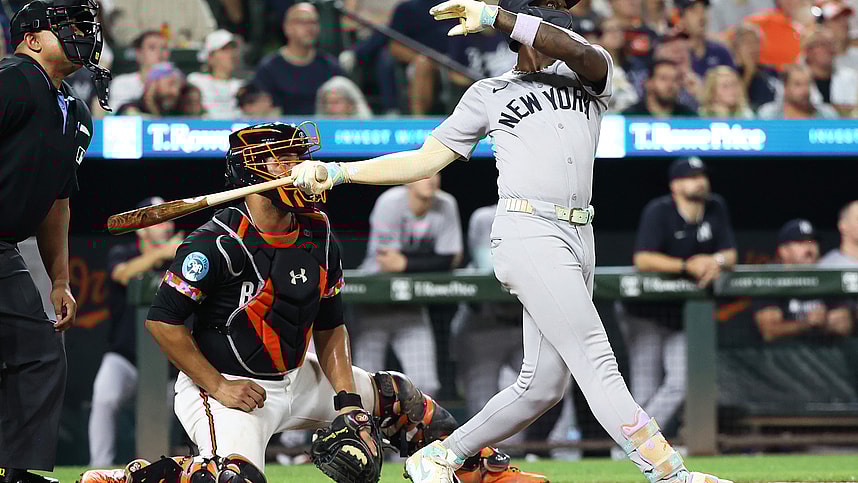
General Manager Brian Cashman just sent a shiver down the spine of every Yankees fan who values electricity over efficiency, publicly stating that the team is “open-minded” about trading star infielder Jazz Chisholm Jr.
Via the MLB Network, Cashman didn’t exactly shut down the rumors, choosing instead to dangle the possibility of moving one of his most dynamic assets if the right offer materializes.
While “open-minded” sounds like standard executive speak, in the Bronx, it often signals that a player is being actively shopped, and moving Chisholm without a concrete replacement plan would be a high-stakes gamble that could backfire spectacularly.
Trading a player coming off a 30-30 season isn’t just bold; it borders on reckless if the return isn’t immediate, championship-caliber talent. Chisholm was a force of nature in 2025, slashing .242/.332/.481 while launching 31 home runs and swiping 31 bases, providing the rare power-speed combination that most teams spend decades searching for. He posted a 126 wRC+ and accumulated roughly 4.4 WAR, proving that he isn’t just a flash in the pan—he is a legitimate engine that deepens the lineup behind Aaron Judge.
The algorithm hides the best Yankees news; make sure you pin Empire Sports Media on Google News so you don’t miss a beat.

The Contract Clock Is Ticking
The logic behind exploring a trade is purely financial and contractual, as Chisholm has just one year remaining in arbitration before hitting unrestricted free agency after the 2026 season.
The Yankees seemingly have no intention of handing him the massive long-term extension he will likely demand, meaning his trade value will never be higher than it is right now. Cashman knows that if he waits until the deadline or next winter, the return for a rental player diminishes significantly, forcing the front office to maximize the asset while they still control his destiny.
However, the “pros” of replenishing the farm system or acquiring pitching depth pale in comparison to the “cons” of removing a spark plug from a clubhouse that desperately needs his swagger.
Chisholm brings an energy that the Yankees often lack, and his ability to play both second base and third base gives manager Aaron Boone critical versatility. Trading him creates an immediate vacancy in the middle of the infield and the batting order, forcing the Yankees to rely on unproven prospects or bargain-bin veterans to replace 30 home runs and 30 steals.
Looking Ahead: A Dangerous Game of Chicken
If Cashman pulls the trigger on a Jazz Chisholm trade without a competent backup plan, he risks stripping the team of its athleticism just as the championship window is wide open.
The Yankees are better with Chisholm causing havoc on the basepaths, and unless the return package includes a frontline starter or an equal offensive threat, this is a risk not worth taking. Sometimes the best move is to ride the wave for one more year and worry about the contract later, rather than selling a star simply because you don’t want to pay him in 2027.

More about:New York Yankees
