
 Alexander Wilson
If you were hoping for one more splashy signing to bolster the bullpen or rotation, you might want to look away. The New York Yankees have effectively maxed out their credit card, and the bill coming due is enough to make Hal Steinbrenner sweat through his suit. With the ink drying on Cody Bellinger’s massive extension, the Yankees’ projected luxury tax payroll has ballooned to a staggering $324.8 million, placing them firmly in the deepest, darkest waters of the MLB luxury tax system.
According to the latest projections, the Bombers are currently sitting in the 4th Tier of the luxury tax, facing a 50% surtax as a “3+ Time Payor”. The math is brutal: for every dollar they spend right now, they are paying a penalty that effectively doubles the cost. The team is currently projected to be $80.8 million over the tax threshold, resulting in an estimated tax bill of $64.3 million—money that goes straight to the league, not onto the field.
The $22 Million Mistake: Trent Grisham
When we look at why the payroll is this bloated, it isn’t just the superstars; it’s the inefficiencies. The most glaring example is Trent Grisham. The Yankees took a calculated risk by extending the $22.025 million Qualifying Offer, hoping he would decline it in search of a multi-year deal elsewhere. Instead, he accepted, locking the Yankees into paying solid starter money for a centerfielder who is experiencing defensive declines.
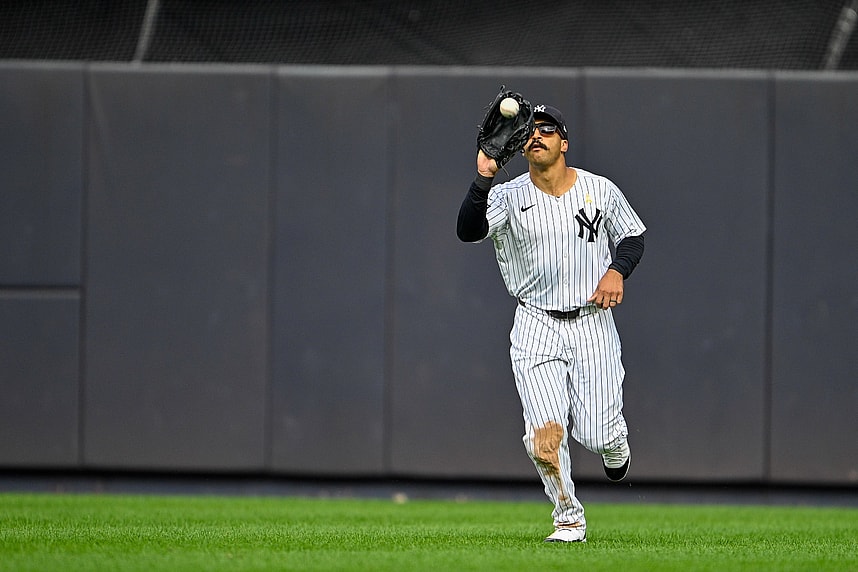
Grisham can still manage defensively, and the Yankees believes hi bat is sustainable, but paying $22 million for a guy who might regress badly is the kind of roster clogging that prevents winning teams from making nimble moves at the deadline. That single contract is currently eating up nearly 7% of the entire payroll, a massive amount for a volatile asset.
The “New” Money: Bellinger and McMahon
Bringing back Cody Bellinger was necessary, but it wasn’t cheap. His new deal carries a $32.5 million luxury tax hit for the 2026 season. While he stabilizes the lineup, that number puts immense pressure on him to replicate his 2025 production. If he regresses, that contract becomes an anchor instantly.
Then there is Ryan McMahon. The third baseman carries an $11.6 million luxury tax hit, which seems palatable until you realize it’s pushing the team further into the penalty tax bracket. He’s a solid player, but is he the missing piece that justifies a $64 million tax bill? That remains to be seen.
The “Big Three” Pitchers Are Eating $90 Million
The rotation is where the money is truly concentrated. Between Gerrit Cole ($36 million), Max Fried ($27.25 million), and Carlos Rodón ($27 million), the Yankees have over $90 million tied up in three arms. With two of the three carrying injury risks or rehab timelines heading into 2026, the return on investment here is terrifyingly fragile.
Brian Cashman has built a Ferrari, but he’s paying for it with a high-interest loan. The roster is set, the budget is blown, and the financial flexibility is gone. This team has to win now because the investments are becoming more volatile by the day.

More about:New York Yankees
