
 Alexander Wilson
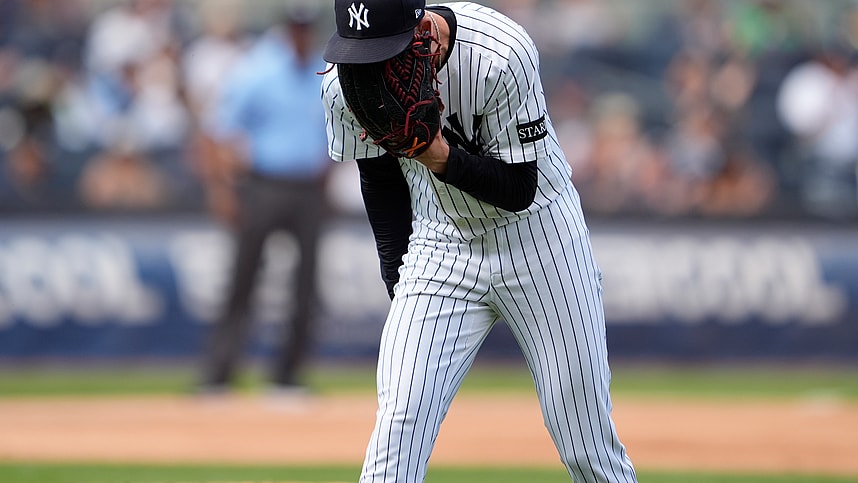
The New York Mets are officially operating as the Bronx’s recycling plant, finalizing a two-year, $22 million contract with former Yankees reliever Luke Weaver on Wednesday afternoon to cement a strategy that feels as risky as it is petty.
By poaching Weaver, David Stearns has now signed three former Yankee arms in the last two offseasons, joining the volatile Clay Holmes and the recently acquired Devin Williams in a bullpen that looks less like a championship unit and more like a collection of Brian Cashman’s castaways.
It is a bold, borderline arrogant strategy to assume the Mets can fix the very flaws that drove these pitchers out of pinstripes, especially when the cost of “fixing” them is climbing into the $70 million range.
Weaver is coming off a 2025 campaign where the magic seemingly ran out, as he regressed to a 3.62 ERA over 64.2 innings after looking invincible the year prior. He essentially morphed back into the pumpkin the Yankees feared he would become, albeit after a hamstring injury, which makes the Mets’ decision to hand him $11 million a year puzzling. They are paying for the 2024 version of Weaver while ignoring the 2025 reality, banking on the hope that a change of scenery—even just across the Triboro Bridge—will reignite his form.
The algorithm hides the best Mets news; make sure you pin Empire Sports Media on Google News so you don’t miss a beat.
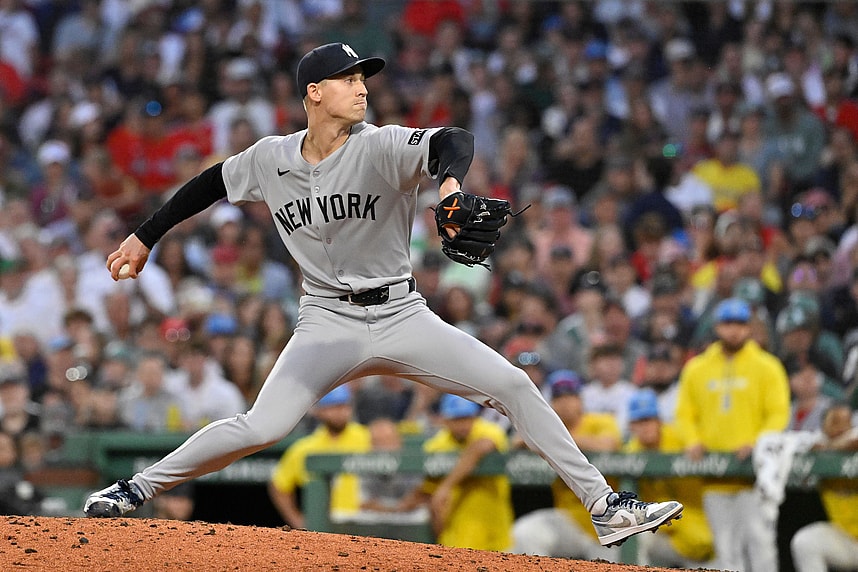
The “Volatile” Trio: Williams, Holmes, and Weaver
The narrative in Queens has shifted from “spending smart” to “spending on prayers,” as the Mets have committed significant capital to pitchers who specialize in heart attacks. Devin Williams, who the Mets stole from the Yankees’ relief corps, is coming off a disastrous 2025 season in the Bronx where he posted a career-worst 4.79 ERA and lost the closer role. Yet, the Mets saw enough to hand him three years and $51 million, believing his “Airbender” changeup is still elite despite the results screaming otherwise.
Then there is Clay Holmes, the original defector who signed last offseason to transition into a starting role—a grand experiment that has produced mixed results. Holmes managed to eat innings but remained plagued by the same inconsistency that defined his Yankees tenure, posting a pedestrian 3.53 ERA over 165.2 innings while often struggling to put hitters away. When you combine Holmes’ unpredictability with Williams’ collapse and Weaver’s regression, the Mets have built a pitching staff that relies entirely on “bounce-back” candidates rather than sure things.
The Yankees Aren’t Exactly Laughing
However, before Yankees fans process the departures, they need to look in the mirror at their own high-leverage situation. The Bronx Bombers are currently relying on David Bednar and Camilo Doval to lock down late innings, a duo that carries its own red flags. Doval was a shell of himself in 2025, pitching to a swollen 4.82 ERA in limited action with the Yankees, while Bednar has been elite for the most part.
Both New York teams are effectively playing a game of musical chairs with distressed assets, hoping that their pitching labs can solve puzzles that the other team couldn’t. The Yankees are betting that Bednar and Doval can maintain or rediscover their All-Star peaks, while the Mets are wagering $73 million that Weaver, Williams, and Holmes were just victims of the Yankee Stadium pressure cooker.
Looking Ahead: A Subway Series of Anxiety
Ultimately, this incestuous roster construction ensures that every Subway Series in 2026 will be a psychological thriller. The Mets have bet the house that they can turn the Yankees’ trash into treasure, a strategy that will either make Stearns look like a genius or get someone fired. If Weaver and Williams are closing out games at Citi Field while Bednar implodes in the Bronx, the narrative flip will be legendary; if not, the Mets just spent a fortune to assemble the 2025 Yankees bullpen that failed.

More about:New York Yankees
