
 Alexander Wilson
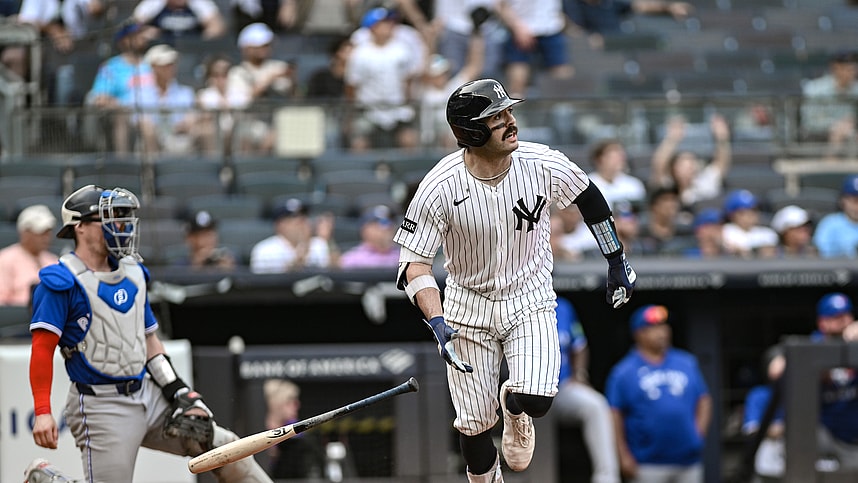
The rules of catching are changing. That is not dramatic language; it is the most important structural shift the position has seen in a generation, and it matters enormously for how the New York Yankees should be thinking about Austin Wells heading into 2026.
For decades, teams built their catching depth around defense first. Framing, blocking, game-calling — the guys who could squeeze a strike out of a borderline pitch were worth their roster spot regardless of what they did at the plate. Wells fit comfortably in that mold entering last season. His framing grades were excellent. His arm was good enough. The bat was the question, and the organization was willing to live with some offensive uncertainty as long as the glove carried him.
The Automated Ball-Strike Challenge System changes that calculus. Starting Opening Night, every team carries two challenges per game to review any ball or strike call. The human umpire still makes the live call, but the margin for elite framers to manufacture strikes on pitches outside the zone just got meaningfully smaller. The era of building your lineup around a defensive-first catcher is not over, but the balance is shifting. Offense at the position is becoming more valuable by the season.
Wells knows it. His bat this spring suggests he knows exactly what is at stake.
What Wells Has Shown and What He Has Not
Wells posted a 107 wRC+ as a rookie in 2024 across 115 games — .229/.322/.395 with 13 home runs, 55 RBIs, a 21% strikeout rate, and a walk rate above 11%. He was disciplined, patient, and showed genuine pull-side power at a ballpark perfectly designed for a left-handed hitter who can elevate. He finished third in Rookie of the Year voting and looked like a breakout waiting to happen.
Last season, it did not happen. He hit .219/.275/.436 with a 94 wRC+ — six percent below league average. The walk rate fell off a cliff. The power was still real, but the overall profile felt like a hitter trying to force things rather than trust his process.
The mechanical culprit was a load change mid-season. Wells swapped the quiet toe-tap that powered his 2024 approach for a bigger leg kick. More movement sounds like more energy, but in this case it created more timing problems than power. A bigger load requires more time to complete. More time means you have to commit earlier. Commit earlier and suddenly you are catching up to fastballs rather than attacking them, and you are sitting dead on breaking pitches that you should be laying off.
What the Swing Comparison Actually Shows
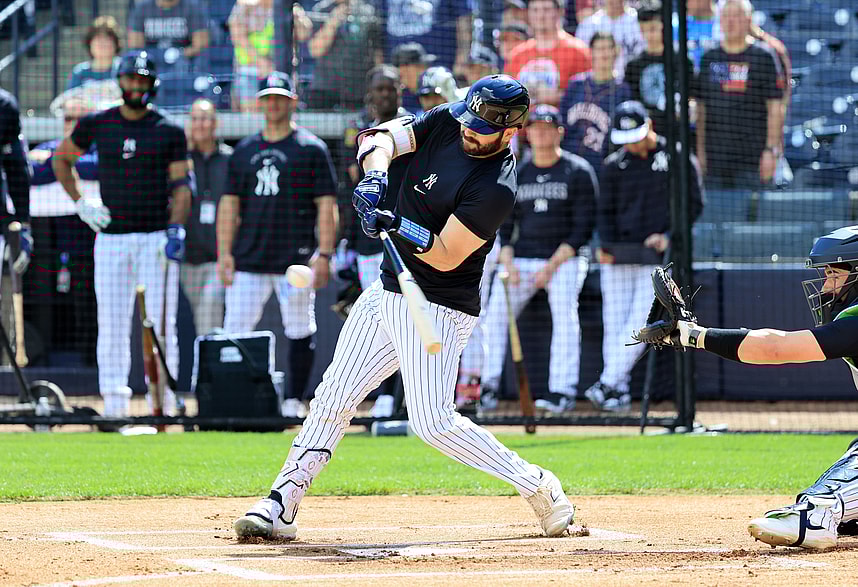
The video below tells the story more clearly than words can. The video shows Wells in the 2026 World Baseball Classic on top and his 2025 Yankees swing on the bottom, synced at the same moments in the swing.
In the first frame, the setup: the 2026 Wells has his hands elevated and in a natural attack position, bat angled and ready. The 2025 Wells has the bat sitting lower, weight distributing differently at rest. It is a subtle difference at address, but subtle differences in setup compound into large differences at contact.
The load: the WBC version shows a clean, compact toe-tap — his front foot barely leaves the ground before planting. The 2025 version has a more pronounced kick, the front leg lifting higher before coming back down. The higher the kick, the more moving parts have to sync back up before contact. When they do not sync, you see weak contact, early swings, or late takes on pitches you should crush.
By the mid portion of the video — contact — the payoff is visible. The 2026 swing is already through the zone with extension and a flat, direct barrel path. The 2025 version arrives at the same moment but with a slightly different plane, the barrel coming in at a steeper angle that limits his ability to stay through the zone and drive balls to the opposite field or up the middle.
The end result, the follow-through, makes it definitive. The 2026 Wells is watching the ball go up and away — the follow-through is high, full, and balanced, the kind you see when a hitter has unloaded through contact rather than around it. That is what a properly timed, hands-elevated swing looks like when it works.
Why 2026 Is the Year
In WBC play for the Dominican Republic, Wells posted a 23.7% chase rate while swinging at 65.4% of pitches in the zone. Those are patient, controlled numbers. He also walked it off against Korea to send the D.R. to the semifinals — a moment that speaks to something beyond mechanics.
The Yankees drafted Wells 28th overall in 2020 because they believed in the bat. Defense became his calling card, but offense was always the dream. With the ABS system narrowing the framing advantage and Wells carrying a demonstrably cleaner swing into Opening Day, the conditions are finally aligned.
FanGraphs projects him for a 99 wRC+ this year — essentially league average. If the swing change is real and it sticks, that projection is conservative. The 2024 version of Wells was a 107 wRC+ hitter. There is no reason to believe the ceiling dropped between then and now.
The Yanks need their catcher to hit. Wells needs to prove 2024 was not a fluke. For once, the mechanics and the moment are pointing in the same direction.

More about:New York Yankees
