
 Quinton Fesq
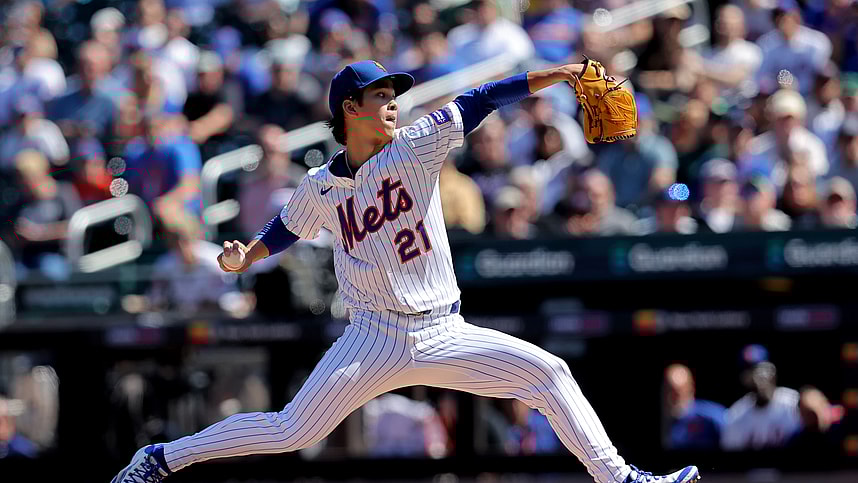
If you only looked at the back of Jonah Tong’s baseball card for his time in Binghamton last year, you’d see the best pitcher on planet Earth. A 1.43 ERA across 113.2 innings, with a crazy 179 strikeouts. That’s the kind of video-game stuff that rightfully earned him the MiLB Pitcher of the Year award.
But the issue is we don’t pay for a player’s minor league dominance; we pay for them to get outs in the bigs. When the Mets hit the panic button to send him to the majors in late August, reality checked in, and Tong was absolutely pummeled. Through his 18.2 major league innings, Tong posted a 7.71 ERA, with 9 walks, and gave up 3 homers. During his third start, the Texas Rangers lineup treated his “invisible” fastball like batting practice.
So are we watching a future frontline starter, or just another arm that can’t translate their “stuff” into “pitchability”?
The Metric That Matters: 19.8 Inches
Let’s ignore the ugly MLB ERA for a second. It’s a small sample size of five starts. What doesn’t slump is just how insane his fastball really is.
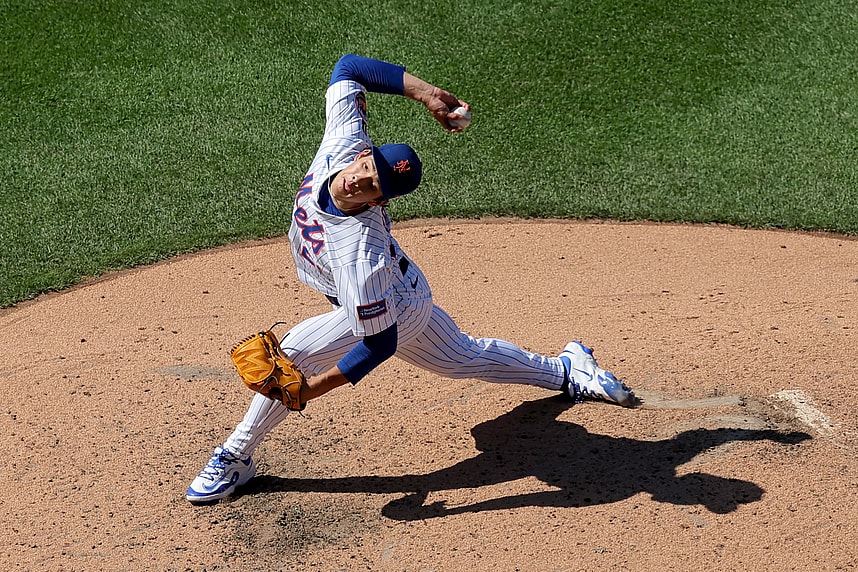
Tong’s Statcast data from his brief call-up showed what the scouts have been telling us about: his four-seam fastball averages 19.8 inches of Induced Vertical Break (IVB). For context, the MLB average is around the 15-16 inch range. When you combine his elite vertical break with a deceptive Lincecum-esque delivery that hides the ball until the last millisecond, you get a pitch that hitters couldn’t touch with a paddleboard.
His 25.3% strikeout rate in the majors, despite the shellackings, tells you the raw stuff is there. When Tong was in the zone, big league hitters were swinging under the heater, but they quickly realized they just had to stop swinging.
The Arsenal Gap
The book on Tong in September was simple: sit dead red. He threw his fastball 57% of the time. While his “Vulcan” changeup (27% usage) showed flashes of being a legitimate out-pitch against lefties, his curveball was a non-factor, being used just 12% of the time.
In Double-A, you can blow 95 mph with 20 inches of vertical break past guys even if they know it’s coming. In the NL East, if you can’t land the curveball for a strike, then hitters will simply eliminate the bottom of the zone and hunt the high heat. And that’s exactly what happened. Tong’s walk rate shot up to 10.3% when he couldn’t entice chases as hitters realized he wasn’t commanding his secondary pitches.
Looking Ahead
Tong is not a bust; he was a 22-year-old kid who was rushed to the show before he had time to master a third pitch. The Mets did him no favors by bypassing Triple-A almost entirely (just two starts for Syracuse).
For 2026, Tong’s ceiling would be a legitimate number two starter who misses bats at an elite level. But his floor is a high-leverage reliever who throws 97 mph heaters for an inning at a time. Expect him to start the year in Syracuse to prove he can command the curveball, and if he brings that walk rate down even marginally, the 7.71 ERA will be nothing more than a footnote in a long career.
Fortunately, the acquisition of Freddy Peralta provides a nice cushion for the Mets to take their time with Tong.
More about:New York Mets
