
 Alexander Wilson
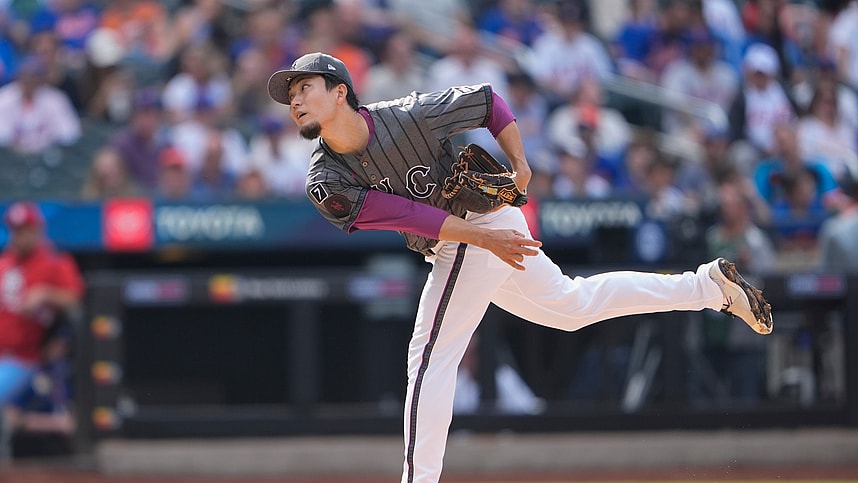
94.8 miles per hour.
That number represents a warning light flashing on the dashboard. It is a full 1.1 mph drop from where Kodai Senga’s fastball sat during his debut season in 2023, and in the world of high-leverage pitching, losing a tick on your heater is often the first step off a cliff. The New York Mets have already shown they have zero interest in holding onto depreciating assets this winter.
We saw it Sunday. President of Baseball Operations David Stearns looked at the calendar, saw Brandon Nimmo’s contract running until 2030, and shipped him to Texas for Marcus Semien just to get the books in order. It was a cold, calculated move to escape a deal that was aging poorly.
Now, the crosshairs should be firmly fixed on Senga.
The Illusion of the ERA
If you just glance at the back of the baseball card, you might think Senga is doing just fine. He posted a 3.02 ERA over 113.1 innings last season. On the surface, that looks like a reliable number two starter. But smart front offices don’t pay for ERA; they pay for the underlying metrics that predict the future. And Senga’s peripherals are screaming “regression.”
The 32-year-old is walking a tightrope. Last year, the command simply wasn’t there.
- Walks: He issued 4.37 free passes per nine innings.
- Strikeouts: His K-rate dipped to 8.66 per nine.
- Velocity: The aforementioned drop to 94.8 mph.
When your strikeouts go down and your walks go up, you are living on borrowed time. You are relying on luck and defense to bail you out of jams that you used to solve yourself. The “Ghost Fork” is a legendary pitch, but it only works if hitters respect the fastball. When the velocity dips and the location scatters, big league hitters just sit on the mistake.
Injuries and the Trust Factor
The biggest currency a pitcher has is availability. Right now, the New York Mets cannot trust Senga to take the ball every fifth day. Between the shoulder fatigue, the calf issues, and the general wear and tear of a pitcher in his 30s, he has become a luxury item that is rarely available to be used.
He is currently halfway through a five-year, $75 million contract. At $15 million per season through 2027, the money isn’t crippling. In fact, for a healthy mid-rotation starter, it’s a bargain. But that is the catch. He isn’t healthy, and the trends suggest he won’t be a mid-rotation anchor for much longer.
Sell Before the Crash
The Nimmo trade proved that Stearns is trying to make this roster more agile. He wants to shed the “deadweight” of contracts that restrict flexibility.
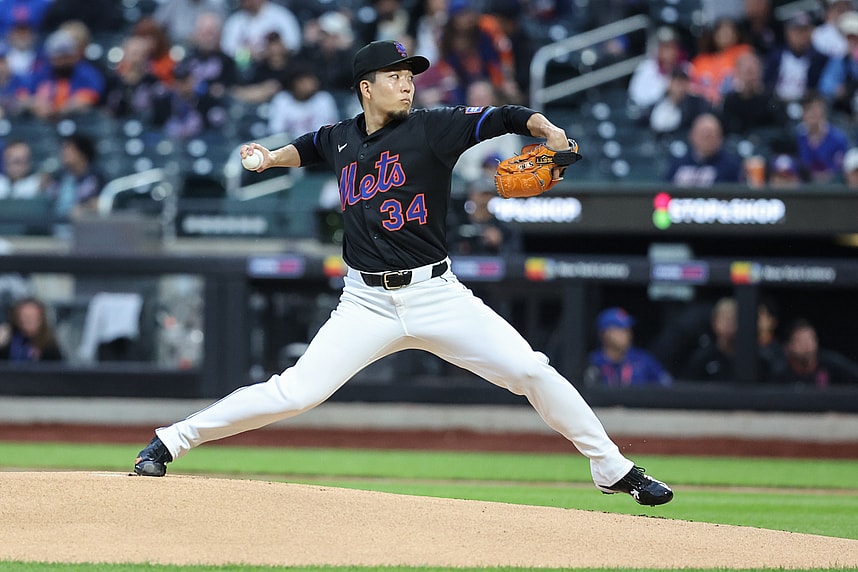
Senga still carries name value. He still has that ERA to point to during negotiations. There is a team out there desperate for pitching that will convince themselves they can fix the mechanics or manage the workload better. The Mets need to find that team immediately.
Allocating $15 million to a pitcher who gives you 110 stressful innings is bad business. That money could be better spent on a durable innings-eater or two high-leverage bullpen arms. The Mets are cleaning some out the closet, and before Senga’s value completely evaporates along with his velocity, they need to cut the cord.

More about:New York Mets
