
 Alexander Wilson
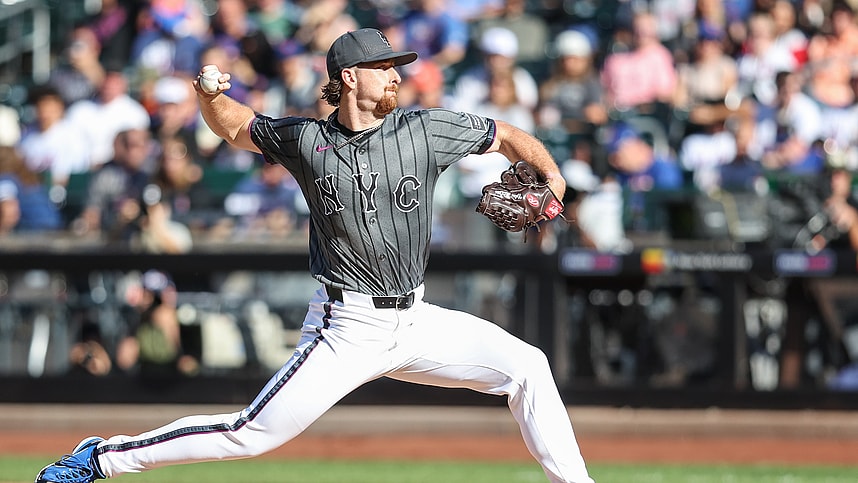
The Mets have spent the winter chasing the biggest names on the pitching market. We have discussed the “inevitability” of signing a workhorse like Framber Valdez or a finesse artist like Ranger Suárez, and we have even entertained the fantasy of a blockbuster trade for Tarik Skubal. These are the moves you make when you are desperate for a frontline starter. But what if the Mets’ 2026 ace isn’t in Houston, Philadelphia, or Detroit? What if he’s already sitting in Port St. Lucie, waiting to unleash a curveball that defies physics?
Nolan McLean is no longer just a “two-way curiosity” or a fascinating prospect; his 2025 cameo proved he is a legitimate weapon. In eight starts down the stretch, McLean posted a dazzling 2.06 ERA over 48 innings, striking out 57 batters while walking just 16. While the sample size is small, the underlying metrics suggest this wasn’t a fluke—it was a breakout.
The Arsenal: A Pitch Mix That Unlocks “Ace” Potential
McLean’s transition from a two-way player to a full-time pitcher has unlocked a level of velocity and spin that few starters can match. Breaking down his 2025 data paints the picture of a pitcher with elite stuff who is learning how to weaponize it.
The “Death” Curveball
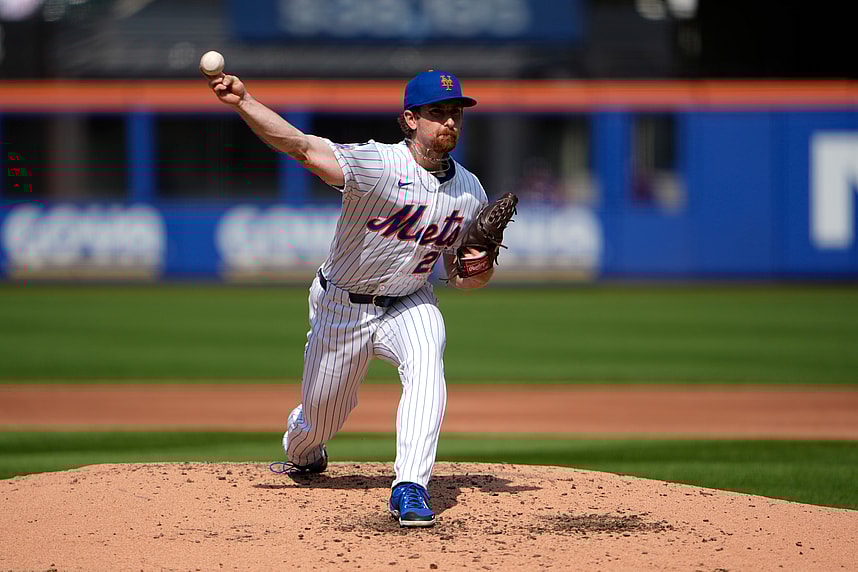
If there is one pitch that cements McLean’s ace potential, it is his curveball. According to the data, this pitch was virtually untouchable in 2025.
- Usage: 15.8%
- Velocity: 80.0 MPH
- Batting Average Against: .074
- Whiff Rate: 50.0%
When half of the swings against a pitch result in a miss, you aren’t just pitching; you are dominating. The curveball generated a minuscule .088 wOBA, meaning hitters essentially turned into pitchers when they swung at it. It is the perfect “put-away” pitch that allows him to escape jams and pile up strikeouts.
Elite Velocity
McLean isn’t just tricking hitters with spin; he is overpowering them. His four-seam fastball averaged 95.8 MPH last season, limiting hitters to a .154 batting average and generating a solid 37.1% whiff rate. He pairs that with a hard sinker (94.8 MPH) that he uses nearly 28% of the time to induce weak contact (.268 wOBA). Having two distinct fastballs that both sit in the mid-90s gives him a margin for error that most young pitchers dream of.
The Sweeper Paradox
Interestingly, the one area for improvement is arguably the pitch scouts raved about the most: his sweeper. In 2025, it was his most hittable offering, surrendering a .361 batting average and a .528 slugging percentage. While the spin traits are elite, hitters were seeing it well last year. The good news? If this is his “problem” pitch, the fix is likely mechanical or location-based. If he can refine the sweeper to match the dominance of his curveball, he becomes virtually unhittable.
Why This Changes the Offseason Strategy
The emergence of McLean allows President of Baseball Operations David Stearns to operate from a position of power. He doesn’t have to overpay Framber Valdez on a six-year deal out of desperation. He doesn’t have to empty the farm for Skubal.
If the Mets sign a veteran like Valdez or Suárez, it shouldn’t be to lead the staff—it should be to stabilize it so McLean can ascend. With a fastball that touches 98 MPH and a curveball that hitters can’t touch, Nolan McLean has all the ingredients to be the homegrown ace the Mets have been waiting for since the days of Jacob deGrom. The future isn’t coming; it arrived in 2025, and it’s throwing 96 MPH.

More about:New York Mets
