
 Alexander Wilson

The Mets have been aggressive in rebuilding their bullpen this winter, but amidst the headline-grabbing acquisition of Devin Williams, the signing of former Yankees reliever Luke Weaver might be the savviest gamble of the entire offseason.
President of Baseball Operations David Stearns handed Weaver a two-year, $22 million contract—a deal that raised eyebrows given how Weaver’s tenure in the Bronx ended. But if you look past the catastrophic postseason implosion, the Mets might have just secured a high-leverage arm at a discount because the Yankees couldn’t fix a specific, correctable flaw.
The “Tip” That Torpedoed a Season
To understand why Weaver is a bounce-back candidate, you have to understand why he fell apart. Weaver was a revelation for the Yankees in 2024 and for the first half of 2025, but his season unraveled down the stretch due to a pitch-tipping issue that became an open secret in the league.
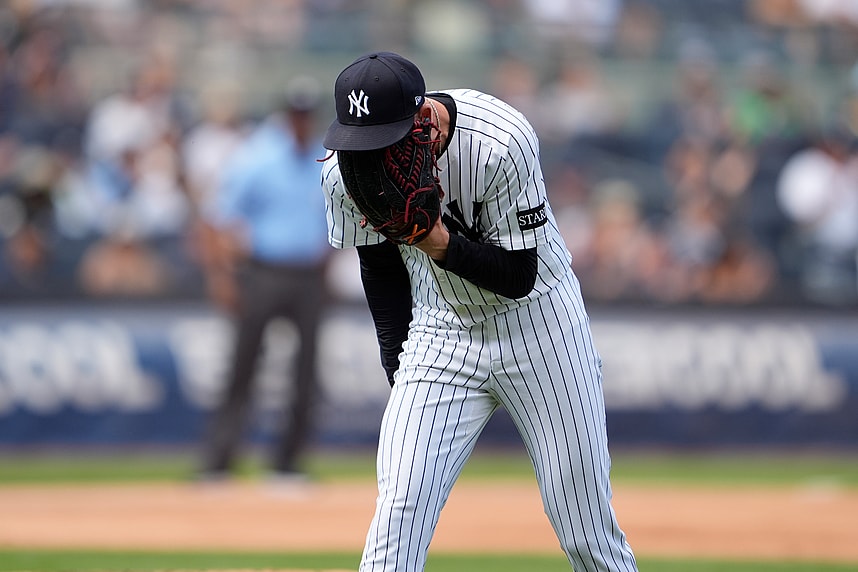
The consequences were disastrous in October. In the playoffs, Weaver was virtually unusable, surrendering five earned runs while recording just one out across three appearances against the Red Sox and Blue Jays. He looked lost on the mound, admitting to reporters that he was trying to make mechanical adjustments on the fly to stop tipping his pitches, which only led to “paralysis by analysis.” He wasn’t getting beat because his stuff was bad; he was getting beat because hitters knew exactly what was coming.
The algorithm hides the best New York Mets news; make sure you pin Empire Sports Media on Google News so you don’t miss a beat.
The Stuff Is Still Elite
Despite the ugly finish, Weaver’s underlying metrics from 2025 paint the picture of a pitcher who still has it.
- 2025 Regular Season Stats: 3.62 ERA, 1.02 WHIP, 72 strikeouts in 64.2 innings.
- Velocity: His fastball still sat at 95 mph, proving there was no physical drop-off.
- Strikeout Ability: He maintained a healthy strikeout rate, fanning over a batter per inning.
The Mets are betting $11 million a year that they can fix the tipping issue in a low-pressure environment during Spring Training. If they do, they are getting the 2024 version of Weaver—a dominant setup man—without the long-term commitment usually required for elite relievers.
High AAV, Low Risk
This contract structure is a classic Stearns special. By offering a higher average annual value (AAV) on a short-term deal, the Mets secured legitimate upside while protecting themselves from long-term risk. If Weaver fixes his mechanics, the Mets have a steal. If he doesn’t, the commitment is off the books in two years. For a team looking to contend immediately, gambling on a guy whose primary issue is “hiding the ball better” is a risk worth taking every single time.

More about:New York Mets
