
 Alexander Wilson
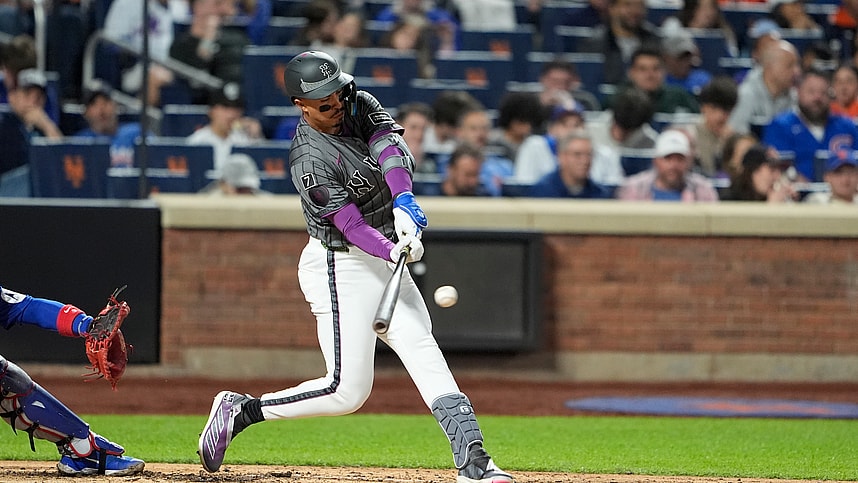
The New York Mets are facing a pivotal offseason decision that could define their 2026 campaign: how to replace the production of Pete Alonso at first base.
While the team has added veteran Jorge Polanco, relying on a career middle infielder with chronic knee issues to handle the rigors of first base is a gamble David Stearns might regret. Reports indicate that the new Mets infielder had some training at first base in 2025, but expecting him to be a full-time solution is optimistic at best.
This leaves Mark Vientos as the most logical, yet volatile, internal option. Vientos offers a tantalizing combination of power and cost control, but his inconsistency at the plate and defensive shortcomings make him a polarizing figure in the organization. The Mets have team control over Vientos until 2030, keeping his cost significantly down and making him a valuable asset whether they decide to start him or trade him for pitching help.
A Tale of Two Seasons: The Offensive Regression
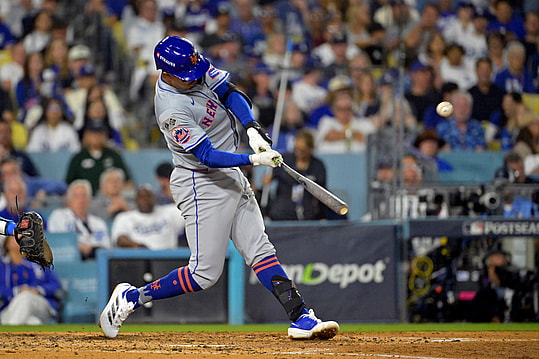
The primary concern with handing the keys to Vientos is the stark contrast between his breakout 2024 campaign and his regression in 2025. In 2024, Vientos looked like a legitimate middle-of-the-order threat, slashing .266/.322/.516 with 27 home runs and a robust 132 wRC+. He was a driving force in the lineup, proving he could punish major league pitching consistently.
However, 2025 was a sobering step backward. Over 121 games, his production dipped across the board, as he finished with just 17 home runs and a .702 OPS. His wRC+ plummeted to 97, signaling that he was actually 3% worse than the league-average hitter. While his hard-hit rate remained elite—ranking in the 89th percentile—his strikeout rate (28th percentile) and whiff rate (6th percentile) exposed holes in his swing that pitchers happily exploited.
Defensive Liabilities Cannot Be Ignored
If the bat isn’t producing at an elite level, Vientos becomes difficult to justify in the lineup because his glove provides no safety net. The metrics paint a picture of a player who struggles significantly in the field. In 2025, Vientos ranked in the 15th percentile for fielding run value and a dismal 6th percentile for range (Outs Above Average).
The Mets are trying to build a roster focused on run prevention, and placing Vientos at first base—a position he is still learning—could weaken the infield defense considerably. With Polanco also being a defensive downgrade, the Mets are stuck between a rock and a hard place: sacrifice defense for Vientos’ potential power, or look outside the organization for a more complete player.
Looking Ahead: The Decision on Vientos
Ultimately, the Mets must decide if Vientos is a long-term piece or a trade chip. His cheap contract through 2030 makes him attractive to rebuilding teams who can afford to let him work through his defensive struggles. For the Mets, who are in “win-now” mode, banking on a bounce-back season from a player with a .233 batting average and poor defense is a risky proposition. If they don’t trust him to take over for Alonso, trading him now while his power potential still holds value might be the smartest play.

More about:New York Mets
