
 Quinton Fesq
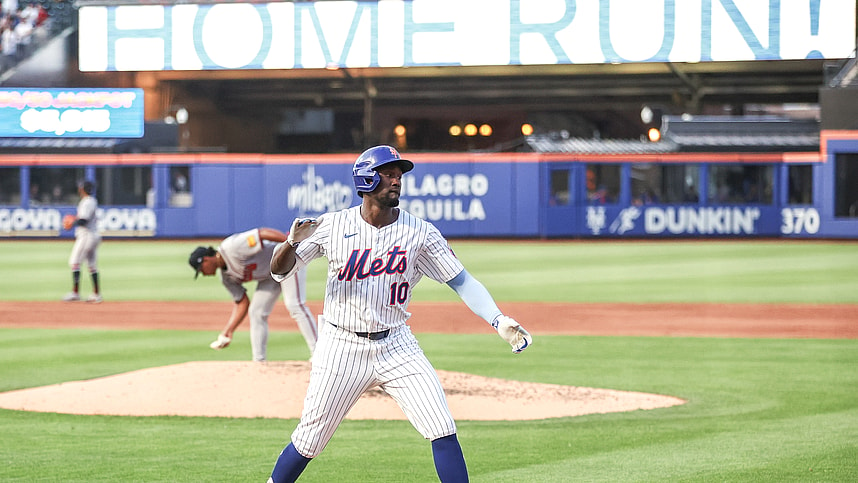
The story surrounding Ronny Mauricio has shifted from “when will he arrive?” to “what can he actually provide?” After Mauricio lost his entire 2024 season to a torn ACL, followed by spending the first half of 2025 shaking off the rust in Syracuse, Mauricio finally returned to Queens, and it was a mixed season of real potential and frustrating inconsistency. 2026 won’t be another developmental year for the young switch-hitting infielder, but instead it’ll be a make or break season where he must prove he can be a reliable piece of the Mets‘ future core, rather than just a trade chip with unpolished tools.
2025: Ronny Mauricio’s Return to the Mets
Last season, In 168 at-bats following his June return, Mauricio slashed a pedestrian .226/.293/.369, resulting in a .663 OPS and an wRC+ of 88, 12 percent below the league average. While the raw power was still evident with six homers in limited action, his inability to control the strike zone capped his ceiling. He struck out 29.3% of the time, a figure that becomes untenable when paired with an 8.2% walk rate that doesn’t nearly compensate for his swing-and-miss issues.
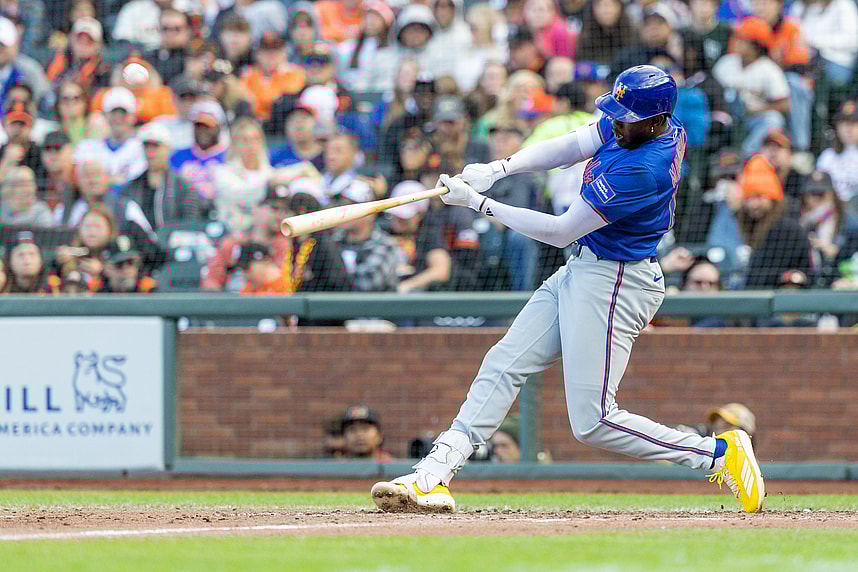
The promising aspect of Mauricio’s profile remains his ability to damage the baseball. When he was able to make contact in 2025, it was powerful, his average exit velocity sat at an insnae 91.2 mph, and his bat speed remains elite at 73.8 mph. However, “when” is the key word to acknowledge. His plate discipline metrics were very concerning, posting a 39.9% chase rate and a 33.9% whiff rate. What might be the most glaring concern was his inability to hit from the right side, batting abysmal .083 against lefties. If he cannot fix this issue, he risks being put into a strict platoon role.
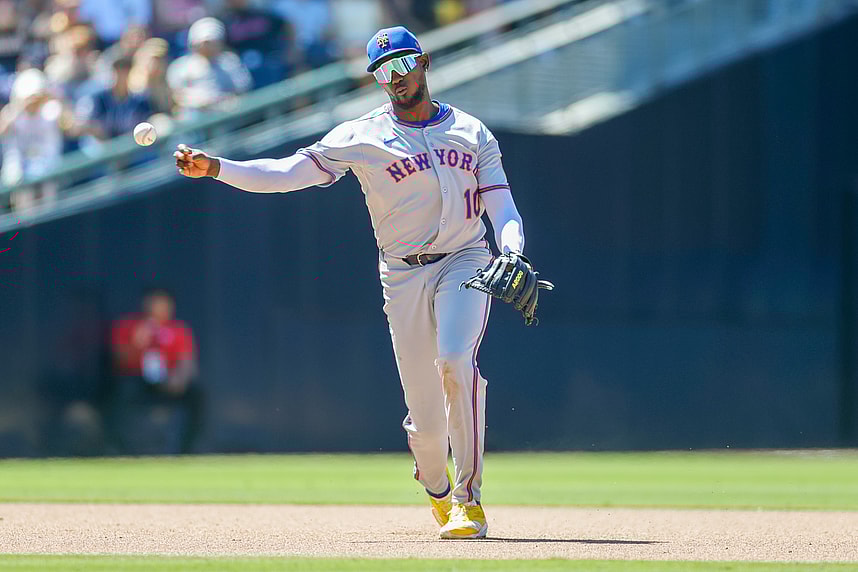
As for the defensive side, Mauricio actually provided a glimpse of hope. In 292.0 innings at third base, he posted +4 Defensive Runs Saved (DRS) and +5 Outs Above Average (OAA). Which was surprising for many, as he was viewed primarily as a shortstop-only prospect, and this defensive upside theoretically gives the Mets flexibility. However, with the roster addition of Bo Bichette made this offseason, that defensive value might not be enough to save his spot on the roster.
2026: Ronny Mauricio and the Mets’ Infield Logjam
Mauricio’s 2026 projection are down, as Steamer projects a slight rebound, expecting a slash line around .246/.302/.410 with roughly 5 home runs in 138 plate appearances. These numbers suggest a potential high-end bench player, but the path to those reps is steeper than ever. The biggest challenge for Mauricio isn’t just the pitching, it’s the transformation of the Mets’ roster.
With the recent blockbuster signings of Bo Bichette and Jorge Polanco, and the addition of Marcus Semien, the Mets’ infield is suddenly one of the most crowded in baseball. Francisco Lindor remains the anchor at short, while Bichette is slated to handle third base. This pushes Mark Vientos and Brett Baty into a battle for DH and utility reps, leaving Mauricio as the odd man out.
Mauricio’s 2026 could possibly start in Triple-A, as he has one minor league option left, and with utility player Vidal Bruján also in the mix, the Mets might prefer tog get Mauricio everyday at-bats in the minors rather than letting him rot on the bench. For Mauricio can show a refined approach this spring, he could force his way into this lineup. If his chase rate stays near 40%, his 117-mph exit velocity only becomes a “fun fact” rather than a functional tool.
There is also the very real possibility of a trade, as the Mets “close in on a new core,” Mauricio’s name has come up in rumors alongside Mark Vientos as potential trade chips. If he stays, the team must decide if he is a cornerstone or a change-of-scenery candidate. If he can’t force his way into the lineup this spring, then 2026 might be his final chapter in Queens. He has the tools, but the consistency is still lacking.
More about:New York Mets
