
 Quinton Fesq
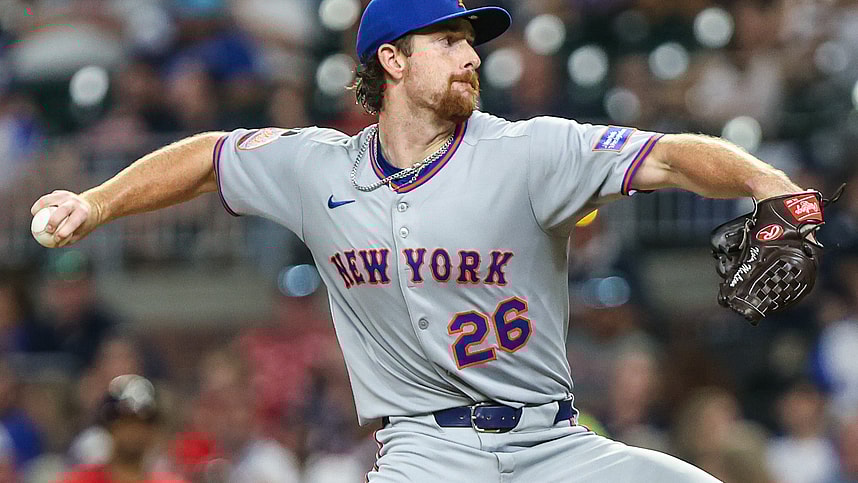
Nolan McLean finished his rookie season with a 5-1 record, a 2.06 ERA, a 1.04 WHIP, and 57 strikeouts over 48.0 innings. For a pitcher who made his MLB debut on August 16, that’s not a small sample fluke — that 2.06 ERA came alongside a 2.97 FIP and a 21.8% strikeout-minus-walk rate, tied for 17th best among starters with at least 40 innings. The performance was real. The upside is real. And the NY Mets front office, if it’s paying any attention, should be thinking about the next problem: what McLean costs when the market finally catches up to him.
Jon Heyman reported it plainly in March. No serious long-term talks yet. Both sides focused on 2026. And in the meantime, Nolan McLean is making $791,500 — $11,500 above the MLB minimum. He told the New York Post he’s “just happy to be here.” That quote tells you exactly where the leverage sits right now, and it won’t sit there for long.
What the Market Is Already Telling You
The pitcher extension market has moved fast, and the position player market has moved even faster. The difference between the two is worth understanding before the Mets try to thread the needle on McLean.
On the pitching side, the most instructive comps are Tanner Bibee and Garrett Crochet. Bibee signed a 5-year, $48 million extension with Cleveland entering his final pre-arbitration year, with 2 years of MLB service time at the time of signing. The Guardians got a productive, command-oriented starter who had already proven himself as a full-season rotation piece. Crochet agreed to a 6-year, $170 million extension with Boston just one start into his Red Sox career, after the team acquired him over the winter. Both deals reflect a simple reality: teams pay a massive premium once a pitcher’s durability and stuff are fully established. The early-career window is when the discount exists.
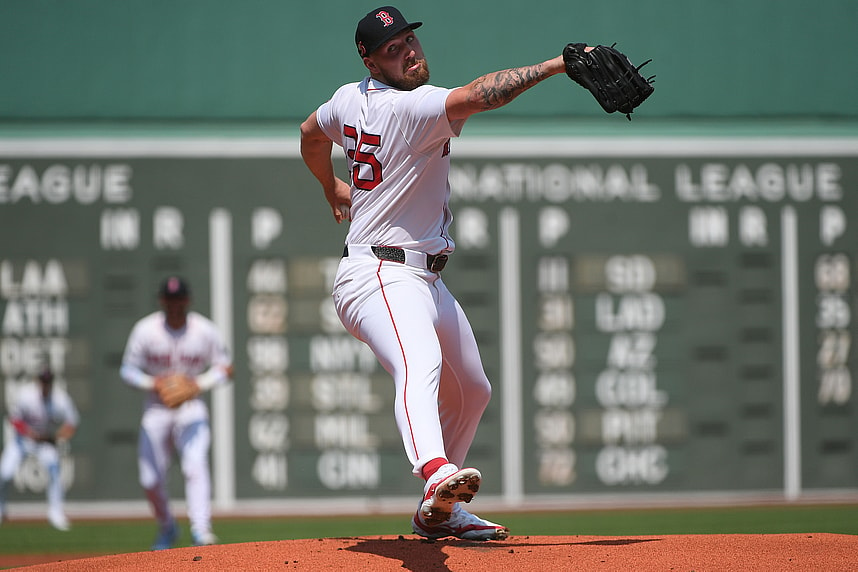
Position player extensions happen even earlier and even more aggressively, and the reason is straightforward — pitchers carry injury risk that makes teams hesitant to commit full value before a track record builds. Roman Anthony signed an 8-year, $130 million deal after fewer than 46 games in the big leagues. Jackson Merrill locked up 9 years and $135 million after 1 year of MLB service time. Those deals reflect a different calculus: an outfielder who can play is an outfielder who can play. A young pitcher is always one MRI away from a different conversation. That asymmetry is exactly why the Mets’ window to act on McLean is real, but it’s also why teams have historically been more cautious.
What Makes McLean’s Profile Different
Most early-extension pitchers in the comp table had one or two clear calling cards. McLean is operating at the intersection of 2 things that almost never coexist. His 60.2% ground-ball rate and 30.3% strikeout rate in 2025 made him just the second starter in the pitch-tracking era — after Lance McCullers Jr. in 2016 — to post a 60% ground-ball rate and a 30% strikeout rate in the same season. Ground-ball pitchers limit damage. Strikeout pitchers limit runners. McLean does both. That combination translates across ballparks, defensive configurations, and BABIP variance in a way that most young arms can’t claim.
He goes 6 pitches deep, anchored by a mid-90s sinker with elite ground-ball generation and a curveball spinning at over 3,200 rpms that produced a 50% whiff rate in 2025. The stuff isn’t fluky. It’s deep and varied in a way that tends to hold up over a full career, not just a hot September.
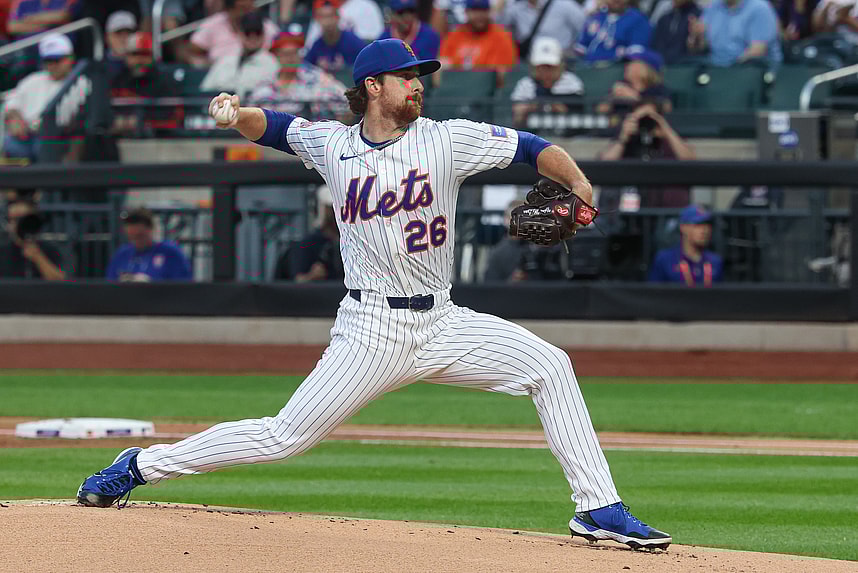
McLean doesn’t hit arbitration until 2029 and won’t reach free agency until 2032. The Mets have him under team control for 6 more seasons regardless. That creates a tempting internal argument — why pay a premium now when the leverage is already yours? The answer is that team control and locked-in cost certainty are not the same thing. Arbitration panels don’t grade on a curve.
If McLean gives the Mets 3 full seasons of this production, he will be due north of $20 million per year in arbitration by the time the process actually starts. The Bibee deal is the cleaner parallel: 2 years of service time, $48 million to buy out 3 arb years and 2 free agent years. McLean, with a higher ceiling and more dramatic stuff, would almost certainly command more.
What a Fair Number Looks Like
Bibee got $48 million after 2 years of MLB service time. Crochet got $170 million after 4 years of service time and one full season as a starter. McLean sits between those 2 data points on experience — less proven than Crochet, more electrifying than Bibee at the same age.
A deal in the range of 6 to 7 years and $80 to $110 million structured to kick in through arbitration and cover his first 2 to 3 free agent seasons would check every box for both sides. It represents a significant raise on $791,500. It represents a discount on what McLean would command if he pitches at this level for 2 more years and hits the open market as a 26-year-old. And it gives Mets president of baseball operations David Stearns the kind of rotation anchor cost certainty that lets you build the rest of the roster without recalculating every winter.
The comps from the position player side are a reminder of how quickly these windows close. Roman Anthony got locked up before anyone outside of Boston had seen him consistently. The Red Sox didn’t wait to see if he was who they thought he was. They paid to make the question irrelevant. The Mets don’t have to move tomorrow — but if McLean delivers another full season of what he showed in 2025, the conversation in March 2027 will be happening at a very different price point.
Right now he’s happy to be here. The Mets should be working to make sure that feeling is mutual, and contractually binding, before the rest of baseball drives up the cost of keeping him.
More about:New York Mets
