
 Andres Chavez
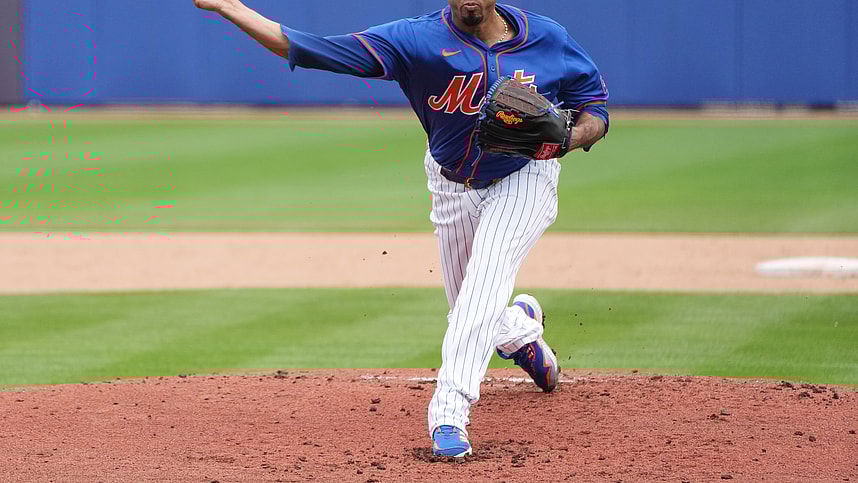
The first bullpen inning of April is still months away, but the damage was done in December.
The New York Mets entered the offseason knowing relief pitching would define it. Tyler Rogers, Ryan Helsley, Gregory Soto, and Edwin Diaz were all gone to free agency, leaving behind a bullpen that suddenly looked thin, unstable, and unfinished. You can survive losing depth pieces. You cannot casually replace a closer who once felt inevitable every time the ninth inning arrived.
That made retaining Diaz not just a priority, but a necessity. And when the Winter Meetings rolled into Orlando, the Mets were very much in the game.
A Negotiation That Drifted Sideways
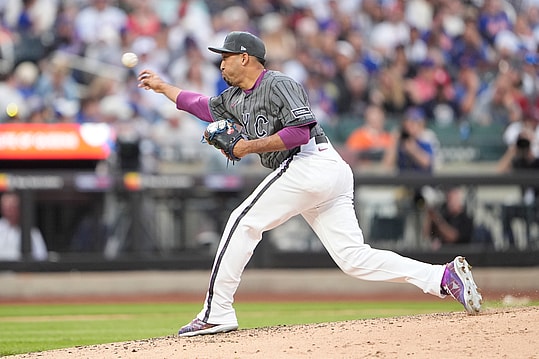
By the time baseball’s annual reunion began, Diaz had two concrete offers on the table. According to ESPN’s Jorge Castillo, the Los Angeles Dodgers had offered three years, while the Atlanta Braves went to five. The Mets, notably, had not informed Diaz of their decision to sign Devin Williams, and he didn’t like it, but he still wanted to hear from them.
It was not a deal-breaker, but it created distance. In a market where timing signals intent, the Mets were already playing catch-up.
Their offer finally arrived on December 7. Three years, $66 million. There was $21 million deferred over 10 years, a structure that fit the Mets’ broader payroll approach but landed awkwardly with the player.
Trying to Close the Gap, But Not Enough
The Mets did not stop there. Talks continued, and the front office came back with a revised proposal that included a $9 million signing bonus to match the Dodgers. The deferrals were stretched even further, $21 million over 15 years, an adjustment that helped ownership flexibility but did little to address Diaz’s core ask.
That ask was simple. At least $20 million per year. Less deferred money. A shorter timeline.
The Mets would not go there. Neither would Atlanta.
The Dodgers, meanwhile, leaned in.
Why the Dodgers Won the Moment
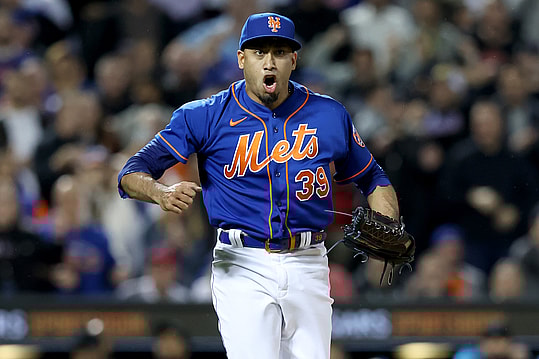
Los Angeles improved its offer to three years and $69 million, added the $9 million bonus, reduced deferrals to $13.5 million over 10 years, and included a conditional $6.5 million option for 2029 tied to days spent on the injured list. It was cleaner. More aggressive. More final.
Diaz accepted immediately.
His explanation, shared via Mets Batflip, was revealing. The Mets had been presented with an offer and said there was still a gap. When that same framework reached the Dodgers, they said yes on the spot. At that point, Diaz felt he could not circle back and reopen talks with New York once Los Angeles had already committed.
For Mets fans, that part stung the most. The belief that if Diaz had simply checked back one last time, the Mets might have nudged higher. The front office even hinted they were willing to stretch.
But negotiations do not reward hypotheticals. They reward decisiveness.
The Fallout for the New York Mets
The result is the Mets entering the season without a generational reliever who defined an era of their bullpen. Diaz was not just a closer. He was an identity. The trumpets, the certainty, the sense that games shortened to eight innings when he was available.
Now there is a void. Devin Williams helps, but he does not erase the loss. Bullpens are ecosystems, and removing a dominant closer shifts stress everywhere else.
This was not about being cheap. It was about structure, timing, and conviction. The Mets made offers. They negotiated. They just never landed the final blow.
And sometimes, in an offseason built on margins, that is all it takes to watch a franchise-defining arm walk out the door.

More about:New York Mets
