
 Andres Chavez
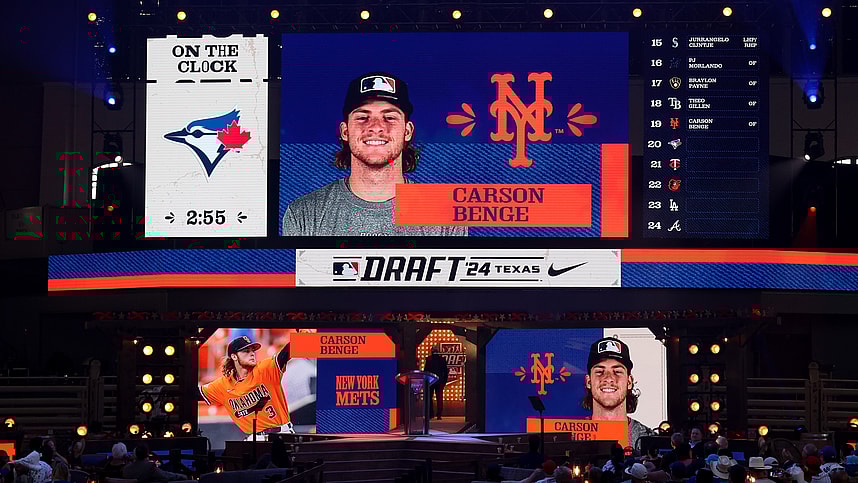
Center field has been a revolving door for the New York Mets in 2025, and not in the way a contending team would hope. Injuries, inconsistency, and underperformance all combined to turn the position into a sore spot, one that quietly dragged down the roster throughout the year.
Jose Siri, acquired with optimism last winter, was supposed to stabilize things defensively and bring some power to the bottom of the lineup. Instead, he spent much of the season hurt and never found his rhythm once he returned. His final stat line—a brutal -11 wRC+—says it all. Tyrone Taylor got an extended look but couldn’t seize the job either, finishing with a 70 wRC+ in 341 plate appearances. Even Cedric Mullins, brought in at the deadline to patch the hole, posted a 66 wRC+. The Mets cycled through names, but not solutions.
Searching for Stability
By September, it became clear the Mets had to think beyond stopgaps. President of baseball operations David Stearns has made it known that fixing center field is one of the front office’s offseason priorities. The difference this time is that the answer might come from within.
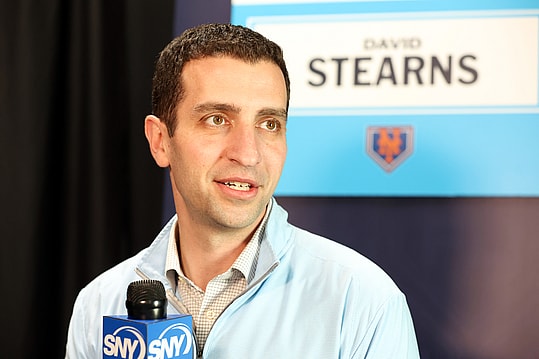
“Carson Benge is going to come into spring training with a chance to make our team,” Stearns told the media this week, per Joel Sherman. It’s not a throwaway line. It’s a real vote of confidence in one of the organization’s most exciting young talents—and a glimpse into the team’s long-term thinking.
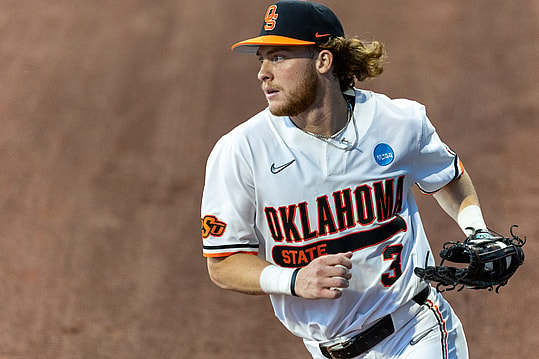
Benge, the Mets’ 2024 first-round pick, has quickly become one of their top prospects. He’s athletic, well-rounded, and confident beyond his years. Scouts love the polish in his approach and the blend of power and speed that made him such a fast riser in his first full professional season. Across three levels in 2025, he hit .281/.385/.472 with 25 doubles, seven triples, 15 homers, and 22 steals—numbers that would catch any front office’s attention.
A Potential Star, Not a Savior
For all the excitement, there’s also realism. After tearing through High-A and Double-A, Benge hit a wall in Triple-A Syracuse, where he managed just a .178/.272/.311 line in 103 plate appearances. The jump in competition exposed some holes in his swing decisions and timing, the kind of struggles that often test even elite prospects.
Still, the Mets aren’t discouraged. The organization views that rough patch as part of the learning curve rather than a red flag. They want to see how he responds—with an open competition in Port St. Lucie this spring serving as the ultimate test.
If Benge shines, the rewards could be immense. A young, cost-controlled, five-tool center fielder would not only fill a glaring need but also free the Mets from having to chase expensive veterans or trade valuable prospects for short-term fixes.
The Bigger Picture
What makes the possibility so intriguing is that it aligns with Stearns’ broader vision: building a sustainable winner. The Mets don’t want to patch every hole with money anymore; they want their farm system to start producing real contributors.
Of course, there’s risk. Prospects are uncertain by nature, and spring training optimism doesn’t always translate to regular-season production. But after a year of frustrating inconsistency in center field, the Mets are ready to take a calculated gamble on potential rather than mediocrity.
Can Carson Benge become the answer the Mets have been searching for? They’ll find out soon enough, but if his tools and mindset are any indication, he might not just fill a need—he could redefine it.

More about:New York Mets
