
 Alexander Wilson

The free agent market for starting pitching has officially turned into a casino where the house always wins, forcing David Stearns to look toward the trade market for sanity. With Michael King reportedly narrowing his choices to the Yankees, Orioles, and Red Sox, the Mets are wisely pivoting away from overpaying for injury risks and looking to acquire support through sheer asset management.
However, while every general manager is calling about the Mets’ young arms, Stearns has made it crystal clear that while Jonah Tong might be available, Nolan McLean is going nowhere.
It is a bold stance to take on a 24-year-old with limited big-league innings, but McLean’s brief sample size was the kind of electric factory that championships are built on. In just 48 innings last season, the right-hander posted a dazzling 2.06 ERA and won five of his first eight appearances, looking less like a rookie and more like a frontline starter in waiting.
The algorithm hides the best Mets news; make sure you pin Empire Sports Media on Google News so you don’t miss a beat.
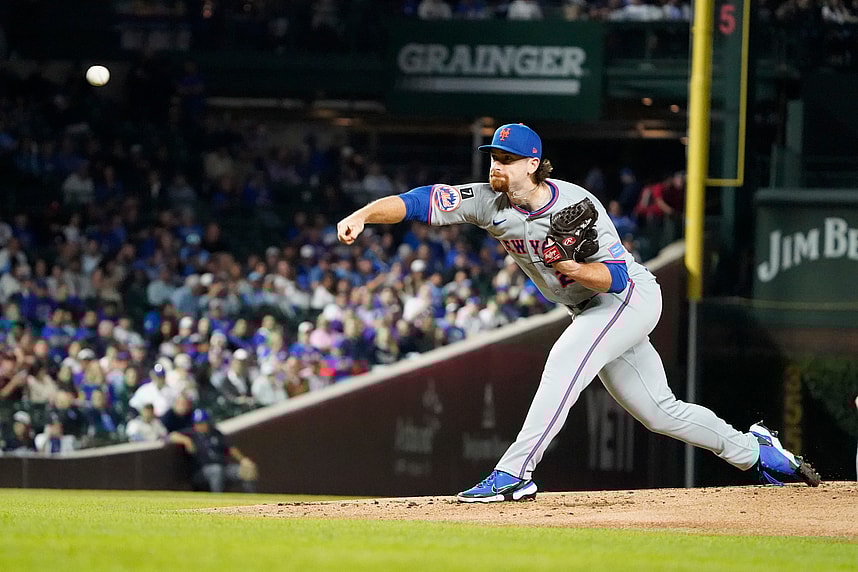
A Ground Ball Machine That Defies Modern Physics
What makes McLean truly “untouchable” isn’t just the ERA; it is the way he manipulates contact in an era where everyone is trying to lift the ball. He generated an elite 61.1% ground ball rate, ranking in the 100th percentile of major league pitchers, which essentially neutralizes the home run threat at Citi Field. When you combine that worm-burning ability with a strikeout rate of 30.3%, you have the holy grail of pitching: a guy who misses bats but also gets quick outs when he needs them.
His 10.69 strikeouts per nine innings proves he isn’t just pitching to contact; he is dominating the zone with a stuff-first mentality. While the rumor mill suggests Jonah Tong has emerged as trade bait, McLean’s metrics suggest he is already the pitcher the Mets hope Tong eventually becomes. Trading a known commodity with this specific skill set would be asset malpractice, regardless of the return.
The Pitch Mix That Nightmares Are Made Of
McLean’s arsenal is headlined by a sinker that opposing batters hit just .193 against, despite it averaging a modest 94.8 miles per hour. It isn’t about blowing doors off; it is about late movement that shatters bats and wills, setting up a pitch mix that keeps hitters guessing. His curveball was even more lethal, holding opponents to a microscopic .074 batting average and collecting 19 strikeouts on just 15.8% usage, acting as his primary “put-away” pitch.
There is still work to do, specifically with a sweeper that got hammered to the tune of a .361 average, but that is a fixable flaw in an otherwise sterling package. If the coaching staff can tweak the shape of that sweeper or have him lean more heavily on the curveball, McLean moves from “promising young arm” to “perennial All-Star.” You don’t trade that kind of upside; you nurture it and put it in the rotation for the next decade.
Looking Ahead: The Smart Play is Holding Firm
The temptation to package McLean for a flashy veteran is always there, especially when the Mets are targeting monster upgrades like Mason Miller to fix the bullpen. But Stearns knows that sustainable winning comes from homegrown aces, not expensive rentals. Selling high on McLean now might return value, but it would likely be a transaction the Mets regret when he is contending for Cy Young awards in 2028.
The Mets are right to dangle Tong and protect McLean at all costs. In a market where mediocrity is costing $20 million a year, having a cost-controlled ground ball wizard is the ultimate cheat code. Stearns needs to hold the line, because Nolan McLean isn’t a trade chip; he is the future.

More about:New York Mets
