
 Quinton Fesq
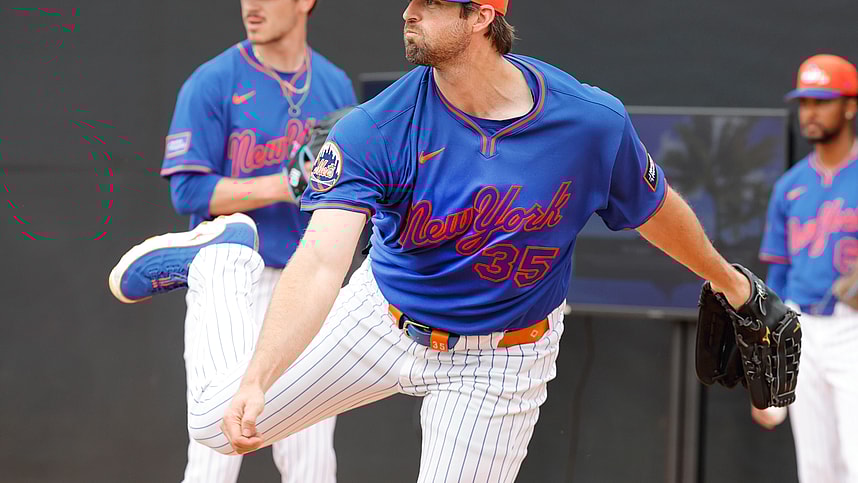
Spring training is officially underway, and it is time to figure out the starting pitching for the New York Mets. Fans always want to know who is taking the ball on Opening Day, and how the rest of the staff lines up behind him. The current depth chart shows a really interesting mix of veterans and younger arms. We need to look closely at the underlying metrics to see how this group will actually hold up over a long season. Here is how I see the rotation shaking out when looking at the numbers.
The Ace: Freddy Peralta
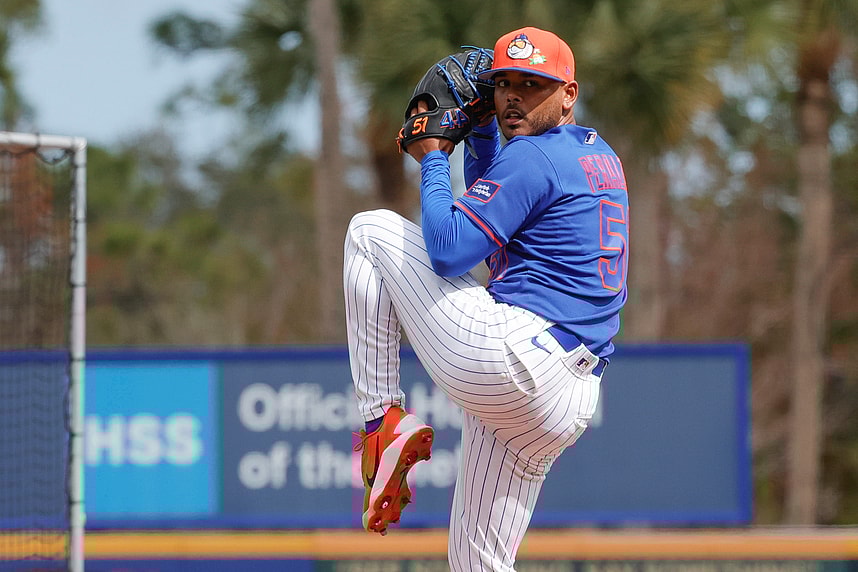
Freddy Peralta looks like the guy who will take the mound for the New York Mets on Opening Day. He had an incredible 2025 season. He posted a 17-6 record with a 2.70 ERA over 176.2 innings. He also struck out 204 batters across 33 starts. That is exactly the kind of durability and production this team needs at the top of the rotation. But here is the thing, projection systems expect a step back. Models like Steamer and ZiPS project his 2026 ERA closer to the 3.80 mark. His 3.64 FIP last year suggests he had a little bit of good luck on his side.
His overall pitching run value sat in the 97th percentile. He relies heavily on his four-seam fastball. He throws it 53 percent of the time at around 94.8 mph. The velocity is just average, but it plays up because of his elite secondary pitches. His offspeed run value was in the 96th percentile last year. He mixes a changeup, curveball, and slider to keep hitters completely off balance.
This pitch mix works beautifully for him. He gets a ton of swings and misses. He ranked in the 83rd percentile for whiff rate and 84th for strikeout rate. Even when batters do make contact, they rarely square it up. He was in the 90th percentile for limiting hard hits last season. His walk rate is a little high at 9.1 percent, but he makes up for it by missing barrels and limiting damage. He is a true top-of-the-rotation arm.
The Rising Star: Nolan McLean
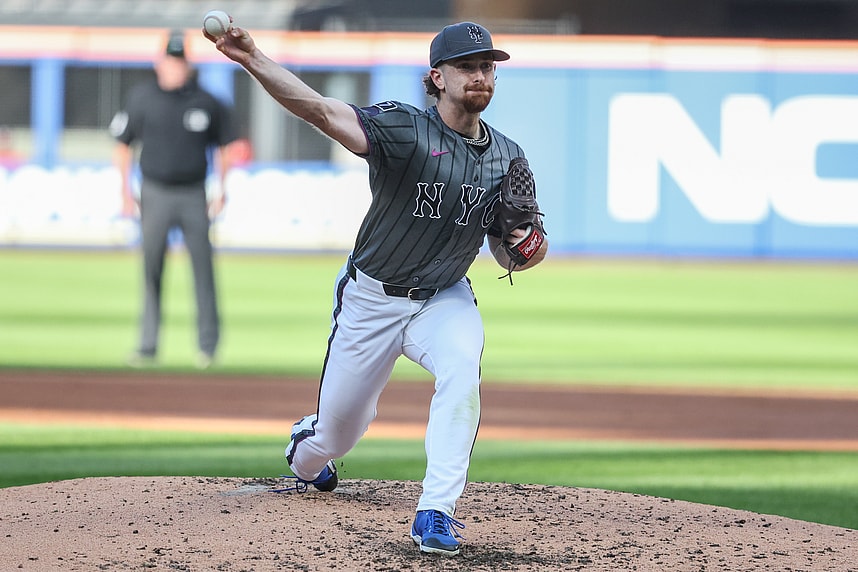
Nolan McLean burst onto the scene for the New York Mets last season, and he looks like a lock for the second spot in the rotation. He is a big presence on the mound at 6-foot-2 and 214 pounds. He made eight starts in the majors in 2025. He threw 48 innings and posted a brilliant 2.06 ERA. He also struck out 57 batters and had a 1.04 WHIP. Those are fantastic numbers for a rookie. He is currently ranked as the number 11 prospect in all of baseball and the top prospect in the Mets system.
He throws six different pitches to keep everyone guessing. He relies mostly on his sinker. He throws it 28 percent of the time at around 94.8 mph. He pairs that with a sweeper that he uses 26 percent of the time. He also mixes in a curveball, a 95.8 mph four-seam fastball, a changeup, and a cutter. This huge arsenal makes him very tough to predict. It helped him generate a massive 60.2 percent ground ball rate last year. He also struck out 30.3 percent of the batters he faced.
But we need to look at the underlying numbers too. When hitters do make contact against him, they tend to hit the ball hard. His hard-hit rate sat at a high 43.4 percent last year. His expected ERA was 3.53, which tells us he had some good luck on his side compared to his 2.06 actual ERA. Projection systems like Steamer expect his numbers to normalize a bit in 2026. They project him to throw about 149 innings with a 3.71 ERA. That is still a really strong season for a young pitcher. He just needs to limit the hard contact as he pitches his first full year in the big leagues.
The Veteran Groundballer: Clay Holmes
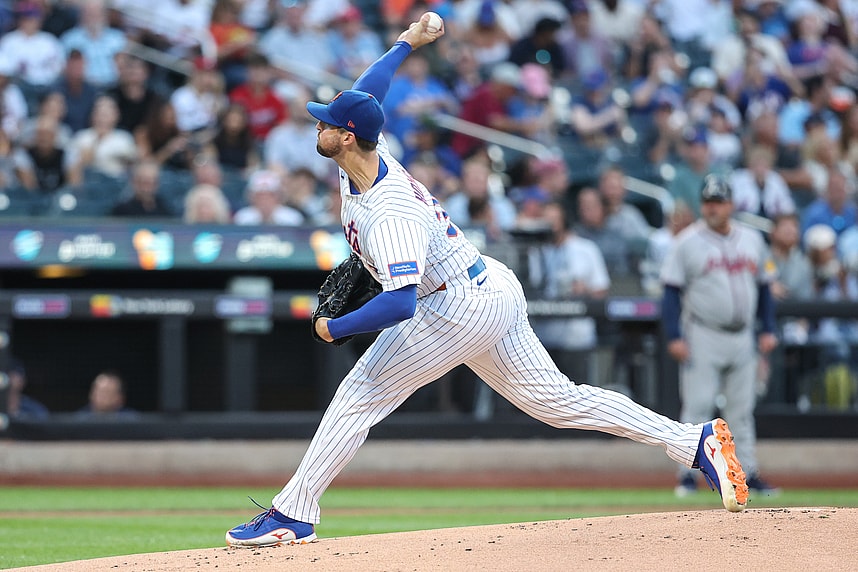
Clay Holmes is penciled in as the number three starter for the New York Mets. He brings a completely different look to the rotation. He is a massive presence on the mound, standing 6-foot-5 and weighing 245 pounds. He transitioned into a full-time starter in 2025 and put up really solid results. He threw 165.2 innings across 31 starts. He finished with a 12-8 record and a 3.53 ERA. Projection systems like Steamer expect him to be solid again in 2026. They project a 3.88 ERA over 154 innings of work.
Holmes is not going to blow anyone away with strikeouts. His strikeout rate was just 18.2 percent last year, which put him in the 18th percentile. Instead, he relies on getting contact on the ground. His ground ball rate was huge at 55.9 percent, placing him in the 94th percentile. He does this by leaning heavily on his sinker. He throws it 41 percent of the time at an average of 93.7 mph. His fastball run value was fantastic, sitting in the 93rd percentile. He also throws a sweeper, changeup, slider, cutter, and a rare four-seamer to keep the ball out of the air.
But here is the problem we need to watch. His expected ERA last year was 4.33, so he definitely had some good luck compared to his actual numbers. He also gets hit hard when batters figure out his timing. His hard-hit rate was 42.3 percent. His breaking pitch run value was also poor, sitting all the way down in the 10th percentile. He has to keep the ball down in the zone to be successful. If he does that, he will eat up a lot of innings and give this team a steady veteran presence in the middle of the staff.
The Southpaw: David Peterson
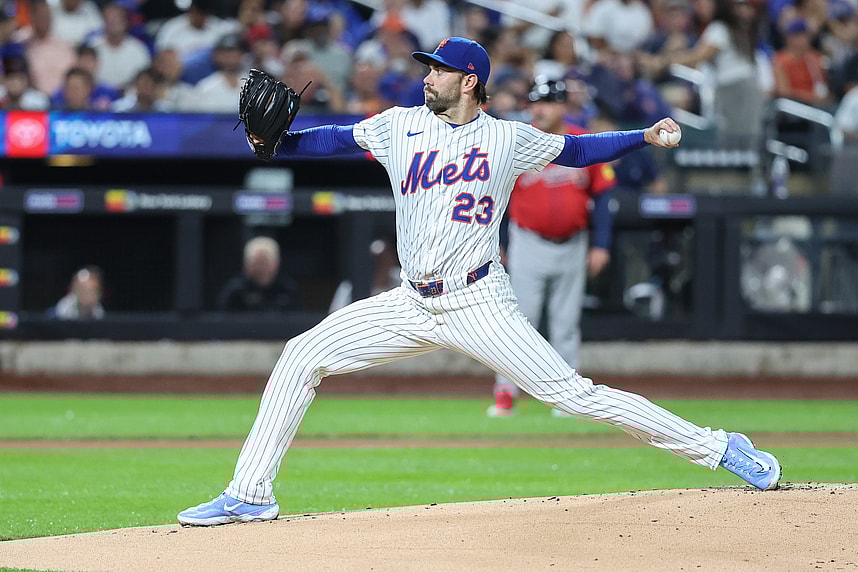
David Peterson steps in as the left-handed option for the New York Mets starting rotation. He is a massive presence on the mound at 6-foot-6 and 240 pounds. He gave the team some much-needed length in 2025. He threw 168.2 innings across 30 starts. He finished with a 9-6 record and a 4.22 ERA. Those are really solid numbers for a guy in the back half of a rotation. The projection systems actually like him to take a step forward this year. Steamer projects him to throw 170 innings with a 3.65 ERA in 2026.
Peterson gets a huge amount of extension toward home plate, sitting in the 96th percentile. That makes his pitches look a lot faster to the hitter. He relies heavily on a sinker that he throws 30 percent of the time at 91.3 mph. He also throws a four-seam fastball, a slider, a changeup, and a curveball. That is a deep arsenal. Just like Clay Holmes, his ground ball rate is his biggest weapon. He gets grounders 55.4 percent of the time. That ranks in the 93rd percentile.
But here is the problem we have to look at. When batters actually elevate the ball against him, they hit it incredibly hard. His hard-hit rate was 46 percent last year, placing him in the bottom 9th percentile of the league. His expected ERA was 4.61, so he definitely got a little lucky compared to his actual results. His fastball run value was also below average. To keep his spot in the rotation, he has to keep leaning on his secondary stuff. His breaking run value was in the 79th percentile last year. If he uses his slider and curveball to keep the ball on the ground, he can definitely have another strong season.
The Bounce-Back Candidate: Sean Manaea
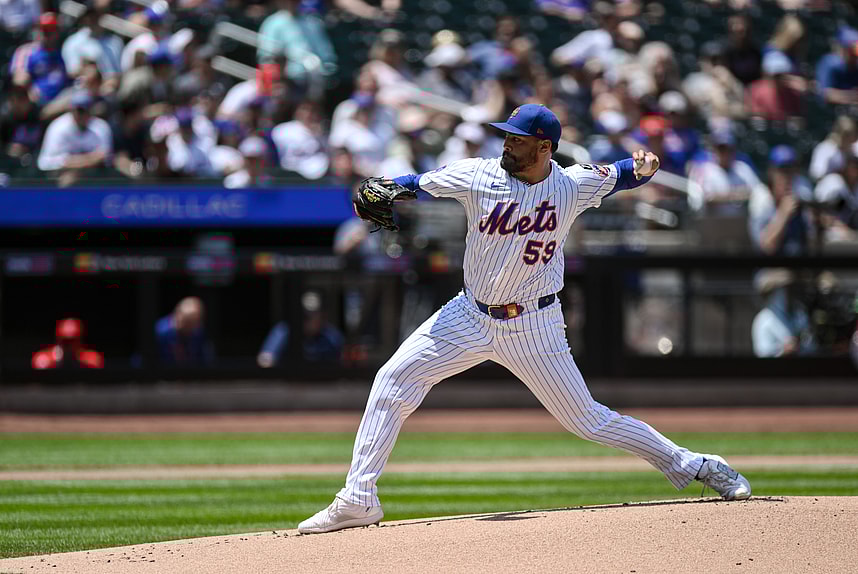
Sean Manaea is penciled in for the final spot in the New York Mets starting rotation to open the season. His 2025 campaign was definitely a struggle. He only threw 60.2 innings across 15 appearances and posted a rough 5.64 ERA. That is a big drop from his fantastic 2024 season, where he threw over 180 innings with a 3.47 ERA. But if we look closely at his underlying metrics, there is plenty of reason for hope. Projection systems like Steamer expect him to bounce back with a 3.88 ERA over 136 innings in 2026.
Even though his ERA was high last year, his strikeout and walk numbers were actually elite. He struck out 28.5 percent of the batters he faced, putting him in the 86th percentile. Better yet, he basically stopped walking people entirely. His 4.6 percent walk rate ranked in the 96th percentile of all major league pitchers. He also gets fantastic extension off the mound. His release point sits in the 90th percentile, meaning his 91.7 mph four-seam fastball jumps on hitters much faster than they expect.
He completely simplified his pitch mix last year. He relies almost entirely on just two pitches now. He throws his four-seamer 60 percent of the time and pairs it with a sweeper 34 percent of the time. He mixes in a changeup just 6 percent of the time to keep hitters honest.
But here is the problem he has to fix. When batters make contact, they hit the ball hard and in the air. His ground ball rate sat in the bottom 28th percentile, and his hard-hit rate was in the 31st percentile. The advanced metrics hated his pitch shapes last year, with his breaking run value dropping to the 20th percentile. If he can keep the ball down and avoid giving up hard contact, he can definitely give this team quality innings at the back of the rotation.
The Wildcard: Kodai Senga
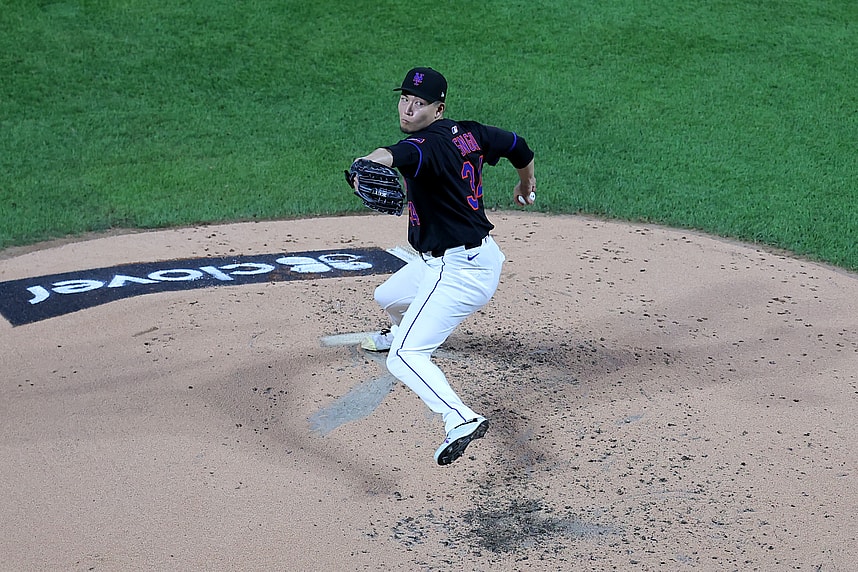
Kodai Senga is the ultimate wild card for the New York Mets starting rotation this year. After missing almost all of 2024, he came back and made 22 starts in 2025. He put up a 7-6 record with a really solid 3.02 ERA over 113.1 innings. But here is the thing, projection systems expect him to regress a bit. Steamer projects him to throw 123 innings with a 3.89 ERA in 2026. His 4.12 FIP from last year also tells us he had some good luck on his side compared to his actual run prevention.
When you look at his Baseball Savant page, it is clear he still has an elite weapon. His offspeed run value was in the 95th percentile last year. That is almost entirely because of his famous ghost forkball. He throws it 28 percent of the time, and it sits around 82.5 mph. Hitters just cannot figure it out. He mixes that with a 94.7 mph four-seam fastball that he uses 32 percent of the time, plus a cutter he throws 20 percent of the time to keep batters from sitting on the forkball.
But here is the problem he needs to address. His control was a major issue last season. His walk rate sat at a high 11.4 percent, which put him all the way down in the 8th percentile among all major league pitchers. His overall pitching run value was also pretty poor, sitting in the 29th percentile. His fastball and breaking ball run values were both well below average. If he can just find the strike zone more consistently, his ghost forkball will generate enough ground balls and strikeouts to keep him as a highly effective part of a six-man rotation.
So here is what it all means for this pitching staff. The starting rotation for the Mets last year threw the 8th least innings among all teams in baseball. That simply has to be fixed this year. The bullpen cannot carry that kind of heavy load again over a full season.
The top of the rotation has some real star power with Freddy Peralta, and getting a full season out of a healthy Kodai Senga changes the ceiling of this entire group. Nolan McLean is an exciting young arm who can rack up strikeouts, and veterans like Sean Manaea, Clay Holmes, and David Peterson will need to eat up a lot of innings to keep the relievers fresh.
There are definitely some questions about hard contact and walk rates across the board. The advanced metrics show that several of these guys outperformed their expected stats last season. But if they can pitch to their strengths, limit the free passes, and keep the ball on the ground, this group can definitely keep the team competitive all year long. And here is the best part. The team has some great depth waiting in the wings. Barring any injuries, we could easily see young arms like Jonah Tong or Christian Scott step up and join the starting rotation later in the year.
More about:New York Mets
