
 Andres Chavez
In the high-stakes world of Major League Baseball, consistency isn’t just a goal; it’s the currency of survival. Organizations are constantly hunting for sustainability, trying to figure out if a player’s current hot streak is a structural improvement or just a lucky roll of the dice.
This quest for a repeatable formula is why velocity has become the obsession of the modern era. A high-octane fastball is the ultimate insurance policy. It shrinks the hitter’s window of decision-making, forcing them to guess earlier and swinging the pendulum of power back toward the mound. When a pitcher’s velocity dips, it’s like a carpenter showing up to a job site with a smaller hammer; you can still drive the nails, but every swing has to be more precise, and there’s far less room for error.
The Velocity Gap in Queens
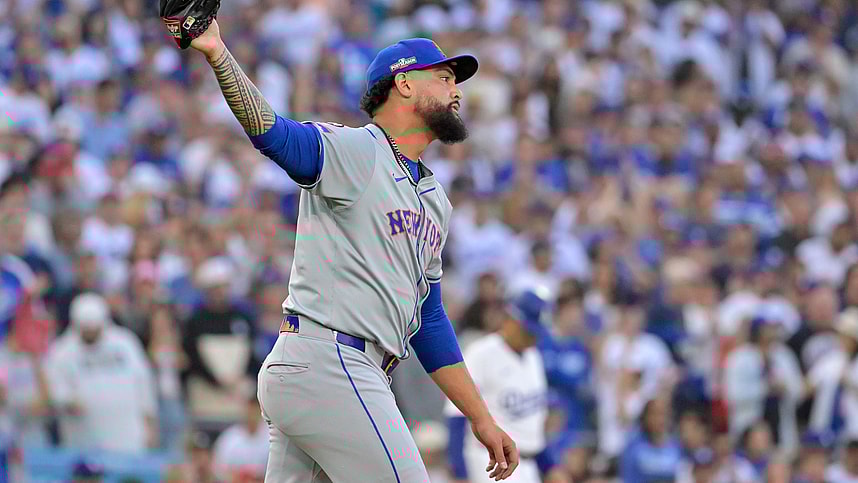
For New York Mets starter Sean Manaea, that hammer currently looks significantly lighter than it did a year ago. During his recent Tuesday outing, Manaea was statistically perfect through four innings, yet the underlying metrics sent a chill through the fan base.
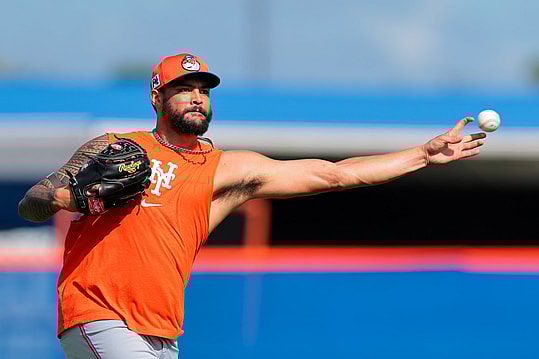
His four-seam fastball topped out at a modest 89.9 mph, averaging just 88.3 mph. To put that in perspective, he averaged 91.7 mph last season and sat at 92.2 mph back in 2024, a year where he used that extra zip to punch out 184 batters and maintain a stellar 3.47 ERA.
Losing three miles per hour is not a minor adjustment; it is a fundamental shift in how a pitcher must approach the game. Last year was a struggle for the veteran lefty, as he battled an oblique strain and elbow issues later identified as loose bodies.
Despite the physical hurdles, Manaea and the Mets training staff chose to bypass the operating table, betting on a more conservative recovery path. Now, at 34 years old, the margin for a bounce-back season seems to be thinning alongside his velocity readings.
Adrenaline and the Competitive Edge
Manaea remains the picture of calm despite the external noise. He views the current dip as a byproduct of the spring training environment rather than a permanent decline in his physical ceiling. “It’s low, but I feel good,” the lefty said, per The New York Post, after his outing. “I’m not concerned about it whatsoever. I’ll get to Citi Field, get the adrenaline going, and it will shoot back up.”
His theory is that the controlled, low-stakes nature of the Grapefruit League doesn’t provide the necessary spark to push his body to its limit. He believes that once the lights are bright and the games actually count toward the standings, that missing velocity will reappear like a lost traveler finding the main road.
Navigating the Strike Zone
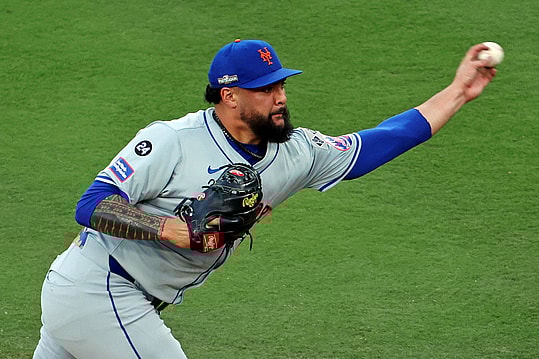
If the velocity doesn’t return, Manaea will have to reinvent himself as a crafty tactician. “I’ve pitched with 86-87 [mph],” Manaea said. “I don’t want to be there, but I still think I’m effective. I’ll fill up the strike zone and mix and match.”
While his confidence is admirable, the history of aging southpaws suggests that relying solely on “mixing and matching” is a dangerous tightrope walk. Coming off a season where his ERA ballooned to 5.64, the Mets need him to be a reliable anchor in the rotation.
Without that extra gear on his fastball to keep hitters honest, every mistake over the heart of the plate becomes a potential souvenir for the bleachers. The team’s optimism is currently resting on the hope that adrenaline is indeed the missing ingredient.

More about:New York Mets
