
 Alexander Wilson
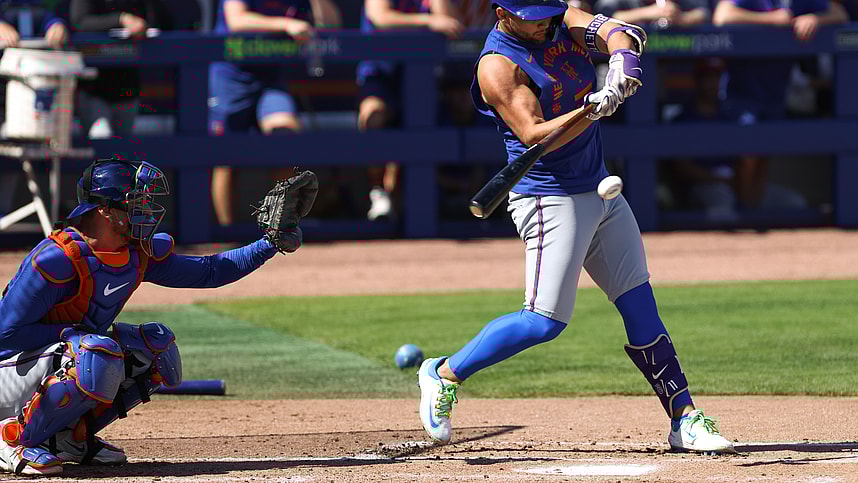
The Mets have completely revitalized their lineup for 2026, for better or worse. Gone are the days of relying on Pete Alonso to launch home runs every game. After letting Alonso walk in free agency and trading Brandon Nimmo to Texas, David Stearns assembled a contact-heavy, experience-loaded roster anchored by Marcus Semien, Bo Bichette, and Luis Robert Jr. The approach is clear: balanced offense over boom-or-bust power.
Marcus Semien Brings Championship Pedigree
Semien arrived from Texas in the trade that sent Nimmo packing, and he immediately addressed the team’s revamped identity. “It’s a loaded group,” Semien told SNY. “We have a lot of All-Stars, guys who have played in big games; World Series champions, Silver Sluggers, all kinds of accolades up and down this lineup — a good amount of speed, power, good defenders.”
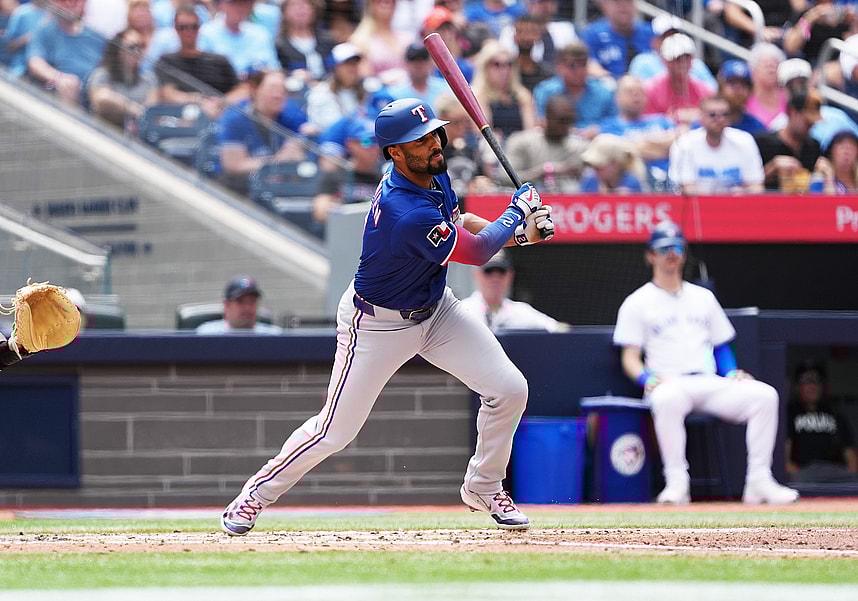
The 35-year-old second baseman hit .230 with 15 home runs across 534 plate appearances in 2025, but his elite defense (86th percentile baserunning run value, 82nd percentile fielding run value) and championship experience from the Rangers’ 2023 title run bring something the Mets desperately needed. Semien’s 92nd percentile range (7 OAA) at second base should stabilize the middle infield alongside Francisco Lindor.
His offensive profile favors contact over power. A .243 xBA and 6.7% barrel rate suggest he won’t provide Alonso-level slugging, but his 63rd percentile walk rate (9.4% BB rate) and ability to make consistent contact (17th percentile hard-hit rate at 35.0%) fit the Mets’ new philosophy. I’m convinced this is exactly what the Mets needed after years of living and dying by the home run.
Not to mention, Jorge Polanco brings a bit of underrated power himself.
Bo Bichette Reunites With Semien
Bichette’s signing on a three-year, $126 million deal reunites him with Semien, his former double-play partner in Toronto during the 2021 season. “That’s a big pickup,” Semien said, per SNY. “I got to play with Bo when he was a 23-year-old shortstop, so now he’s a little older, a little more seasoned, and he’s learning a new position — I was in that position when I met him too, learning second base.”
Bichette brings elite contact skills to third base. He hit .311 with 181 hits in 2025, posting a .295 xBA (98th percentile) and .473 xSLG (78th percentile). His 18 home runs and 83rd percentile hard-hit rate (48.8%) show he’s not a one-dimensional slap hitter—he can drive the ball when needed. But the real value is his ability to spray line drives all over the field, evidenced by an 83rd percentile sweet-spot percentage (37.9%).
Defensively, Bichette is transitioning from shortstop to third base, where his limited range (1st percentile OAA at -13) won’t be as exposed. His 36th percentile arm strength is average, and the Mets are betting that daily reps at the hot corner will smooth out the transition.
Luis Robert Jr. Adds Power-Speed Combo
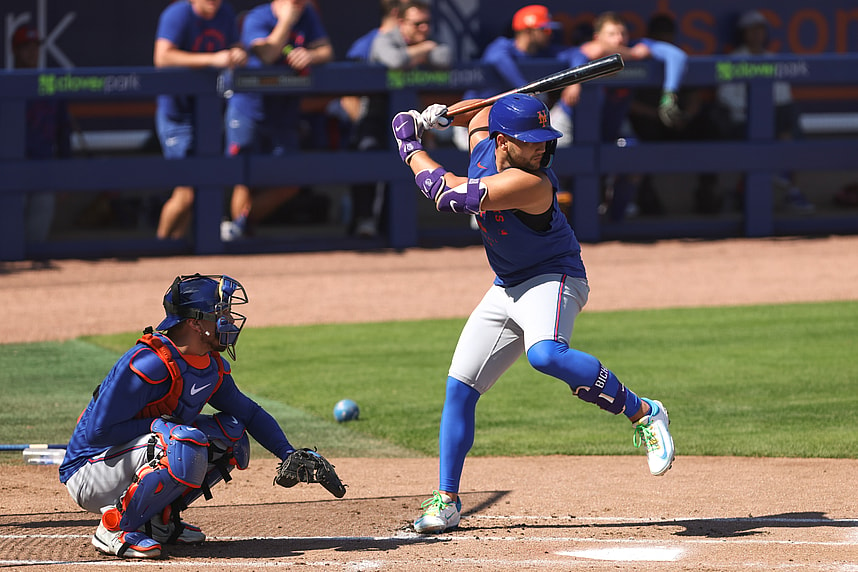
Robert Jr. fills the center field void left by Nimmo’s departure and provides the Mets with legitimate power-speed upside. The 28-year-old hit .223 with 14 home runs and 33 stolen bases across 431 plate appearances in 2025. His 93rd percentile range (7 OAA) and 87th percentile fielding run value make him an immediate upgrade defensively in center.
The bat is boom-or-bust. Robert’s .246 xBA (43rd percentile) and 10.2% barrel rate (60th percentile) suggest he can punish mistakes, but a 9th percentile whiff rate (31.7%) and 8th percentile squared-up percentage (20.3%) mean he’ll strike out plenty. His 90th percentile sprint speed and 76th percentile baserunning run value give the Mets a dimension they haven’t had in years—a true burner who can wreak havoc on the bases.
The Mets are betting Robert’s 92nd percentile bat speed and elite athleticism will translate into more consistent contact in a lineup that no longer forces him to carry the offense. Hitting behind Bichette and Lindor should generate better pitches to hit, and his 55th percentile sweet-spot percentage (34.7%) leaves room for growth.
The Philosophical Shift Away From Alonso
The Mets’ decision to let Alonso walk signals a clear shift in organizational philosophy. No longer will they rely on one masher to carry the offense through slumps. Instead, Stearns built a lineup with multiple contact-oriented threats who can manufacture runs through baserunning (Semien’s 86th percentile, Bichette’s 10th percentile, Robert’s 76th percentile) and defensive versatility.
“I look at the whole package, the lineup is one thing, but everyone is playing both sides of the ball,” Semien told SNY. “If we all score as many runs as we can, that means we’re running the bases well, we’re getting on-base, we’re slugging, we’re doing those things — if we can all do that together, we can win a lot of ballgames with our bats.”
Semien’s comments capture the essence of what the Mets are building. They’re not abandoning power entirely—Bichette’s 18 homers and Robert’s 14 show they can still go deep—but the emphasis is on situational hitting, contact, and manufacturing runs in multiple ways. When you combine that with Francisco Lindor’s consistent production and Juan Soto’s elite on-base skills, the Mets suddenly have a lineup with far fewer easy outs.
The Risk-Reward Calculation
This approach comes with risks. Semien is 35 years old coming off a down year. Bichette’s defensive transition to third base is unproven. Robert has never played a full healthy season. But the upside is tantalizing—if Semien provides Gold Glove defense and league-average offense, if Bichette stays healthy and hits .300, if Robert maximizes his tools, this lineup could be significantly more balanced than the Alonso-dependent attack of years past.
The Mets are betting that experience, versatility, and balanced production matter more than relying on 40-homer seasons from one player. Semien’s World Series ring, Bichette’s hit tool, and Robert’s athleticism give Mendoza far more lineup flexibility than he had with Alonso anchoring the middle. Whether that translates to wins depends on health and execution, but the philosophical shift is undeniable.
Stearns revitalized the Mets’ lineup by replacing power with balance. Now it’s up to Semien, Bichette, and Robert to prove that contact-heavy, defensively sound baseball can win in Queens.
Frequently Asked Questions
How did the Mets replace Pete Alonso’s production?
The Mets didn’t replace Alonso with a single power hitter. Instead, they added Marcus Semien, Jorge Polanco, Bo Bichette, and Luis Robert Jr. to create a balanced lineup focused on contact, baserunning, and defense rather than relying on one slugger.
What position will Bo Bichette play for the Mets?
Bichette will play third base after spending his entire career at shortstop with Toronto. With Francisco Lindor entrenched at short and Marcus Semien at second, the Mets are transitioning Bichette to the hot corner for the first time in his career.
What do Marcus Semien and Bo Bichette bring to the Mets?
Semien brings Gold Glove defense (92nd percentile range), championship experience from the 2023 Rangers, and veteran leadership. Bichette offers elite contact skills (.311 average, 181 hits in 2025) and the ability to hit for average with gap power. Both provide baserunning value and versatility.

More about:New York Mets
