
 Andres Chavez
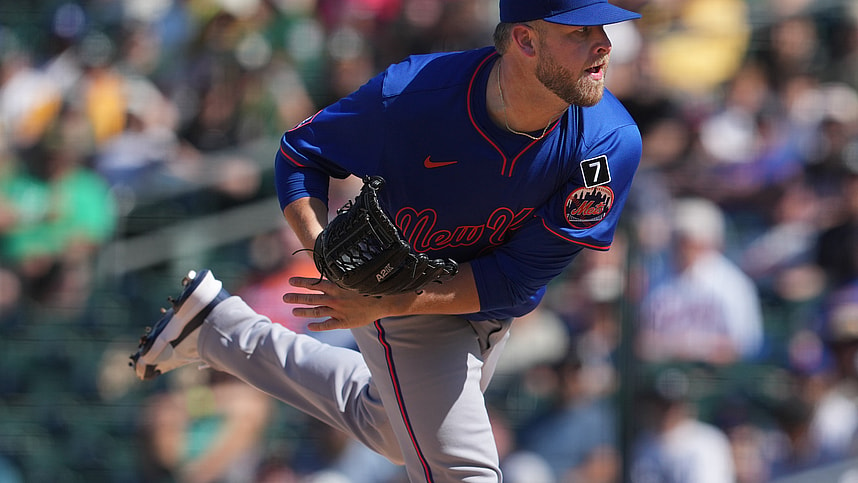
The New York Mets‘ bullpen got some excellent news this week when it was revealed that A.J. Minter, who has been out since last April after suffering a torn lat, is expected to be ready by Opening Day or soon after. In other news, the Mets almost lost Luis Robert Jr. to the Yankees, who viewed the player as Plan B if they lost out on Cody Bellinger.
Mets get excellent news on injured reliever A.J. Minter
The Mets’ two-year, $22 million investment in Minter barely got off the ground in 2025, as a torn lat muscle limited the left-hander to just 11 dominant innings before ending his season. Those innings, however, were a tantalizing glimpse of exactly what the Mets envisioned: a late-inning weapon with elite swing-and-miss stuff who could stabilize a shaky bullpen. His 1.64 ERA and near-32% strikeout rate underscored how impactful he can be when healthy, making his absence all the more damaging.
Heading into 2026, Minter’s decision to exercise his $11 million player option was a formality, but the outlook is more encouraging. Reports indicate he’s expected to be on the roster at some point early in the season, even if he needs a short IL stint to finish rehab. If he returns anywhere close to form, he instantly becomes a critical bridge arm in a bullpen now reinforced by Devin Williams and Luke Weaver, giving the Mets a far more reliable late-game structure.
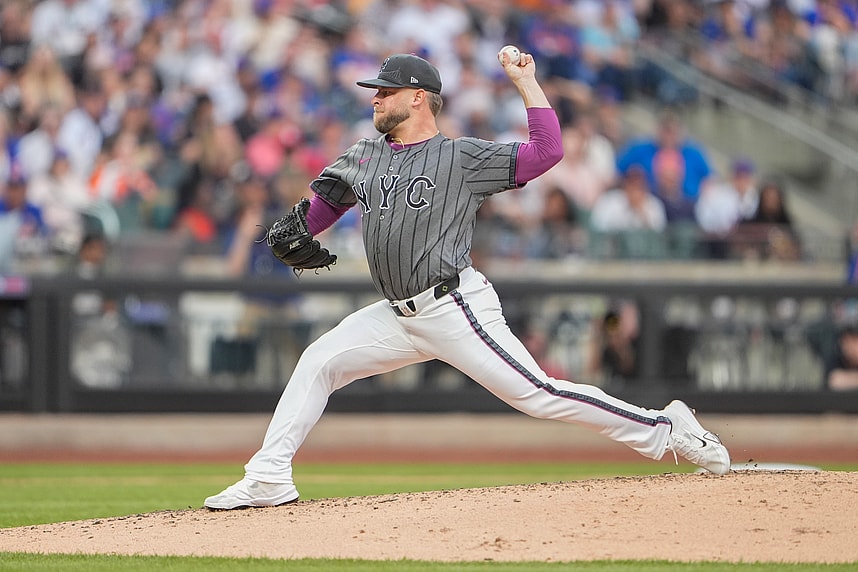
Still, the gamble is real. Minter’s fastball velocity dipped to a career low before his injury, raising concerns about whether his stuff will fully rebound after multiple surgeries. If the velocity and command return, the Mets could have one of the most dangerous bullpen trios in the NL East. If not, they’re paying a premium for hope. Either way, Minter’s health may quietly determine how far this team can go.
The Mets almost lost boom-or-bust outfielder Luis Robert Jr. to the Yankees
After missing out on Kyle Tucker, the Mets pivoted quickly and aggressively, acquiring Robert from the White Sox in a move that screams upside. By parting with Luisangel Acuña and a prospect, the Mets landed one of the most physically gifted players in baseball—a former star whose recent struggles have depressed his value but not erased his tools. The fact that the Yankees viewed Robert as a top fallback option only reinforces how highly he’s still regarded across the league.
Offensively, the last two seasons have been rough, with Robert posting below-average production and a .223 batting average in 2025. But beneath the surface, the traits that once made him an MVP-caliber talent remain intact. His elite bat speed and raw power suggest the decline is more about approach than ability, a problem the Mets believe their hitting infrastructure can help correct. Even modest improvements in discipline could unlock massive offensive gains.
What makes the deal especially appealing is Robert’s defensive floor. He immediately gives the Mets a true center fielder, pairing elite range and speed with strong run-prevention metrics that will play beautifully in Citi Field. Even if the bat never fully rebounds, his glove alone adds real value. At 28, motivated, and placed in a winning environment, Robert represents a calculated risk with star-level upside—and potentially one of the offseason’s smartest bets.
Why Kodai Senga is the roster’s biggest wild card entering 2026
Kodai Senga enters 2026 no longer viewed as the unquestioned ace, but as one of the Mets’ biggest variables. His 2025 season looked solid on the surface, highlighted by a 3.02 ERA, yet that number masks a year split sharply by injury and declining command. After a dominant start, Senga faded following a midseason injury, finishing with troubling indicators that raised doubts about sustainability.
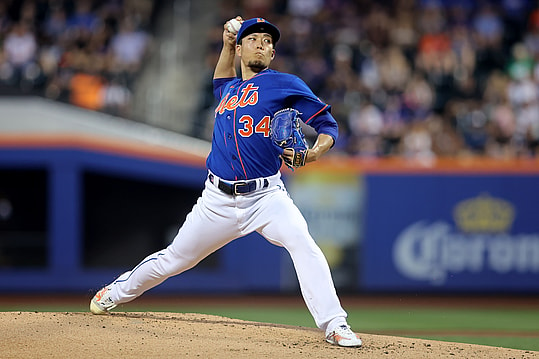
The underlying metrics explain the concern. While Senga’s signature forkball remains elite, his fastball has become increasingly hittable, and his walk rate ballooned to an unsustainable level. That combination forced him into constant hitter’s counts, leading to harder contact and an ERA that outperformed his expected results. Advanced projections for 2026 largely agree that regression is likely, forecasting him more as a mid-rotation arm than a frontline starter.
For the Mets, the bar isn’t dominance—it’s reliability. A healthy Senga delivering 120-plus innings with a mid-3s ERA would still be valuable, even if it falls short of ace expectations. The challenge is whether he can refine his fastball command enough to support his elite offspeed stuff and stay on the mound. At age 33, Senga’s 2026 season will hinge on adjustment and durability, making him one of the most pivotal figures in the Mets’ pursuit of contention.

More about:New York Mets
