
 Andres Chavez
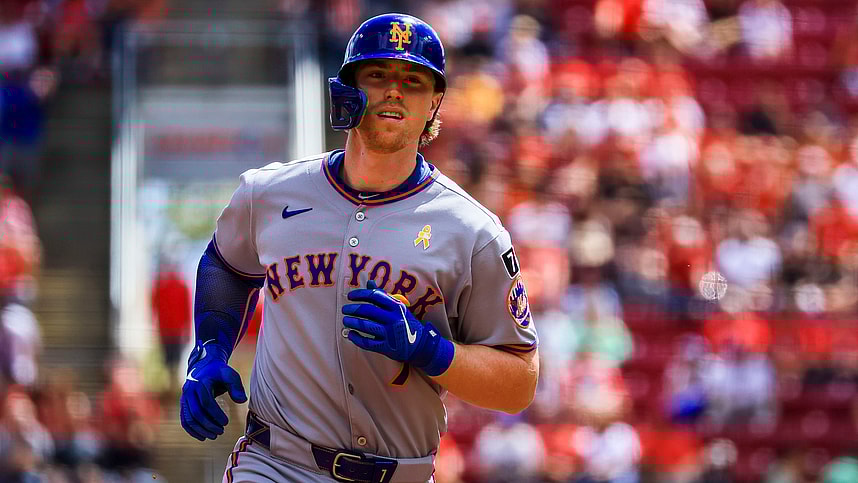
By mid-August last season, the lack of a reliable top-notch starter was costing the New York Mets some games. A team can talk itself into depth, upside, internal growth, but when the games tighten, and the calendar flips, you find out exactly what you lack.
For the Mets, it was a true top-of-the-rotation starter.
The Shape of the Need in Queens
Kodai Senga remains the anchor, and Nolan McLean’s emergence gave the Mets something real to build around. But that pairing alone was not enough to stabilize a rotation over a full season, especially one trying to push back into October relevance. The Mets learned that lesson the hard way while chasing a postseason spot that never quite came into focus.
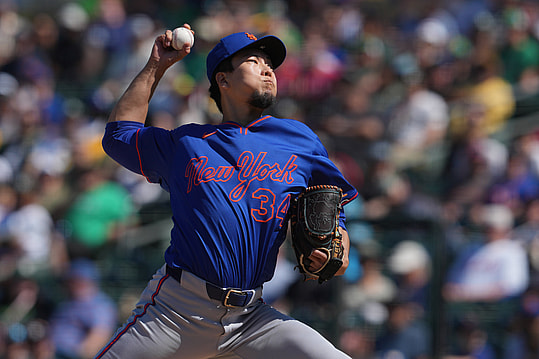
That reality is driving the front office now. The Mets are not shopping for innings eaters or back-end stabilizers. They are hunting impact. Someone who can take the ball in Game 1 or 2 and change the tone of a series.
They have looked everywhere. Free agency. The trade market. Even international avenues. The intent is obvious, but results have been harder to come by.
Edward Cabrera and the Cost of Impact
Edward Cabrera was the latest test of that resolve. The right-hander ultimately landed with the Chicago Cubs, who paid a steep price to get him. Cabrera posted a 3.53 ERA in 2025, striking out 150 hitters across 137.2 innings. The stuff is electric, the upside undeniable, and the age aligns with a club trying to stay competitive beyond a single window.
The New York Mets were involved. So were the Yankees. In the end, the Cubs outbid everyone.
Chicago’s package was headlined by Owen Caissie, one of the better prospects in the game. That mattered. Miami wanted real value, not lottery tickets, and they were willing to wait for it.
Why the Mets Walked Away
According to a report by Pat Ragazzo, the Mets discussions with the Marlins centered on Brett Baty and A.J. Ewing. That was the line. And it was a line the Mets refused to cross.
Baty is no longer theoretical value. He broke out in 2025, launching 18 home runs and posting a 111 wRC+ across 432 plate appearances. He held his own defensively at two infield spots and showed the kind of offensive consistency that makes a young, controllable bat especially valuable in today’s market. There is still room for growth, which only sharpens his appeal.
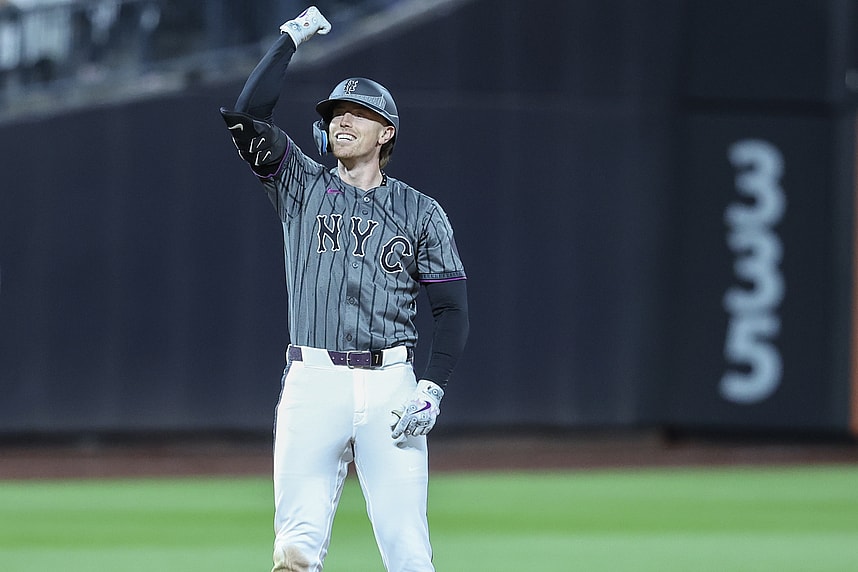
Ewing, ranked seventh in the Mets system by MLB Pipeline, is the type of prospect teams quietly covet. He makes contact. He has enough pop to matter. He can move between the outfield and second base. Players like that tend to find roles, even if they never become stars.
Packaging both for Cabrera would have been a gamble layered on top of another gamble. The Mets decided the price outweighed the certainty.
The Bigger Picture Going Forward
There is risk in that choice. If the Mets miss out on other frontline starters and enter the season leaning too heavily on depth again, this decision will be second-guessed loudly. That comes with the territory.
But process matters. The Mets are not rebuilding, yet they are also not operating like a team desperate enough to strip itself bare for one arm. Holding onto Baty reflects confidence in internal development. Passing on Ewing signals belief that the system still needs to feed the big league roster.
The New York Mets still need that dynamic starter. That part has not changed. What has become clearer is how far they are willing to go, and how far they are not.
Sometimes the smartest move is the one you do not make. Whether this ends up being one of those moments will be answered the next time the Mets are playing games that demand something more than creativity from their rotation.

More about:New York Mets
