
 Quinton Fesq

Luke Weaver’s two-year, $22 million deal with the Mets feels less like a “flyer” and more like a calculated bet on his raw stuff over his latest results. After watching Weaver’s roller-coaster of a season in the Bronx last year, the Mets are banking on the idea that a change of scenery, and perhaps a move back to a setup role can unlock the consistency that he lost late last year. Weaver’s changeup is a legitimate weapon, but he also is full of question marks heading into 2026.
Luke Weaver’s Bronx Roller Coaster
Last season, Luke Weaver posted a 3.62 ERA with 72 strikeouts over 64.2 innings, which is solid for a high-leverage arm. He was also able to post a 1.02 WHIP and limit walks with a 7.6% walk rate, showing he can dominate the zone.
However, the “eye test” felt like a much different story down the stretch. After looking like a force in the first half of the season where he looked like an All-Star, Weaver looked like he ran out of gas, which lead up to a postseason meltdown that most Yankees fans won’t forget anytime soon. His 3.89 FIP suggests he was actually getting lucky, considering his ERA was as low as it was, and his vulnerability to the long ball (1.39 HR/9) became a glaring issue.
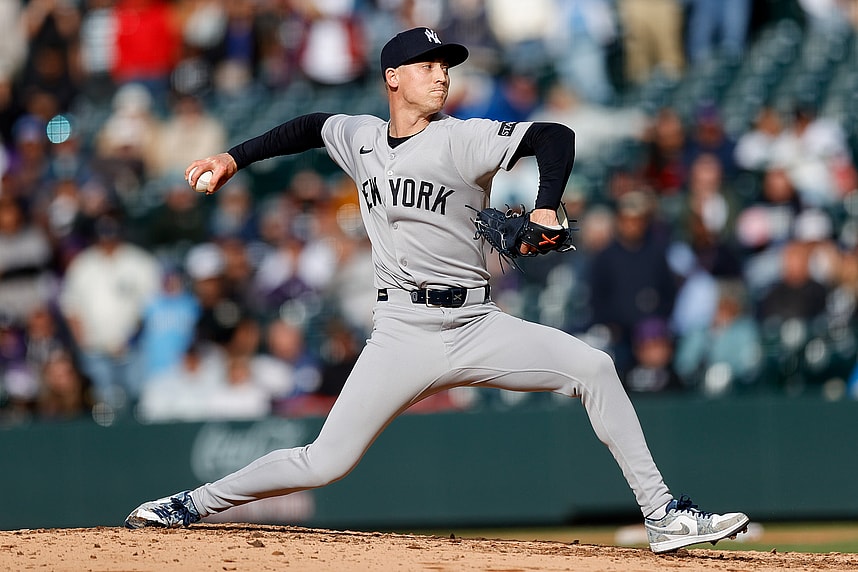
Luke Weaver’s 2026 Projections & The Citi Field Factor
Steamer is projecting that Weaver is likely to regress slightly, expecting a 4.00 ERA and a dip in strikeout rate (K%) to around 25.3%. This comes with the concern that his 2024 breakout and early 2025 dominance were his peak performances, likely driven by a velocity spike that might not be entirely sustainable for a 32-year-old reliever. The projections see him as a roughly league-average reliever, which, while valuable, makes his $11 million AAV seem a bit pricey if he is unable to outperform the projections.
The shift from Yankee Stadium to Citi Field is a favorable change for Weaver, as he is an extreme fly-ball pitcher, with a 56.3% fly-ball rate in 2025. But in the Bronx, those fly balls often find the short porch, while in Queens, they have a better chance of dying in the gaps. If is able to maintain his elite chase rate, which was in the 91st percentile last season, as well as keep the ball in the yard, his ERA should easily be able to beat the 4.00 projection. Citi Field’s spacious outfield is the perfect safety net for a guy like Weaver, who lives and dies by getting hitters to lift the ball.
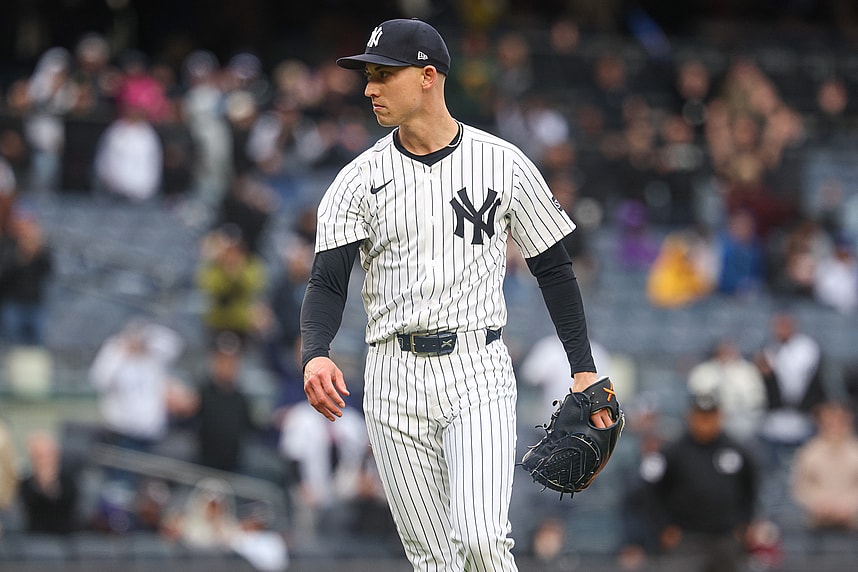
Possibly the biggest boost for Weaver in 2026, might be that he doesn’t have to be “the guy” anymore. With Devin Williams likely locked in as the closer, Weaver should be able to slide into a primary setup role, likely coming in around the 7th or 8th inning. This should be able to reduce the pressure on him significantly.
In 2025, we saw Weaver seemingly crack under the weight of the 9th inning when the workload eventually piled up. But in a structured setup role, carefully managed by Carlos Mendoza, should allow him to avoid being overused, Weaver should be able to focus on going out for 3-4 outs at a time without the mental burden of closing out games every night.
While Luke Weaver is not a perfect pitcher, he fits the mold of what this Mets bullpen needed; a veteran arm with swing-and-miss abilities who isn’t afraid of the strike zone. If he is able to stay healthy, a constant concern given his hamstring issues last year, and he is able to maintain his effective changeup, he gives the Mets a formidable bridge to Williams to close out games. Expect a season with plenty of strikeouts, and hopefully, less heart attacks than he gave Yankees fans.
More about:New York Mets
