
 Quinton Fesq
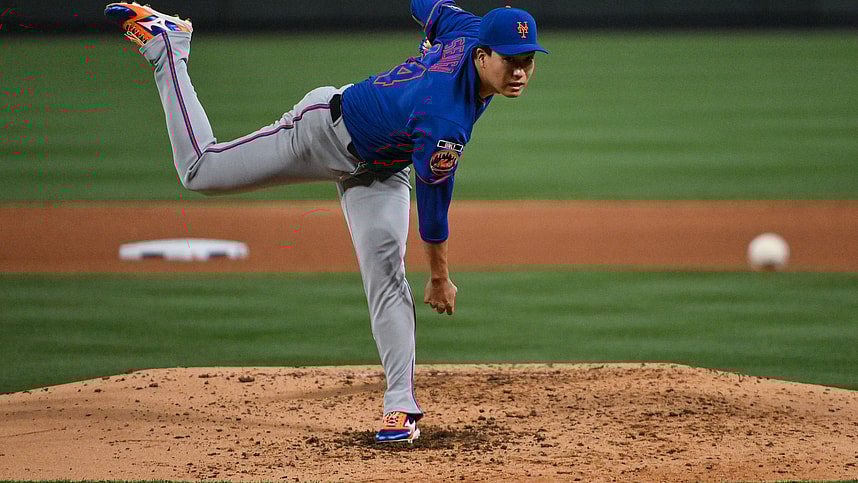
Kodai Senga looks healthy. That sentence, two years in the making, is not something the New York Mets have been able to say with any confidence since October 2023. Through 2 starts of the 2026 season, it is starting to feel true.
Senga has allowed 4 runs in 11 2/3 innings, carrying a 3.09 ERA with 16 strikeouts across 47 batters faced. He is punching out more than a third of the hitters he sees. His fastball is sitting 97.4 mph — up nearly 3 ticks from his 2025 average of 94.8. His FIP through those 2 starts sits at 1.73. That is not a misprint.
The underlying numbers do not just suggest a pitcher who is healthy. They suggest a pitcher who is locked in.
The Gap Between 2023 and Now
When Senga arrived in New York on a 5-year, $75 million deal ahead of the 2023 season, he validated every dollar almost immediately. He posted a 2.98 ERA across 29 starts, struck out 202 batters in 166 1/3 innings, finished second in NL Rookie of the Year voting, and showed the kind of swing-and-miss arsenal that makes opposing lineups look foolish. His ghost forkball was the best pitch in baseball that nobody outside of Flushing had seen coming.
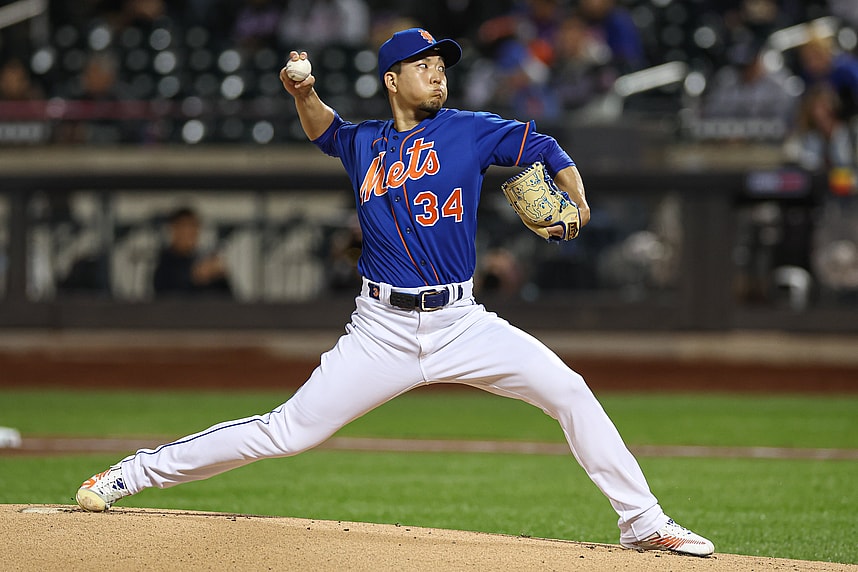
Then the shoulder took over the story. Senga made 1 start in 2024 — a brief, tantalizing appearance before the injury shut him down again. He threw 5 1/3 regular-season innings. The Mets made a postseason run that fall anyway, and Senga did give them 5 innings in October, but that was cold comfort against what they were missing in the rotation.
He came back in 2025 with a 3.02 ERA across 22 starts, which on the surface looks like a return to form. But the trajectory within that season told a harder story. His strikeout rate dropped to 22.6%, a significant step back from the 29.1% he posted in 2023. His xFIP climbed to 4.35. And in September, the Mets optioned him to the Minors — a move that made headlines for the wrong reasons, even if the logic was defensible.
The 2025 finish left real questions. Was the shoulder lingering? Was the ghost forkball — the pitch that made him special — fully back? Had he simply gotten older and lost a step?
What the 2026 Numbers Are Saying
Two starts is a small sample. Anyone who tells you otherwise is selling something. But the numbers from those 2 outings are not just good — they are pointing in the right direction across multiple indicators at once, which makes them harder to dismiss.
The fastball velocity is the most obvious thing. At 97.4 mph in 2026, Senga is sitting nearly 3 mph above where he was last year. Velocity is not everything, but when a pitcher’s signature fastball comes back with more life, it affects everything behind it. The forkball plays off that fastball. So does the cutter. The whole arsenal gets easier to sell when hitters are guessing off 97 instead of 94.
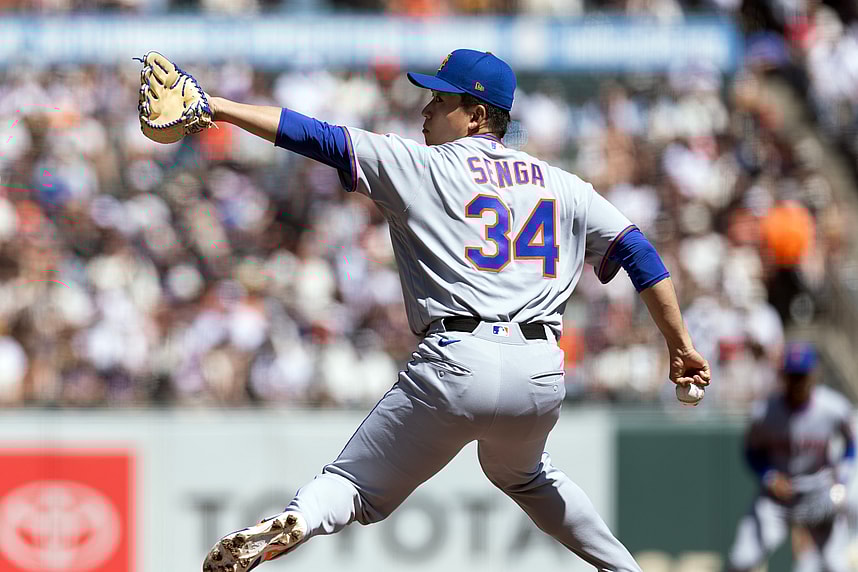
The strikeout rate backs that up. Senga’s 36% K rate through his first 2 starts is his best mark since his rookie year, when he was the most exciting new arm in the National League. He has not allowed a home run yet, his FIP is sitting under 2.00, and his swinging-strike rate is already at 16.3% — well above his career MLB average of 12.3%.
Even his pitch mix tells a story. He is throwing his fastball 39.1% of the time, up from 31.5% in 2025, and his cutter 26.1% of the time. When a pitcher is confident in his fastball, he leans on it. Senga is leaning on it.
“The biggest thing is I was able to throw healthily, and that I was able to get out of it healthy,” Senga said through interpreter Hiro Fujiwara after his most recent start.
That quote tells you everything about where his head is right now. He is not talking about strikeouts or ERA. He is talking about getting through games without his body breaking down. For a pitcher who has spent two years fighting that exact problem, the focus on health first is exactly the right mindset.
What a Healthy Senga Means for New York
The Mets built their rotation with the assumption that Senga would be a frontline arm. If he is, that changes the calculus on everything else. A healthy, dominant Senga does not just fill a rotation spot — he anchors one and makes every pitcher behind him easier to deploy.
Senga himself spoke directly to the rotation’s potential after Sunday’s start. “I think it’s a really strong group,” he said. “As long as we stay healthy, stay out on the mound, we can be a stabilizing force for the team. And if it goes for everybody and myself, I don’t want to be the one lagging behind.”
That last line has some edge to it. He has been the one lagging behind — and he knows it. The motivation is not hard to read.
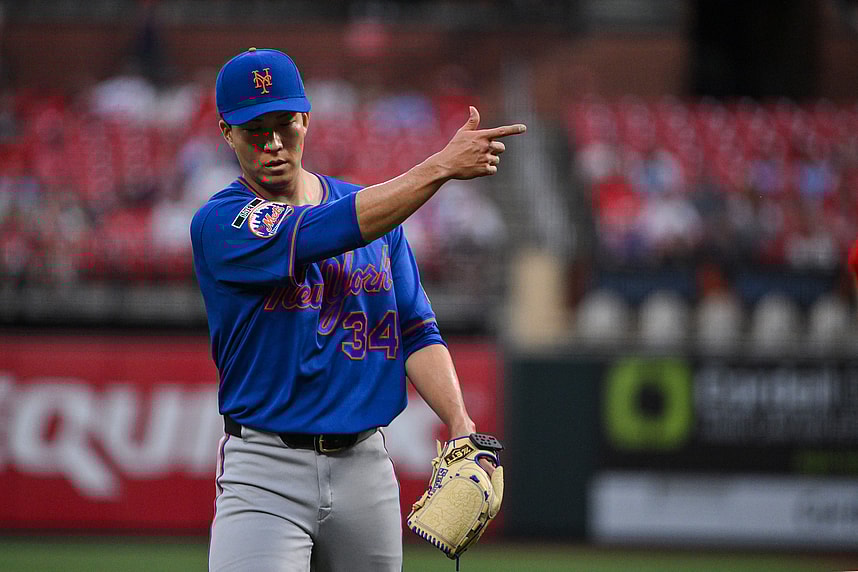
The preseason projections expected somewhere between 119 and 130 innings out of Senga this season, with ERA estimates clustered between 3.75 and 3.94 for the remainder of the year. Those projections were built on the assumption that he would look more like 2025 Senga than 2023 Senga. Through 2 starts, he is giving the models reason to reconsider.
If this version of Senga holds — the 97-mph fastball, the ghost forkball working as a genuine weapon, the strikeouts flowing — the Mets have a number 1 starter in a rotation that already has legitimate depth. That is the version of this team that can compete deep into October. The version without a healthy Senga is still good. The version with him is something else entirely.
Two starts in, the early evidence says the Mets might actually have him back. The question now is not whether he can pitch like this — he has shown he can. The question is whether he can do it for 28 more starts. Everything the Mets want to accomplish this season runs through that answer.
More about:New York Mets
