
 Quinton Fesq
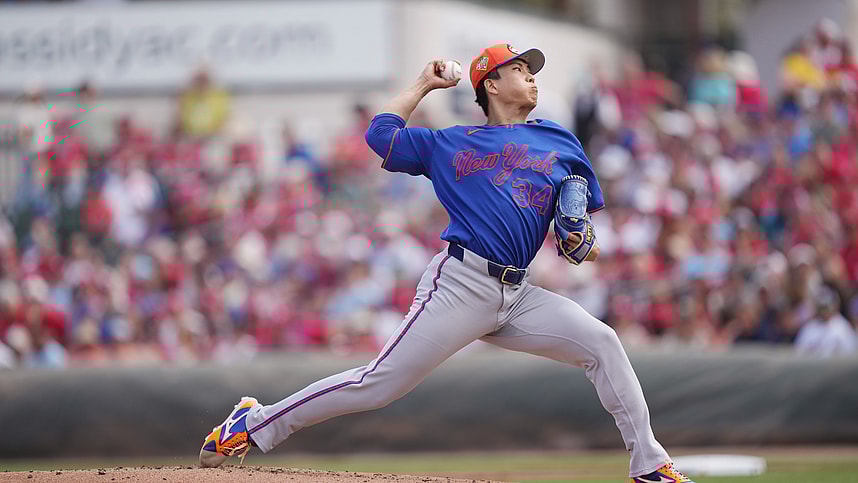
Kodai Senga took the mound for his first Grapefruit League start with the New York Mets on Saturday and the radar gun was the only box score that mattered. His four-seamer averaged 96.7 mph and touched 98.9 at the peak. After everything that happened last season, that number means something.
He averaged 94.7 mph with that pitch last year. A 2 mph jump is not a rounding error. That is a different pitcher.
He gave up 2 solo homers over 2 2/3 innings, Joshua Baez on a fastball in the second and Miguel Ugueto on a forkball in the third. The Mets won 3-2. Both were solo shots in March. Not worth the energy.
Okay But Is the Velo Real?
Yeah, it looks like it. Senga said the jump came from mechanical adjustments, and Carlos Mendoza backed that up, saying “it’s not something that I have seen the last two years that I have been here,” adding that Senga came out sitting 94-95 on the first day of camp and then hit 97-98 the moment live hitters stepped in. That progression matters more than any single peak reading. Guys whose stuff builds as competition ramps up are guys whose arms are in a genuinely healthy place, not just running hot on a warm Florida afternoon.
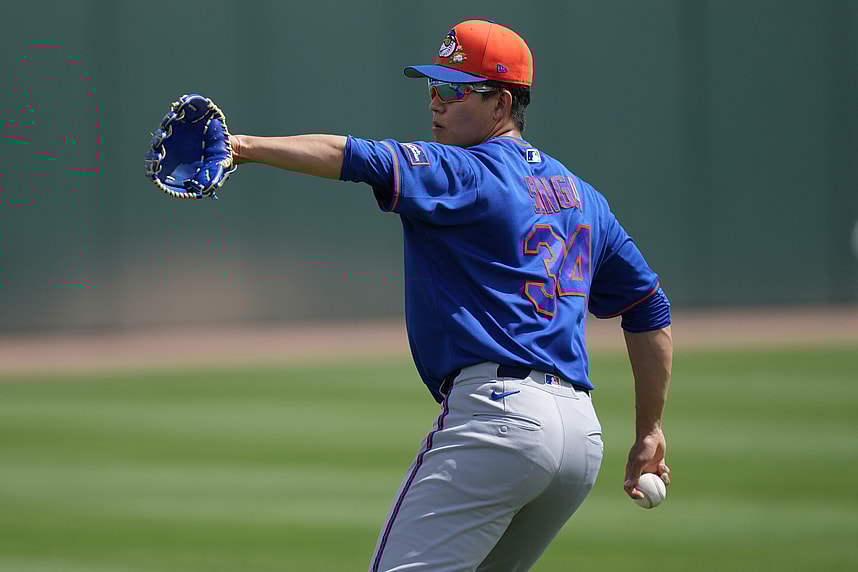
Mendoza also brought up the breaking ball, and that is where it gets interesting. Senga was stealing early strikes with it, mixing in the forkball, using the fastball as the finisher. When that sequencing clicks, he is one of the harder pitchers in baseball to game plan against. You cannot sit on the heater when the forkball is a real threat, and you cannot look for the forkball when he is sitting 97. Saturday had real stretches of that.
The Part That Is Hard to Ignore
Senga carried a 1.47 ERA into mid-June last season and looked untouchable. Then the hamstring happened, and the second half was a slow-motion disaster that ended at Triple-A Syracuse. That is the context that makes Saturday complicated.
So when Mendoza says “he’s healthy and you can see it now,” it is easy to want to run with that. But that is also more or less what the narrative was last April. The forkball homer to Ugueto is a small flag too, not because 1 spring homer means anything, but because that pitch is the engine of everything Senga does. When the command is off even slightly it stays up and hitters can punish it. Senga sounded confident postgame, saying “I’m getting my body back to where I need to be so that I can perform. I feel like I’m there right now.” The stuff on Saturday backed that up. The forkball command did not quite yet.
Where He Fits This Year
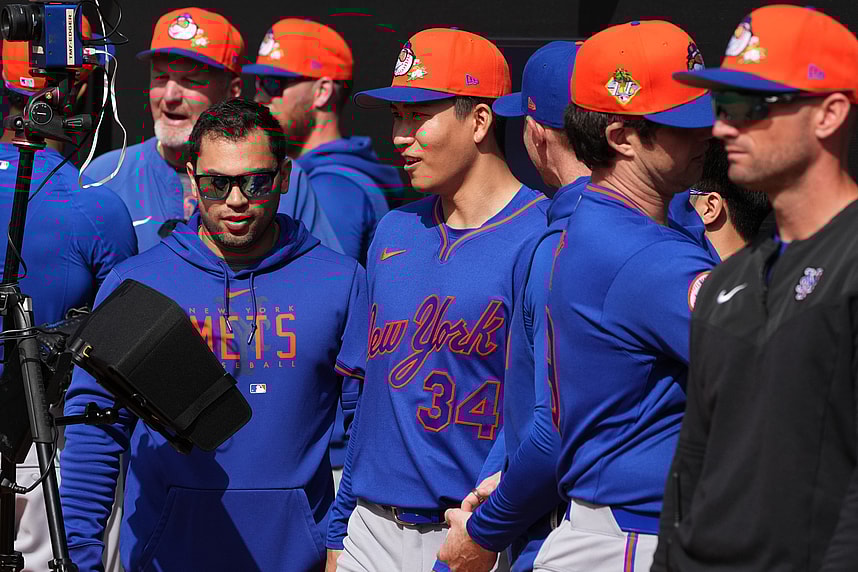
The plan, health permitting across the rotation, is a 6-man group with Senga in it. He also put the rest question to bed, saying “I’ve never said that I can’t throw on regular rest or that I prefer an extra day,” and that whatever the organization decides he will be ready for it. That is a mature answer from a guy who has mostly worked on an extra day over his first 3 seasons. Whether his body holds up on a tighter schedule is still an open question, but at least he is not making it a distraction.
Mendoza painted a different picture of him this spring, smiling in the clubhouse, engaged with teammates, not living in the training room. A healthy player carries himself a certain way and by all accounts Senga is doing that right now. It matters. It is just not the whole story on its own.
Watch the Next 3 Starts
One outing is a data point, not a trend. The fastball holding in the 96-97 range deeper into starts, the forkball command tightening up, getting through 4 or 5 innings without the stuff flattening out, those are the things worth tracking over the next few weeks. If Senga builds on Saturday across 3 or 4 outings, the optimism will be earned. Right now it is a genuinely exciting sign from a pitcher the Mets really need. That is worth something. It is just not everything.
More about:New York Mets
