
 Quinton Fesq
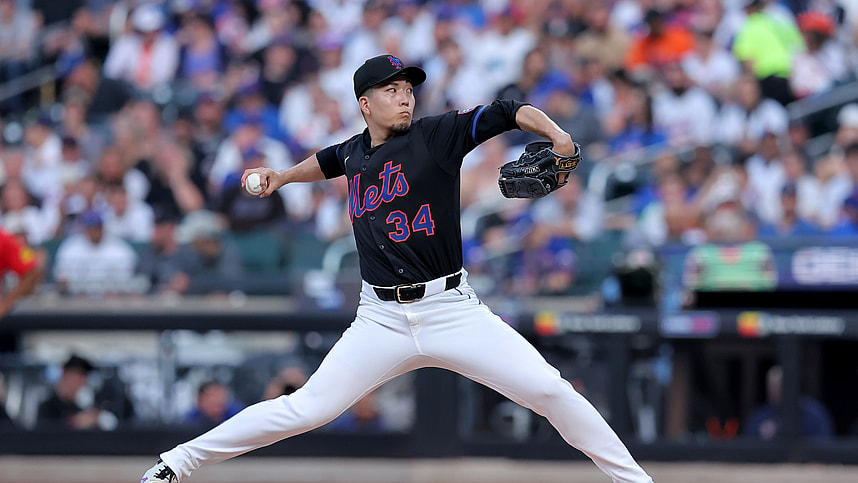
If you asked any Mets fan last May where Kodai Senga stood in the rotation, he was the ace. But baseball has a cruel way of humbling narratives, and the perception of Senga has shifted from a franchise cornerstone to arguably the biggest wild card on the roster. The Kodai Senga experience has always been a roller coaster of electric highs and frustrating lows, but 2025 took that low to a new extreme.
As we look toward the 2026 season, the Mets are in a purgatory that they have been in with their Japanese star where they are betting on the talent that produced a sub-3.00 ERA, while anxiously eyeing the durability concerns that derailed his season. The expectations of Senga in 2026 are no longer that he will win a Cy Young, but whether he can just be on the field long enough to prove that he is worth being on the roster.
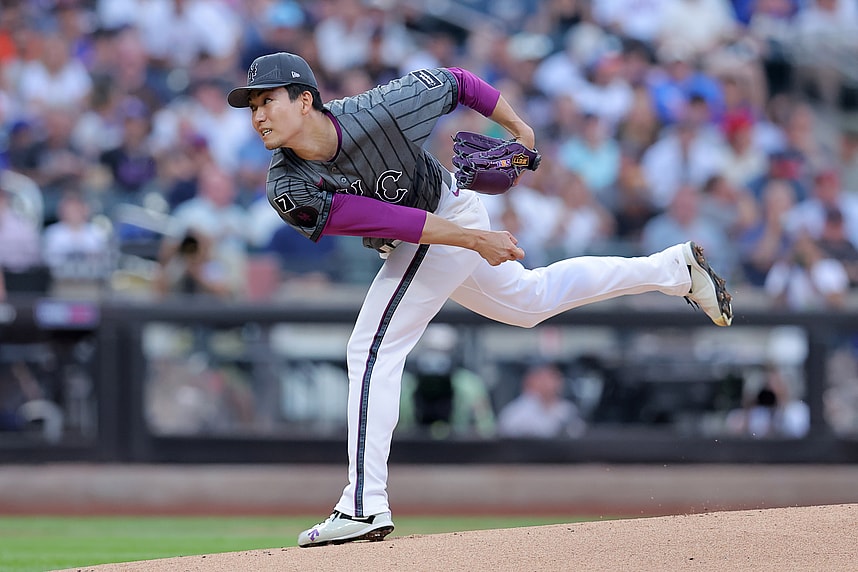
A Tale of Two Seasons: The 2025 Mirage
To understand the hesitation surrounding Senga’s 2026 outlook, we have to dissect the bizarre anatomy of his 2025 season. On the surface, the numbers look solid. Senga posted a 3.02 ERA over 113.1 innings, striking out 109 batters and limiting opponents to a .225 expected batting average (xBA). If you just look at his surface-level numbers, you see a valuable mid-rotation starter, but those numbers mask a season defined by a devastating split. Senga began the year looking like an absolute buzzsaw, carrying a 1.39 ERA deep into June before getting injured vs the Nationals. When he eventually returned, the “Ghost Fork” was still haunting hitters, but his command completely vanished.
The ending of his 2025 season left a bitter taste in the mouths of the fan base. Senga’s final stretch was tainted with ineffectiveness and inflated pace of walking which was an indicator that he was not well all the way. Senga’s Baseball Savant page paints a concerning picture of his command unraveling.
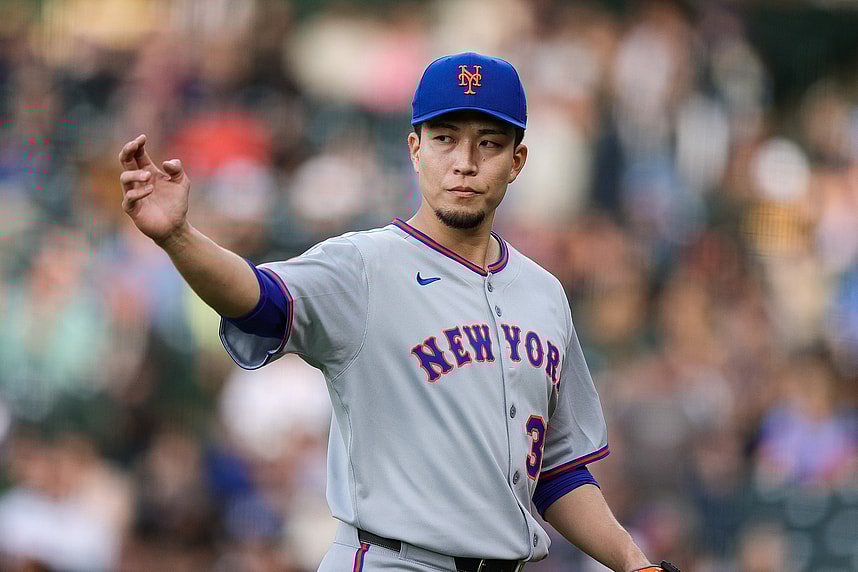
His walk rate sat at 11.4% (8th percentile), which is simply unsustainable in a pitcher attempting to navigate the NL East. His 3.02 ERA was glittering but his xERA (Expected ERA) was almost a full run more at 3.96. That difference suggests that Senga was lucky from some serious batted-ball luck, and that the same could be anticipated in 2026 is a serious gamble for David Stearns to make.
Kodai Senga’s Metrics: Elite Stuff vs. Declining Heater
The most fascinating, and perhaps worrying, part of Senga’s profile heading into 2026 is the growing gap between his primary pitches. According to his run value metrics, Senga is effectively two different pitchers living in one body. His offspeed stuff, specifically his forkball, remains elite, sitting in the 95th percentile for Run Value. However, his fastball has turned into a liability. The heater posted a abysmal 15th percentile Fastball Run Value in 2025, getting beat when he couldn’t locate it on the edge.
This gives it a very slim margin of error. If Senga falls behind in the count, which he did often with that 11.4% walk rate, hitters were able to sit on the fastball and do some damage. The hard-hit rate against him crept up to 40.6% (40th percentile), proving that when batters made contact, they were squaring him up. In order for Senga to succeed in 2026, he doesn’t need to rediscover his velocity, he needs to rediscover the art of location. If he is unable to command the fastball to set up his forkball, the league will simply ignore the offspeed stuff and punish the heater.
2026 Projections: Regression or Reliable Floor?
The projections are understandably skeptical of a repeat of his 3.02 ERA. Steamer projects a regression to a 3.89 ERA over 119.0 innings, while ZiPS is slightly more optimistic, pinning him at a 3.62 ERA with 127.3 innings. Both systems see him winning around 7 or 8 games, essentially viewing him as a high-end No. 3 or No. 4 starter rather than an ace. The FanGraphs Depth Charts (FGDC) align closely with this, projecting a 3.86 ERA and roughly 9 strikeouts per nine innings.
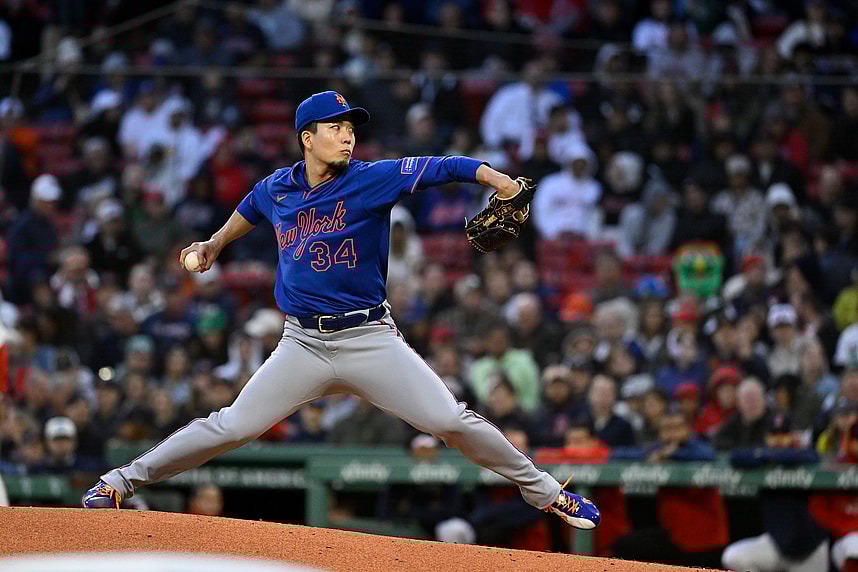
These projections feel fair, if not a bit safe. They are banking on his health risk, projecting fewer than 130 innings, and the likely regression of his batted-ball luck. But for the Mets, a 3.80 ERA pitcher who gives you 120 innings is still valuable. The problem is that the Mets are paying him to be a frontline starter ($15 million AAV), and the team needs him to be more than just an expensive innings eater. If Senga can beat these projections and push his ERA down to the 3.40 range while keeping his walks in check, he can transform the entire rotation.
Ultimately, Kodai Senga’s 2026 season will be defined by availability and adjustment. We know his talent is still there, with his 95th percentile offspeed grade proving that the “stuff” hasn’t eroded. But the days of relying on his raw talent to blow fastballs by hitters are over. Senga is entering his age-33 season at a crossroads.
If he can refine his command and trust his defense rather than nipping at corners, he can be the stabilizer this rotation needs. But if the walks continue to pile up and the fastball continues to look like a meatball over the plate, his “Ghost Fork” might be the only thing scary about his starts. The Mets don’t need him to be an ace, they just need him to be solid. Whether his body allows that remains the $75 million question.
More about:New York Mets
