
 Quinton Fesq
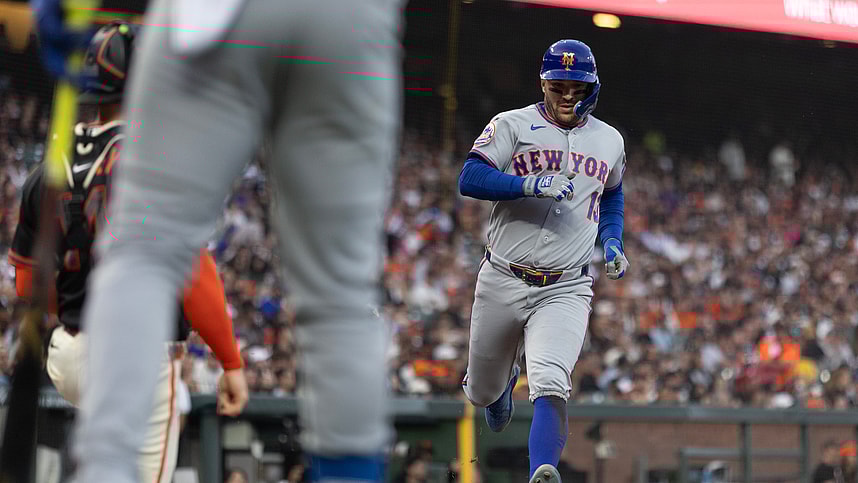
The New York Mets won a series on the road Sunday afternoon. That part is straightforward. What’s underneath it is more interesting — and it starts with a conversation that happened before first pitch.
Trailing 2-1 in the eighth inning at Oracle Park, the Mets had Jorge Polanco and Luis Robert Jr. work themselves into scoring position with a double and a single. Two on, one out, and lefty slugger Jared Young — already 3-for-3 on the afternoon — was due up against Giants reliever Erik Miller, a lefty.
Manager Carlos Mendoza pulled him anyway.
In came Luis Torrens, a backup catcher with a career .228 batting average and no business being the most important at-bat of a series finale. He laced a double to the opposite field on a count he worked, scored both runners, and the Mets pushed across 4 runs in the inning to clinch the series. The move looked bold in real time. It was actually the product of a scouting note delivered hours earlier.
Correa Made the Call Before the Mets Game Started
New bench coach Kai Correa came to Mendoza before the game with a specific scenario mapped out: if a left-handed reliever appeared in a high-leverage spot, Torrens was the bat to deploy against him. Mendoza credited Correa directly after the game, noting that the situation presented itself exactly as his bench coach had described it — and that Torrens was locked in because he’d been told what to watch for from the first inning.
“I gotta give credit to Kai Correa there,” Mendoza said after the game, per SNY. “He brought it up to me way before the game started, like in a big spot, Luis Torrens against one of those lefties… Sure enough, the situation presented itself and we [used] him and he was ready to go from the very beginning and he executed it.”
Torrens confirmed the same from his end. He knew before the game that there was a real possibility he’d be called on. That preparation allowed him to stay sharp through nine innings of sitting, step in cold against a high-leverage lefty, and work a quality at-bat without flinching. He went the other way. Both runners scored.
Torrens Is Better at This Than His Reputation Suggests
The career average is misleading in this context. As a pinch-hitter specifically, Torrens has hit .352 in 54 at-bats — a sample that reflects exactly the kind of player Correa identified: someone who slows his approach down, uses all fields, and rarely chases his way out of an at-bat. Mendoza noted postgame that Torrens is the kind of hitter who gets to two strikes and still gives you something, because he’s willing to take what the pitcher offers rather than hunt one zone.
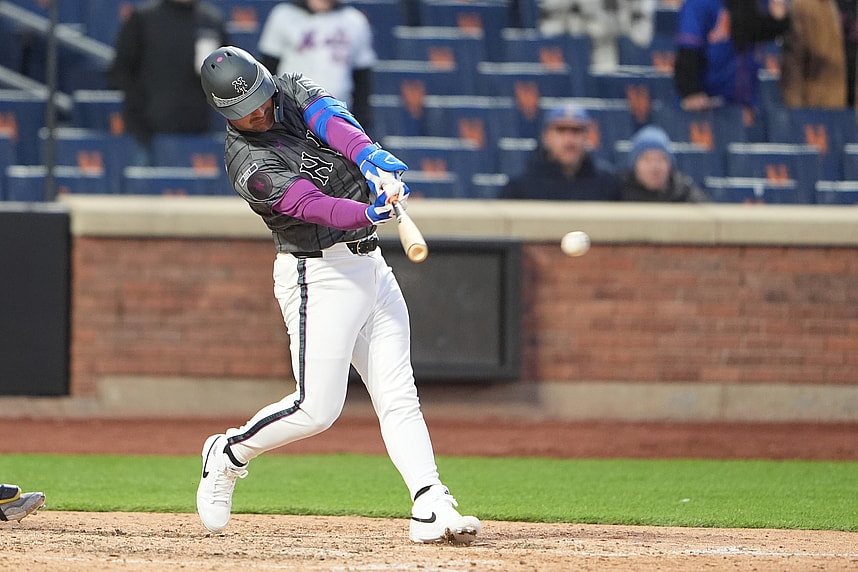
Torrens also threw out a runner trying to steal second in the bottom of the ninth, a reminder that his value behind the plate hasn’t diminished just because his bat is the thing people are talking about today.
The Mets were shorthanded Sunday, navigating minor injuries to Juan Soto and Brett Baty. When a roster thins out, the teams that win are usually the ones who have already thought through the contingencies. Sunday was a clean illustration of that — Correa had mapped the path, Mendoza trusted it, and Torrens was ready when his name was called.
That kind of infrastructure doesn’t show up in a box score. But it’s the reason the Mets head home having won a West Coast series. As the calendar turns to a home stand against the Diamondbacks and Athletics, the question worth watching is whether this staff’s preparation holds up against opponents with more familiarity with this roster — or if the Mets can keep finding edges before the first pitch is thrown.
More about:New York Mets
