Andres Chavez
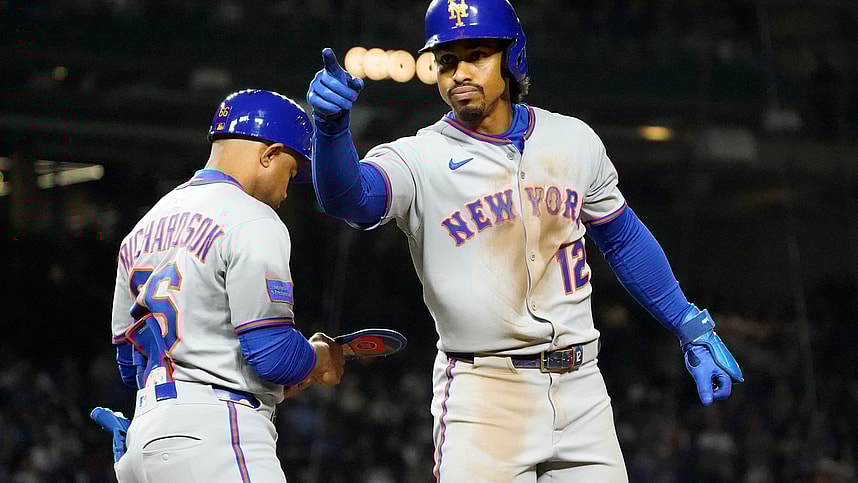
The New York Mets reminded everyone on Thursday night that their postseason hopes remain in their own hands. With an 8-5 win over the Chicago Cubs, the Mets kept their one-game edge over the Cincinnati Reds while fending off the Arizona Diamondbacks, who still linger two games back. The math is simple: finish with at least one more win than those two clubs, and New York is in. But with October on the line, nothing ever feels simple.
Lindor’s milestone moment
For most of the night, the fireworks came early. In the third inning, Francisco Lindor stepped to the plate and launched his 30th home run of the season, a milestone that instantly etched his name into the record books. Just one inning later, Brett Baty blew the game open with a three-run blast of his own, stretching the lead to 6-0.
Baty’s homer set the scoreboard ablaze, but it was Lindor’s swing that carried the deeper significance. His 30th home run didn’t just pad the Mets’ lead—it placed him in one of baseball’s rarest clubs, the 30-30 fraternity.
A 30-30 season in the shadows
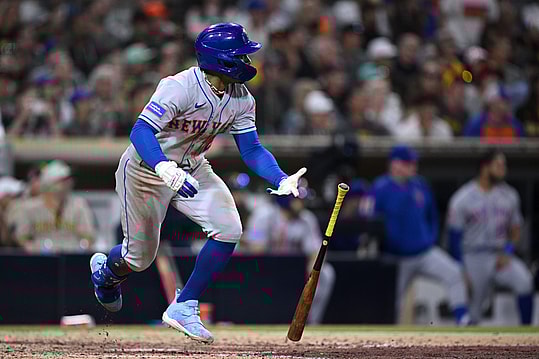
Earlier this month, Juan Soto had already crossed that threshold, becoming the first Met since Howard Johnson in 1991 to put up 30 homers and 30 steals in a single season.
Lindor has now joined Soto, giving the Mets not one but two players in the exclusive group.
That kind of double act has been nearly unheard of. Only two other duos in history have pulled it off: Dante Bichette and Ellis Burks for the 1996 Rockies, and Johnson alongside Darryl Strawberry for the 1987 Mets. To find yourself standing shoulder-to-shoulder with those names is no small feat.
Yet somehow, Lindor’s achievement has flown under the radar. Soto’s presence, charisma, and national spotlight tend to draw the headlines. Lindor, meanwhile, has quietly been putting together an underrated season: a 127 wRC+, 31 stolen bases, 115 runs scored, and 5.9 fWAR. It’s as if he’s driving a luxury car down a quiet side street—smooth, steady, and only noticeable if you stop to really pay attention.
Battling through the lows
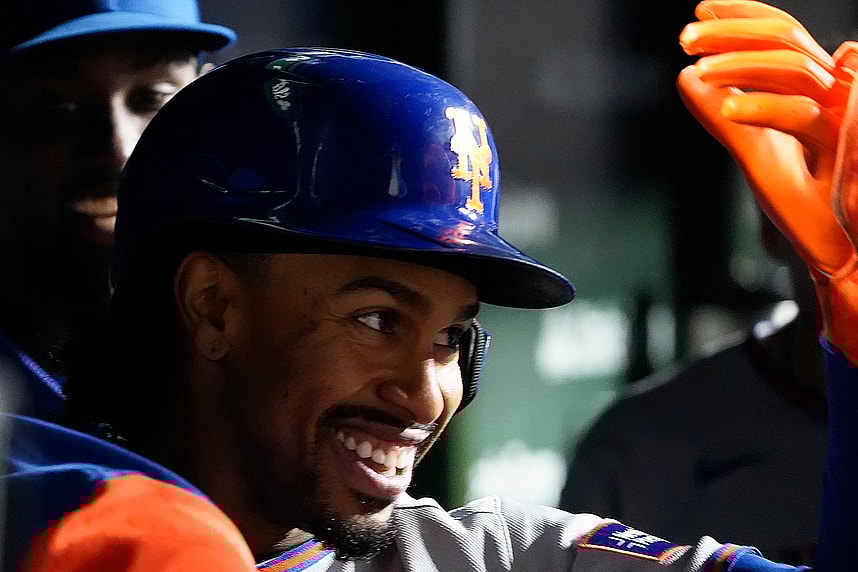
What makes this season stand out even more is that it hasn’t been smooth sailing. June and July tested Lindor, when he hit to the tune of a subpar 76 and 77 wRC+, respectively. Slumps are part of the grind, but for a player carrying both his contract and the weight of New York expectations, those stretches can feel amplified.
Instead of unraveling, Lindor recalibrated. By September, he was back to playing like one of the most complete shortstops in the game. His ability to rebound not only stabilized the Mets but also reminded everyone why he finished runner-up in the 2024 NL MVP race.
Peaking at the right time
As the calendar flips to the season’s final weekend, Lindor’s resurgence couldn’t come at a better moment. His steady glove at shortstop, combined with his bat finally firing on all cylinders, gives the Mets a centerpiece to rally around. If he continues to swing like this, New York won’t just have a shot to clinch against the Marlins—they’ll head into October with momentum that makes them dangerous in any series.
The story of the Mets’ season has been one of resilience, and Lindor embodies that better than anyone. While Soto’s brilliance shines bright, it’s Lindor’s quiet fire that has kept the Mets’ engine running. Now, with the finish line in sight, his latest milestone could be the spark that pushes New York over the edge.

More about:New York Mets