
 Quinton Fesq
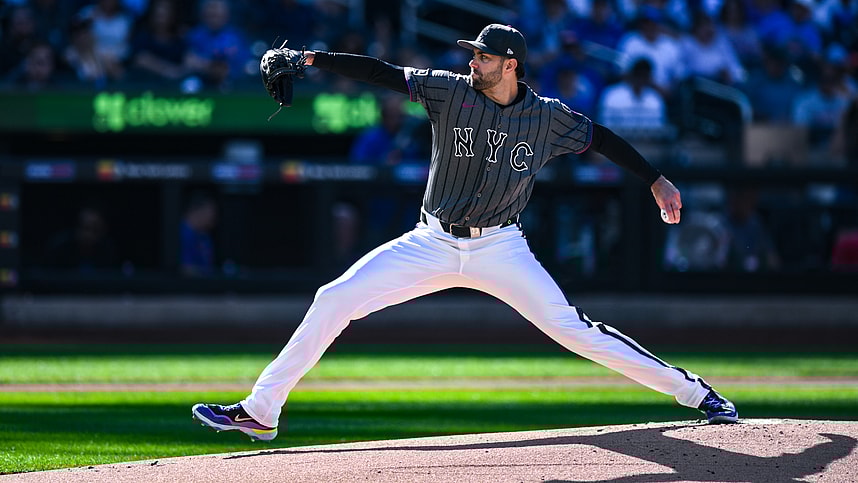
David Peterson has arguably been the most polarizing arm for the Mets. To some, he is a frustrating arm, a former first-round pick who shows flashes with elite extension and a wipeout slider, but then falls apart with walks and hard contact. He is the ultimate workhorse, a left-handed bulldog who has weathered demotions, injuries, and bullpen stints to now finally emerge as a reliable rotation arm. He’s following a 2025 season, where he took the ball every fifth day, posting career-highs in starts and innings. But the story heading into 2026 isn’t about whether Peterson should be in the rotation, but rather which version of him we saw last year, and whether it was a breakout or a mirage.
David Peterson’s 2025 Review: Surviving on the Ground
If you look at his surface level numbers, David Peterson’s 2025 season was exactly what this team needed. He went 9-6, posting a 4.22 ERA over 30 starts, logging 168.2 innings. The exact kind of workload the Mets have been begging for since his debut. He was a stable piece of this rotation that saw plenty of weaknesses, giving the team a 3.1 WAR season that quietly made him one of the more valuable southpaws in the National League. But when you look past those numbers, the picture gets a lot more complicated.
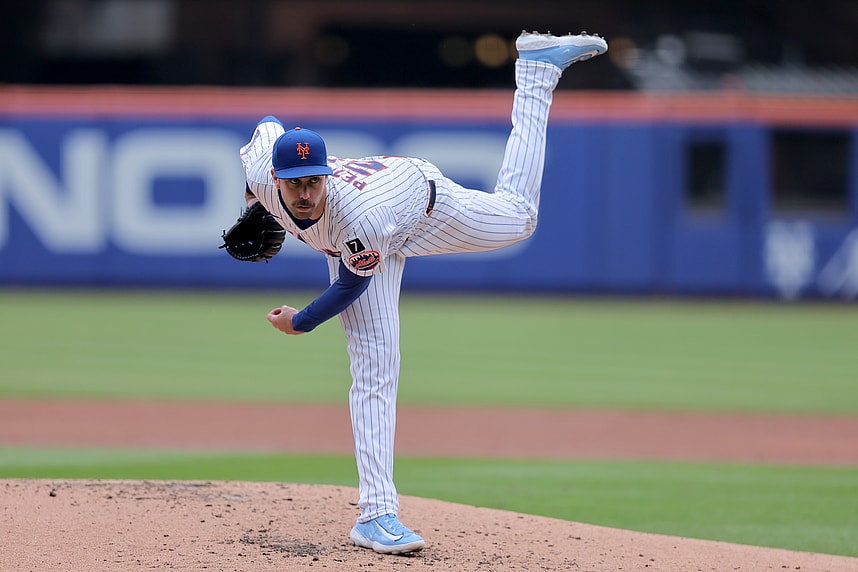
Peterson survived, but also thrived, by keeping the ball on the ground. His 55.4% groundball rate ranked in the 93rd percentile across MLB, a staggering number that allowed him to erase mistakes with double plays. His Baseball Savant page is blue as far as contact quality is concerned, he was in the 9th percentile in Hard-Hit% (46.0) and the 14th percentile in Average Exit Velocity (90.6 mph). Basically, when batters did not beat the ball in the dirt, they were crushing it. His xERA of 4.61 is almost a half-run higher than his real ERA, which suggests that he was actually benefiting from some serious batted-ball luck, and solid defense behind him.
Despite the scary contact metrics, you cannot ignore the raw tools that make Peterson unique. He still shows elite extension (96th percentile), which causes his 92.3 mph fastball to play up, jumping on hitters faster than the radar gun suggests. His Breaking Run Value was stellar (79th percentile), proving that when he can locate that slider, he can still miss bats at a high clip. The problem was always his walk rate (3.47 BB/9). Although it was manageable, it left his WHIP at a 1.37, forcing him to constantly pitch out of traffic. He walked a tightrope all of 2025, but to his credit, he rarely fell off.
2026 Projections: The Variance Between Good and “Good Enough”
Going into his age-30 season, the projections are divided as to what David Peterson truly is, which suits a pitcher of his stature. Steamer is the most optimistic, projecting a breakout season with an 11-9 record, posting a 3.65 ERA and 170.0 innings pitched. If the Mets are able to get that version of Peterson, a sub-3.70 ERA lefty capable of eating 170 innings, he isn’t just a back-end starter, he’s a legitimate mid-rotation asset who makes this staff one of the deepest in baseball.
THE BAT on the other hand is much more skeptical, projecting a regression to a 4.30 ERA with a similar workload. This issues highlighted in Peterson’s profile, if the groundball luck normalizes and those hard-hit balls start finding gaps instead of gloves, he could easily fall back to that 4.50 ERA range. But even the pessimistic projections put him at 27-29 starts. In todays game, where a pitcher’s health is a luxury, having a floor of 160 innings of league-average ball is something you don’t trade away.
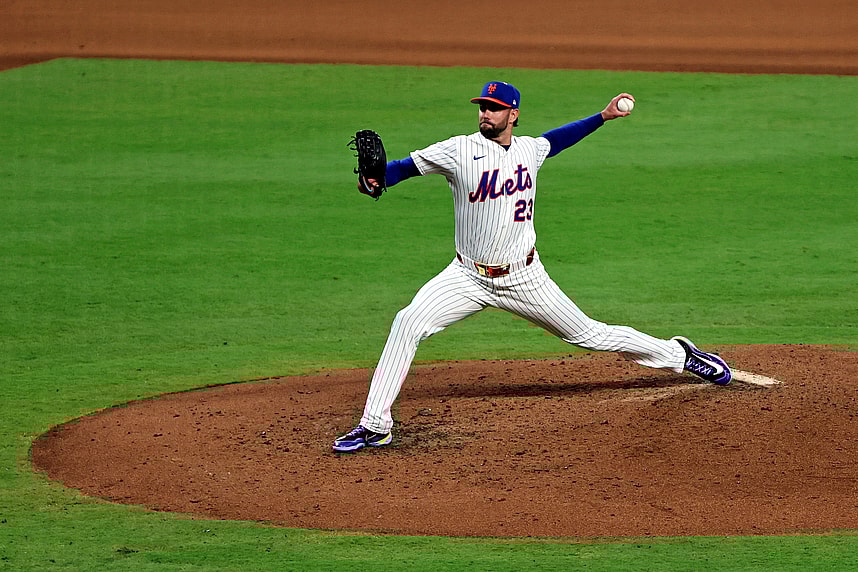
Where does David Peterson fit the 2026 Mets rotation then? With the arrival of Freddy Peralta, Peterson no longer has the pressure of being an ace or a frontline arm. He fits in well as the SP4 or SP5, a role that maximizes his value. He does not necessarily have to be an ace, he just needs to be the one who keeps the bullpen fresh by eating innings.
Ultimately, 2026 is about consistency. If Peterson is able to maintain that elite groundball rate while slightly reducing his walk rate, he can overcome the regression that the underlying metrics are expecting this season. He’s finally proven he has the durability. Now, he needs to prove he has the repeatability. The Mets are betting that the lefty can be a steady arm, and for the first time in his career, he looks ready to hold that ground.
More about:New York Mets
