
 Quinton Fesq

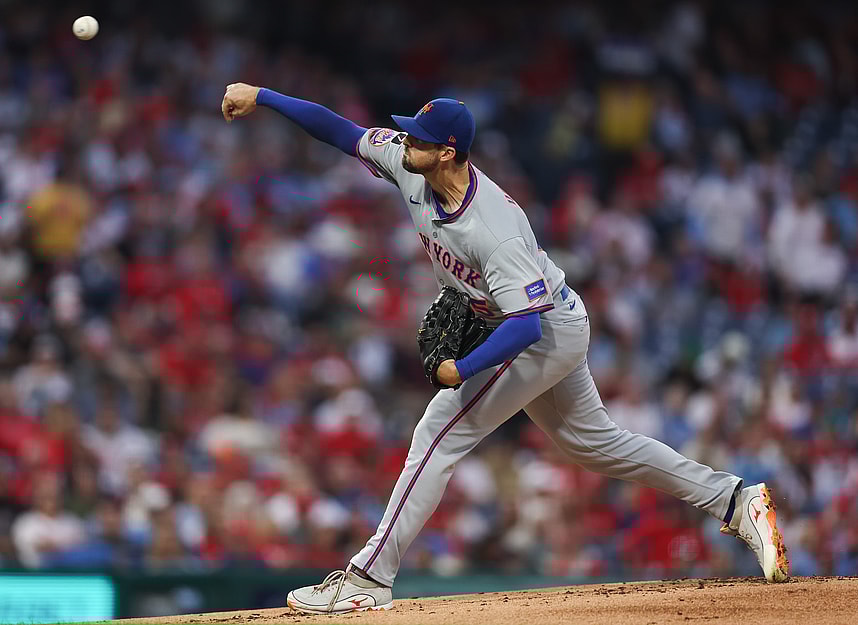
Clay Holmes is doing something that goes beyond just throwing better pitches. The New York Mets starter has upgraded his sinker, changeup, and sweeper this spring, but the wrinkle that could actually push him into a different tier as a starter is what he’s doing on the rubber.
He’s moved closer to the first base side, which has already made his sinker play with more bite. And then he takes it a step further, shifting his position pitch to pitch. That kind of deception layered on top of genuinely better raw stuff is not a combination most hitters want to face, especially in a second full season when lineups are still figuring out who exactly Holmes is as a starter.
What’s Actually Changed
The stuff improvements are real and specific. Holmes has added more fade and drop to his sinker, over 6 more inches of drop on his changeup, and reshaped his sweeper to play more like a frisbee with less vertical drop. Each of those changes individually registers as an upgrade in Stuff+, which grades pitches purely on their physical qualities, no results attached.
He’s also added a curveball, which gives him 3 breaking balls that can look similar out of the hand and do completely different things once they reach the plate. The curveball projects to be a better weapon against left-handed hitters than the sweeper, which addresses one of the softer spots in his profile from last year.
That lefty problem was real in 2025. Adding a pitch that specifically targets that weakness, while also having a frisbee sweeper and a harder slider to deploy, makes the whole arsenal harder to sit on. The rubber movement amplifies all of it. When a hitter has to account for where Holmes is releasing the ball in addition to which breaking ball is coming, the math gets complicated fast.
Where Clay Holmes Fits on This Staff
Holmes slots into the middle of a Mets rotation that now includes Freddy Peralta at the top and Sean Manaea behind him. Last season he carried more weight than that, often functioning as the staff’s best arm while Manaea dealt with injuries. Now he gets to pitch with less burden on his shoulders.
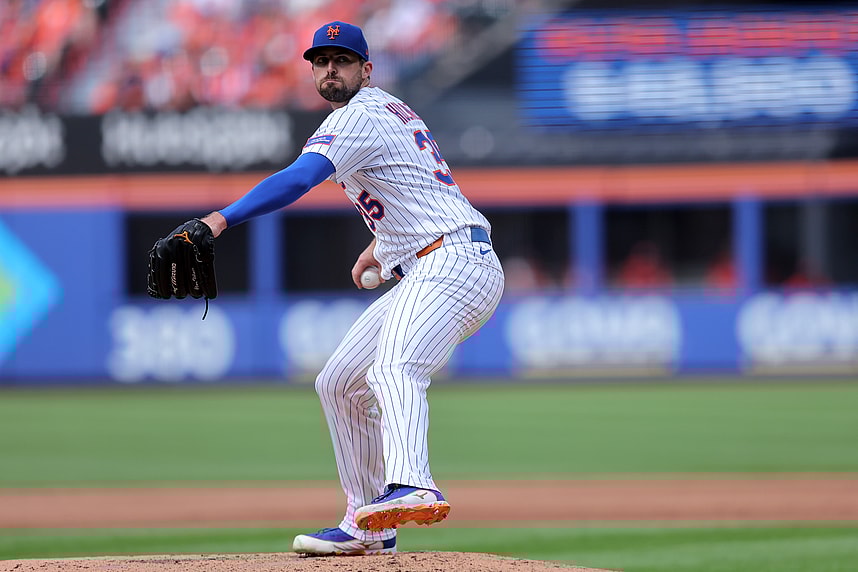
That context matters. He posted a 3.53 ERA in his first full season as a starter, which is a legitimately solid number for a guy who spent most of his career as a reliever with Pittsburgh and New York. The floor is already established. The question heading into 2026 was always whether the ceiling could move.
The Athletic’s Eno Sarris, who ranked Holmes among the starters showing the most meaningful spring improvement by Stuff+, put it plainly: the combination of better raw stuff and added deception could let Holmes take a real step forward in year 2 as a starter. That tracks. Year 2 as a starter after a full offseason of knowing what worked and what didn’t, with a genuine mechanical upgrade layered on top, is exactly when pitchers tend to click.
If the rubber movement becomes consistent and the curveball holds up against left-handed bats, Holmes could be pitching like a legitimate mid-rotation anchor by mid-May, which for a Mets team trying to chase down the NL East would be a very big deal.
More about:New York Mets
