
 Quinton Fesq
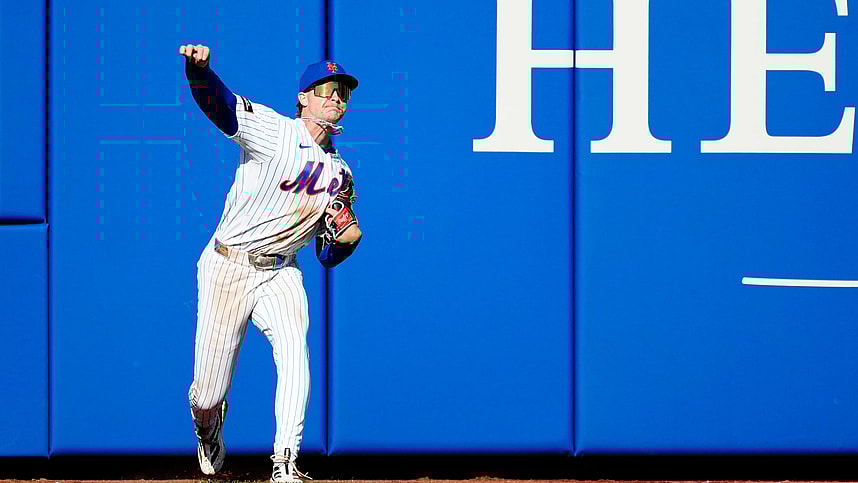
Carson Benge is hitting .108. That number is going to follow him around for a while — and if you’re checking box scores without digging any deeper, it probably has you worried. Through 11 games with the NY Mets, the 23-year-old rookie outfielder looks like a man drowning in his first taste of big league pitching. A .189 slugging percentage. A .403 OPS. A wRC+ of 26, which grades out as historically bad offense relative to league average.
The surface stats are ugly. They are also almost completely misleading.
What the Ball-Tracking Data Actually Shows
Here is what a .108 average with a .125 BABIP actually means: Benge has been brutally unlucky on balls in play, not brutally bad. A .125 BABIP is not a real number — it is a temporary punishment that regression will eventually erase. His expected batting average sits at .173 and his xwOBA is .255, both of which reflect contact quality that is meaningfully better than his results. The gap between what he’s actually doing with the bat and what the scoreboard says is enormous right now, and that gap almost always closes.
His hard-hit rate is 44.0%, placing him in the 65th percentile league-wide. His sweet-spot rate — the percentage of balls hit at the optimal launch angle for production — is 40.0%, which ranks in the 81st percentile. That is not the contact profile of a hitter who is overwhelmed. That is a hitter who is squaring the ball up at an above-average clip and watching too many of them find gloves instead of gaps.
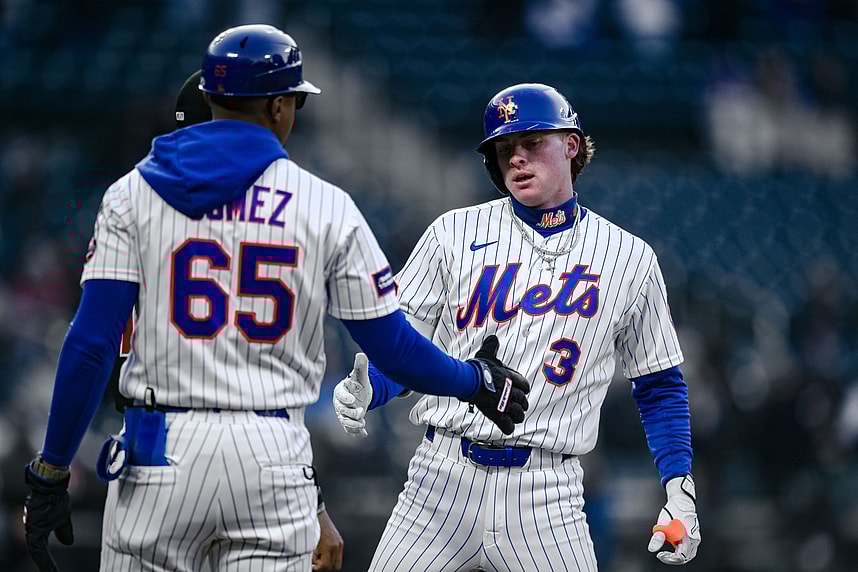
The one real concern in the Statcast data is the strikeout rate. At 28.6%, Benge is punching out at a clip that will need to come down. His chase rate is 31.0% — manageable, not alarming — but he is making contact only 77.8% of the time when he swings, and the whiff rate of 24.2% suggests pitchers are finding a hole. Every projection system in baseball expects his strikeout rate to settle around 21-23% for the rest of the season, which is a much more sustainable number. The early-season version is almost certainly noise inflated by a small sample.
The Profile Carries Value Even When the Bat Is Quiet
Benge has already stolen 4 bases in 11 games. His sprint speed grades out at the 88th percentile at 28.4 feet per second — one of the fastest marks on the roster. That speed is not a parlor trick. It creates extra bases, it pressures defenses, and it adds genuine run value on a nightly basis regardless of whether his average is .108 or .280. He posted 0.6 BsR in his first 42 plate appearances, which is positive baserunning value in a stretch where his bat hasn’t contributed a thing.
Defensively, he has been clean across all three outfield spots — right, left, and center — logging a 1.000 fielding percentage through 96.2 innings. The arm value grades out in the 76th percentile per Statcast, and his range OAA is sitting at zero, meaning he’s been exactly average in range with a small sample that will need more time to stabilize. The point is that Benge’s value floor is not zero while he figures out big league pitching. The speed and the glove are showing up right now.
The Prospect Pedigree Matters Here
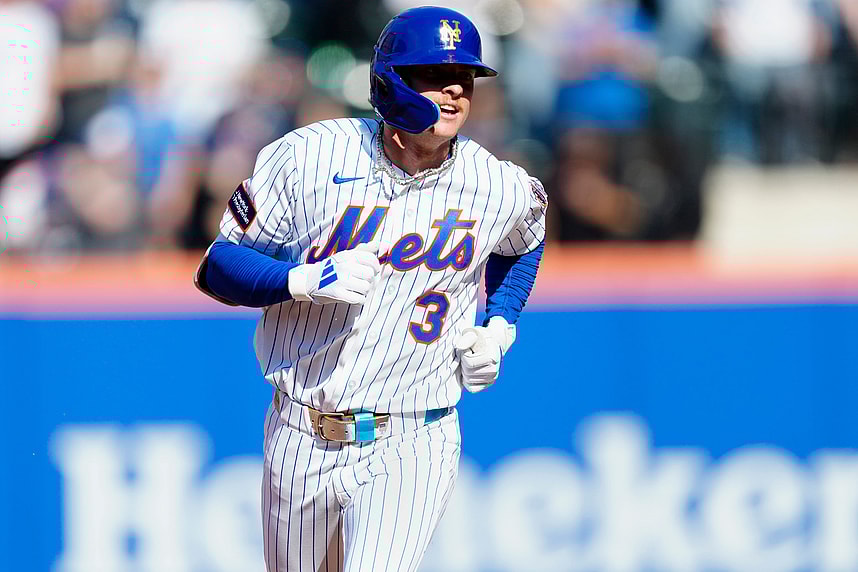
Benge came into the season ranked 16th overall on MLB Pipeline and 2nd in the Mets system. He was a first-round pick out of Oklahoma State in 2024 — 19th overall, $3,997,500 signing bonus. The Mets did not draft him and fast-track him to the majors because they expected a slow burn. They drafted him because the tools are real. The five-tool profile — above-average speed, arm strength, defensive versatility, gap power, and contact ability — is what got him to the big leagues at 23.
Every projection system has him finishing the season around a .236-.239 average with an OPS near .700 and a wRC+ between 92 and 103. ZiPS gives him a 103 wRC+ the rest of the way and projects 12 home runs over a full season. Those numbers reflect a league-average to slightly above-average bat attached to a 88th-percentile runner with above-average arm value. That is a starter. That is a guy who belongs in a major league lineup.
Eleven games and 42 plate appearances is not a verdict. It is barely an opening statement. The underlying contact quality is there, the speed and defense are already producing, and every projection model on the planet is treating the current line as noise. Benge will not hit .108 in May. The real question is whether — once the BABIP normalizes and the strikeout rate tightens — he becomes the everyday outfielder the Mets drafted him to be, or something more than that.
More about:New York Mets
