
 Quinton Fesq
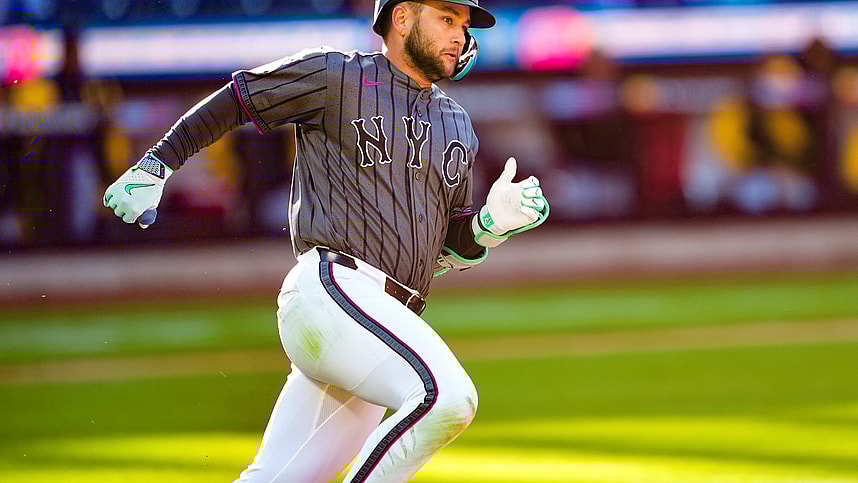
Bo Bichette walked out of the Citi Field postgame interview room on Sunday and said exactly what you’d want a struggling star to say. Asked whether the boos surprised him, he didn’t deflect. “If anything, I thought it took too long,” he told reporters, per SNY. “I get it. I thought my at-bats were terrible, too.”
That kind of accountability is refreshing. It’s also earned — because the at-bats genuinely have been terrible. Through 3 games with the New York Mets, Bichette is 1-for-15 with 8 strikeouts, a .071 average, and an OPS of .138. His Statcast page on Baseball Savant reads like a cautionary tale: xwOBA of .144 in the 2nd percentile, barrel rate of 0.0%, a chase rate sitting at 60%, and a strikeout rate of 53.3%. The only hit on his spray chart is a lonely single to right-center. That’s the whole picture.
The question isn’t whether the numbers are bad. They are. The question is what they mean.
What the Data Actually Tells Us
Some of what’s happening is mechanical and correctable. Bichette’s bat speed has dropped from 69.1 mph in 2025 to 66.3 mph through this small sample. His squared-up contact rate is at 11.8% after sitting at 25.9% and 28.5% the previous two seasons. His swing path is genuinely off right now, not just unlucky.
Mets manager Carlos Mendoza identified the root issue after Sunday’s loss to Pittsburgh. “He is missing good pitches early in counts, and then they are making him chase, especially at the top of the zone,” Mendoza told reporters. That tracks with the plate discipline numbers. Bichette’s out-of-zone swing rate has ballooned to 60.0% — compared to 35.2% last year. Pitchers found him, and he’s biting.
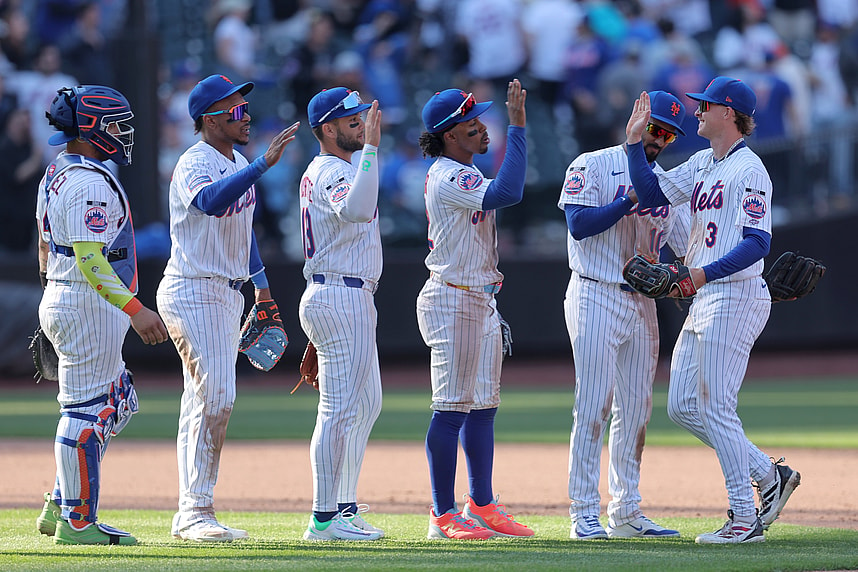
The pressing is real and Bichette said as much himself. “I definitely felt that wanting to have a moment, not only for my teammates but for the fans and everything,” he told SNY. “It’s just something that I have to manage.” That’s not a throw-away line. That’s a guy who signed a 3-year, $126 million deal in January, moved to a new position in third base, and arrived at the sport’s most scrutinized market already trying to manufacture something that can’t be manufactured.
Why the Track Record Still Matters
Here’s the full context the early returns don’t show: Bichette is one of the better hitters in baseball when he’s locked in. Last year he posted a .311 average, a .840 OPS, and a 134 wRC+ with Toronto — a bounce-back season that erased the nightmare of his injury-shortened 2024. He struck out just 14.5% of the time. His career wRC+ of 121 over 751 plate appearances is the profile of a legitimate middle-of-the-order bat, not a guy who needs to be worried about.
Francisco Lindor said it plainly after Sunday’s game. “He’s one of the best hitters in the game. He’s going to have a lot of big moments for us.” That’s not a teammate covering for someone — that’s a guy who has watched Bichette’s career from a front-row seat in the National League East for the last several years.
The FanGraphs depth charts projection still has him at a .285 average, a 118 wRC+, and 4.0 WAR for the rest of the season. Every major projection system — Steamer, ZiPS, ATC — agrees in that same range. Three games of bad at-bats don’t move those numbers.
The Real Test Starts Now
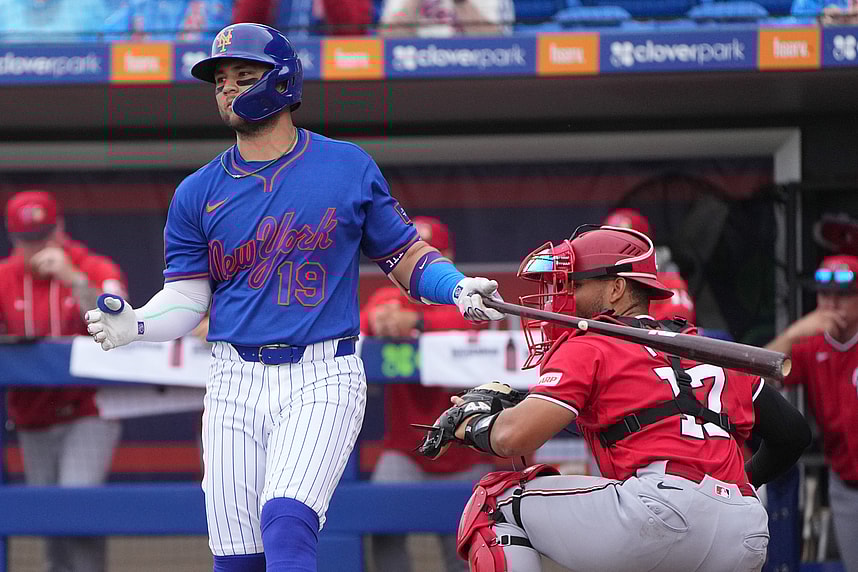
The boos at Citi Field were earned, and Bichette knows it. The pressing is real, and he knows that too. What he said after the game — “Maybe, but I got to figure out how to hit here, anyway” when asked if going on the road might help — isn’t resignation. It’s the right answer. New York doesn’t care about context or trajectory. It cares about the next at-bat.
The mechanical issues are fixable. The chase rate will come down. The bat speed will normalize. The swing path will flatten back out. Players who have legitimate track records of making hard contact and controlling the zone don’t just forget how — they press, they get found, and then they make the adjustment. Bichette has done it before, most recently after a 2024 season that looked like it might define him poorly.
The thing about New York is that the moment Bichette is looking for — the one he admitted he’s been pressing to create — tends to arrive the instant you stop hunting for it. He already showed he can handle the uncomfortable part. Now comes the part that actually wins people over.
More about:New York Mets
