
 Quinton Fesq
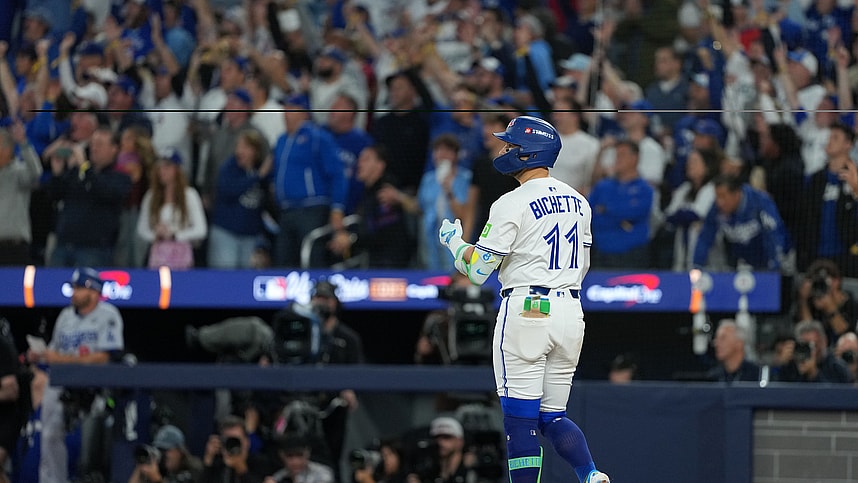
If you asked any Mets fan in November what the team needed, the answer was simple, they needed a pure hitter who could help expand the lineup and provide protection. The story surrounding Bo Bichette has shifted, going from a franchise cornerstone for Toronto to a change of scenery candidate, and now, he’s the lastest weapon in Queens.
After signing a blockbuster deal with the Mets this offseason, Bichette is arriving with the expectation of being the offensive force that will push this team over the top. But entering the 2026 season, the question is which version of Bo Bichette the Mets are getting. Will they get the elite bat-to-ball artist from 2025, or the inconsistent defender who needs a position change?
2025 Review: A Resurgent “Return to Form”
Bichette was coming off a terrible 2024 season where he posted a career-worst 70 wRC+, but last year he was able to silence the doubters with a resurgence that reminded everyone why he was once considered one of the best young hitters in the game. On the surface, his numbers were exactly what you wanted to see. Bichette slashed a stellar .306/.339/.475 over 135 games, posting a 124 wRC+ that made him one of the most productive hitters in the American League.
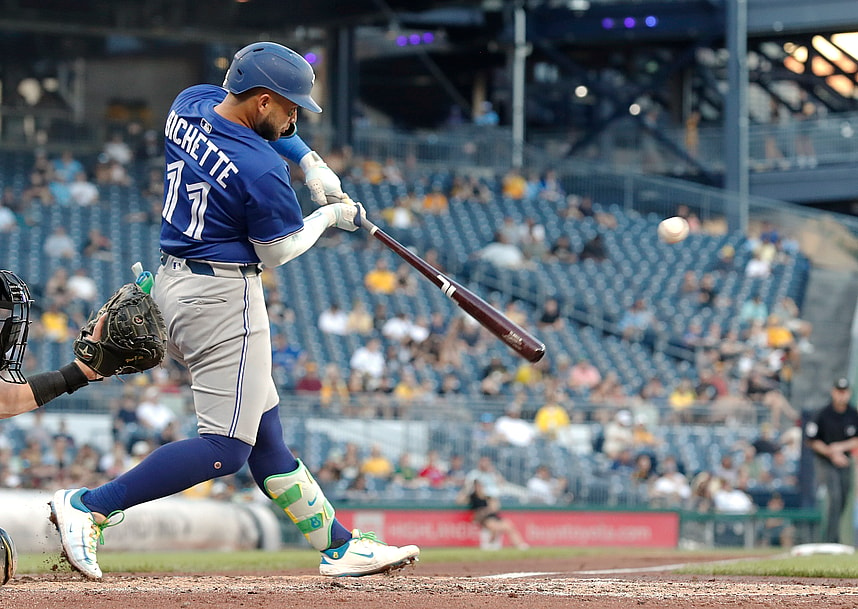
In 2025, he launched 20 home runs and drive in 73 runs, but his most encouraging sign was his consistency and ability to stay on the field. After being limited to just 81 games in 2024, Bichette logged 601 plate appearances in 2025, proving that his health woes were behind him.
His .814 OPS wasn’t just a fluke, it was a genuine return to elite production. For this Mets team that has often struggled with inconsistency from the right side of the plate, getting a hitter who just hit .306 is an absolute luxury. However, his surface-level numbers can sometimes be deceiving, so we need to look at his under the hood metrics to see if this performance will be sustainable in 2026.
The Underlying Metrics: Elite Contact vs. Defensive Liability
His Baseball Savant page paints a picture of a hitter who is arguably one of the best in the world at making contact, but it also showed a fielder who desperately needed to be moved off shortstop. Offensively, Bichette’s profile is a sea of red; he ranked in the 98th percentile in Expected Batting Average (xBA) and the 86th percentile in Batting Run Value. Those metrics suggest that his .306 average wasn’t just a product of luck. It showed that he was hitting the ball even better than what the box score. His 83rd percentile Hard-Hit Rate and 86th percentile Strikeout Rate proved that he is an elite contact hitter who refuses to give away any at-bats.
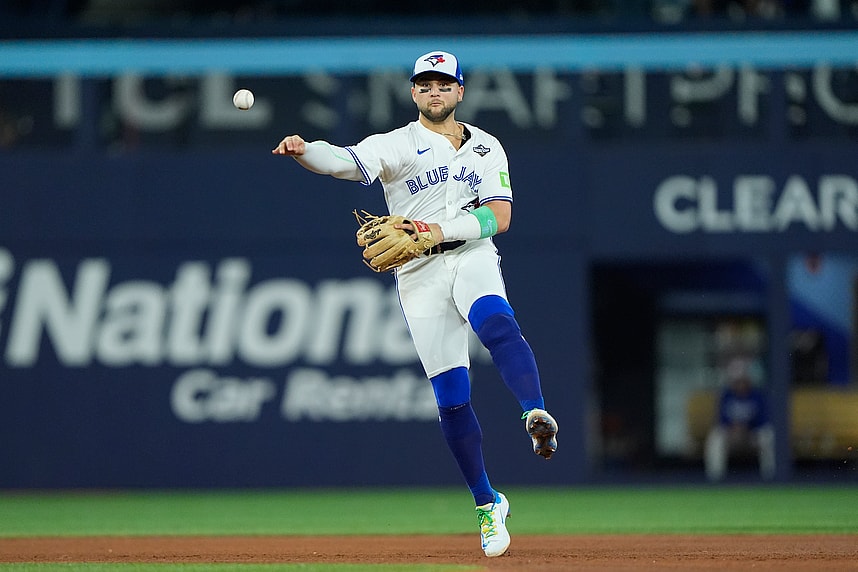
However, the blue on his profile is also impossible to ignore, as it shows why the Mets are going to slide him over to third base. Bichette ranked in the 1st percentile in Range and in the 4th percentile in Fielding Run Value. His arm strength (36th percentile) and sprint speed (21st percentile) have also declined, making him a liability at a premium position like shortstop. The Mets are hoping that a move to the hot corner, where his reaction time will matter more than his range, should hide his defensive deficiencies. If he is able to just be passable at third base, then his bat should be more than enough to carry his value.
2026 Projections: The Model of Consistency
Heading into the 2026 season, the projections are seemingly in agreement, Bo Bichette is going to hit. The FanGraphs Depth Chart (FGDC) is projecting Bichette to be a staple in the middle of the Mets lineup, expecting a slash line of .291/.338/.447 with 19 home runs and a 122 wRC+. Those projections are incredibly safe, essentially banking on him to repeat his 2025 success with just a slight regression in batting average due to the change in leagues.
Steamer and THE BAT X are equally optimistic, projecting him to play around 152 games, which would be a workload that the Mets would happily sign up for. If Bichette is able to post a .340 wOBA as projected, he will give the Mets another elite contact hitter to pair up with Lindor, making this lineup an absolute nightmare for opposing pitchers.
Ultimately, Bichette’s 2026 season won’t be defined by whether he’s able to hit 30 home runs, but by whether he is able to provide that consistent, high-average production that can anchor the middle of the order. Instead, the Mets are paying for a professional hitter, and the data suggests that is exactly what they are going to get.
More about:New York Mets
