
 Alexander Wilson

The New York Knicks are entering a new era under Mike Brown, and the biggest shift won’t be seen in flashy offensive schemes or defensive wrinkles — it will come in how much the team actually plays its stars.
For years under Tom Thibodeau, the Knicks leaned heavily on their core group, squeezing every ounce of production out of Jalen Brunson, Josh Hart, and others during the regular season. It was a strategy rooted in urgency, but one that often left the roster running on fumes by the time May rolled around.
Thibodeau’s demanding approach
Thibodeau’s reputation for grinding his starters is no secret. The philosophy was simple: every possession mattered, every lead was in danger, and no game could be taken lightly. That meant players like Josh Hart were logging career-high minutes night after night, a workload that eventually caught up to him in the playoffs.
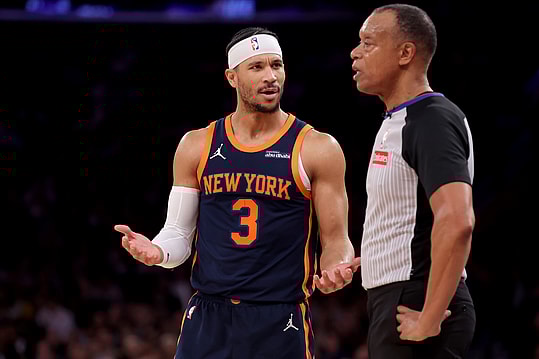
Brunson, the heartbeat of the team, was also pushed to the brink. His brilliance was undeniable, but the toll of heavy minutes often showed up in postseason wear and tear, with nagging injuries limiting his explosiveness when the Knicks needed it most.
The results were predictable: a team that looked resilient in December often struggled to keep pace with transition-heavy playoff opponents who thrived on fresher legs.
Mike Brown’s new philosophy
Brown is flipping that script. The new head coach has been blunt about the need to protect his roster from burnout, even if it means sacrificing short-term wins for long-term gain.
“The biggest thing is trying to make sure you watch everybody’s minutes instead of trying to chase games,” Brown said after Tuesday’s practice. “There might be some games where maybe you throw the towel in early.”
It’s a statement that represents a complete departure from Thibodeau’s ethos. The old mantra of “everything matters” is being replaced with a focus on pacing players for an 82-game marathon, not just a sprint through the regular season.
Preserving the stars
Brown doubled down on the concept, emphasizing that the true measure of the Knicks’ success will come in the spring.
“It’s important to win, but you also have to understand, ‘Hey, I want to keep this guy’s minutes here, this guy’s minutes here, this guy’s minutes here, instead of trying to extend everybody’s minutes,’” Brown explained.
For players like Brunson, this could be a career-saver. Instead of hitting the postseason with nagging injuries and tired legs, the Knicks’ star point guard will ideally be fresher and more capable of carrying the offense through deep playoff battles.
Hart, who epitomizes hustle and energy, will also benefit from being preserved rather than emptied out by April. His playoff drop-off last year was less about ability and more about exhaustion.

Long-term vision for postseason success
This isn’t just about comfort — it’s about competing at the highest level. The Knicks’ biggest weakness in recent playoff runs has been their inability to match the pace of transition-heavy teams. Opponents who push tempo have exploited New York’s fatigue, and Brown is determined to change that storyline.
By cutting minutes strategically and being willing to “throw in the towel early” on certain nights, Brown is betting on quality over quantity. It’s a calculated gamble: sacrificing the grind of regular-season wins in exchange for the possibility of fresher, sharper performances when it truly matters.
For a Knicks team with championship aspirations, the approach could be the difference between another early exit and a legitimate run in June.

More about:New York Knicks
